Budget 2026 shifts buyback taxation from dividend income to capital gains.
Promoters face higher effective taxes: 22% for domestic firms, 30% for others.
Reform protects minority shareholders previously taxed at higher dividend rates.
Experts welcome clarity but warn retrospective amendments may affect certainty.
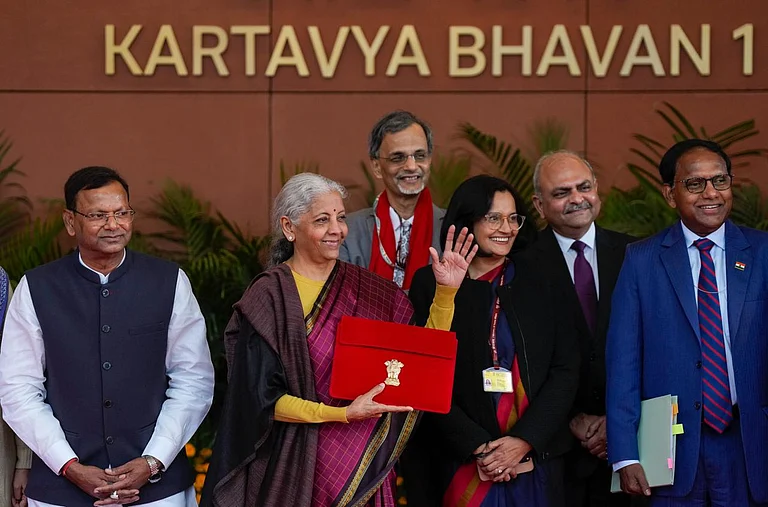
Finance Minister Nirmala Sitharaman today proposed that consideration received by a shareholder on a buyback will be taxed as capital gains rather than being treated as dividend income.
She also announced a differentiated tax structure for promoters: an effective rate of 22% for promoter entities that are domestic companies, and 30% for promoters that are not domestic companies.

1 September 2026
Get the latest issue of Outlook Business

Sitharaman said the change in the taxation framework was aimed at curbing the improper use of buybacks as a tax-efficient route for promoters.
“In the interest of minority shareholders, I propose to tax buyback for all types of shareholders as capital gains. However, to disincentivise misuse of tax arbitrage, promoters will pay an additional buyback tax,” she said. “This will make the effective tax 22% for corporate promoters. For non-corporate promoters, the effective tax will be 30%.”
The buyback route is one of the final avenues for investors to exit a company without bearing a tax burden, as the liability was previously absorbed by the company.
"In a positive move to not disadvantage non-promoters on buyback proceeds being currently taxed as a dividend, the Budget proposes to tax the same at a tax-efficient rate as capital gains. This is a fair move given that non-promoters do not actively participate in a buyback decision, and taxing them at the higher dividend rate is against the principle of equity," said Bijal Ajinkya, partner at Khaitan & Co.
Advertisement
Under the rule that came into force on 1 October 2024, the entire proceeds from a company’s share buyback were treated as a dividend and taxed at the investor’s slab rate. This applied even if the investor made no profit.
"The Budget rationalises the taxation of share buybacks by reclassifying them from dividend income to capital gains. However, the introduction of three retrospective procedural amendments raises concerns around certainty and fairness in tax administration," flagged Himanshu Sinha, Partner of Tax Practice at Trilegal.