
Odisha approves Tata Power’s solar ingot and wafer manufacturing plant in Gopalpur with major incentives, including a 30% capital investment subsidy, ₹2/unit power subsidy, and 100% electricity duty waiver for 20 years.
The senior state official highlighted Odisha’s revenue surplus (₹31,800 crore) and predictable business ecosystem, assuring full support for large-scale clean energy investments.
Odisha is offering plug-and-play infrastructure, concessional land, a dedicated land bank, and a new 25–30-year leasing model tailored for solar projects.
With rising investor interest and an estimated 33,000 MW floating solar potential, Odisha is positioning itself as a major solar manufacturing and deployment hub.
Tata Power has received the Odisha government’s approval to set up a 10 GW solar ingot and wafer manufacturing plant in the state with an investment of ₹10,000 crore.
The state government also cleared several key proposals, including a 30% capital investment subsidy, made by the company. Besides, Tata Power will also receive a 100% waiver of electricity duty for 20 years and a ₹2-per-unit power tariff subsidy.
The state will also provide a 100% net SC/ST reimbursement for a period of 15 years at the plant, which will be set up in Gopalpur.

1 September 2026
Get the latest issue of Outlook Business

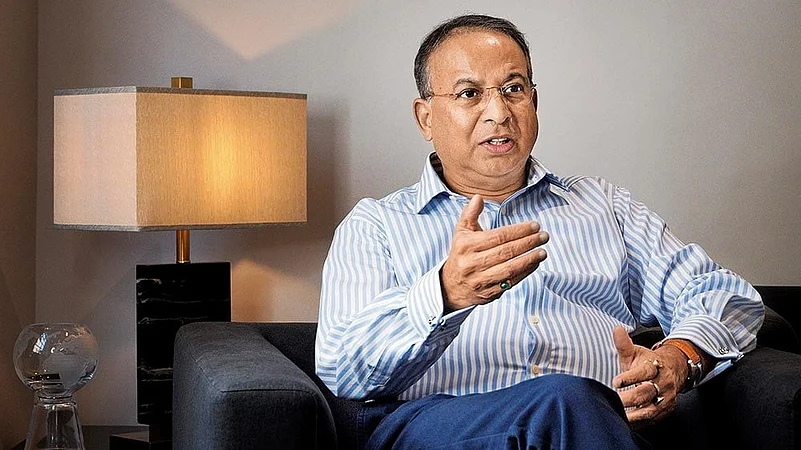
The project aims to reduce the reliance on Chinese imports of ingots and wafers, Vishal Kumar Dev, Principal Secretary, Energy Department, Odisha, told Outlook Business.
Advertisement
Tata Power, which currently has 4.55 GW of cell and module manufacturing capacity, aims to backward integrate ingots and wafers into its solar cell and panel production for both domestic use and export markets, the company had said in November.
Ingots and wafers are key raw materials used in the production of solar cells and modules.

The senior state government official emphasised that Odisha has the financial strength to honour these commitments, noting that the state entered the current financial year with a revenue surplus of around ₹31,800 crore. “We have the fiscal stability to support large investments and ensure that policy commitments are delivered,” he said.
Advertisement
He highlighted that Odisha offers a strong and predictable ecosystem for businesses, consistently performing well in ease of doing business rankings. “Whether it is forest clearances or state-level permissions, we work proactively with investors to ensure smooth project execution,” Dev said.
The official also noted that Odisha is seeing increasing interest in the solar sector, with several companies already operating in the state. Government support mainly includes providing land, concessional rates, and essential infrastructure directly at the doorstep of industry such as water, power, sewerage, and common facilities like pre-treatment and heating plants within industrial parks.

Dev noted that the state was now planning industrial parks and integrated townships that offer a complete “walk-to-work” setup, with housing, commercial areas, schools, healthcare facilities and other amenities built into the industrial ecosystem.
Addressing the challenge of land availability for renewable projects, he explained that Odisha Industrial Infrastructure Development Corporation is adopting a leasing model suitable for solar projects. Instead of the typical 90-year lease granted to industrial units, land for solar installations will be offered on 25–30-year leases at a fraction of the cost, reflecting the project’s lifespan. The state is also creating a land bank to support upcoming renewable investments.
The senior official added that Odisha has a substantial potential for floating solar, estimating nearly 33,000 MW across major, medium and minor reservoirs. “We have abundant water bodies, and this gives us a significant advantage in expanding floating solar capacity,” he said.