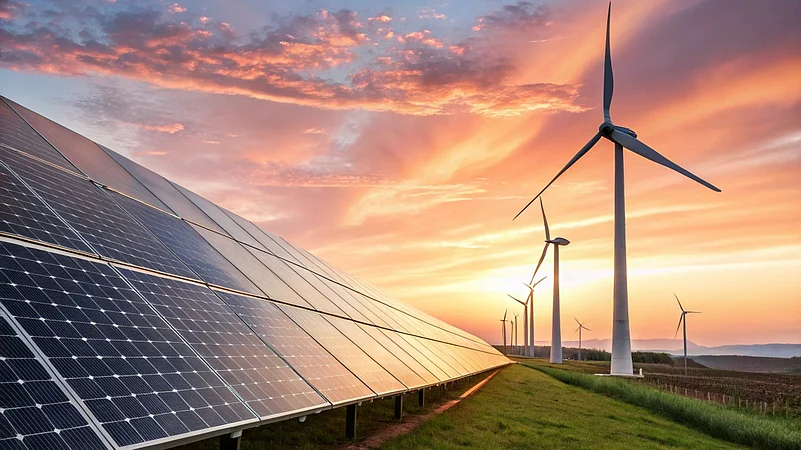

India added 27 GW solar, 3.9 GW wind in April–November period.
Non-fossil fuel capacity now 262.73 GW, 52% of total electricity.
Textile industry steadily increases renewable adoption despite rising energy intensity.
India added a record 27 GW of solar and 3.9 GW of wind power capacity in the April-November period of the current financial year. In contrast, the country added 23.8 GW of solar and 4.1 GW of wind in the full year 2024-25, reported Business Line.
The total non-fossil fuel addition during the first eight months of the current fiscal year is 35.66 GW. This includes 700 MW of nuclear (RAPP-7 in Rajasthan) and 2.6 GW of large hydro (including pumped storage).

1 September 2026
Get the latest issue of Outlook Business

There are 53.9 GW of wind power and 132.8 GW of solar power overall (including 23.16 GW of rooftop and 5.5 GW of off-grid plants). Large hydro capacity of 50.3 GW includes 6.9 GW of pumped storage.

Overall, India currently has total non-fossil fuel-based power capacity of 262.73 GW — 52% of the total electricity generation capacity of 505GW, as at the end of October.
Rajasthan (41.7 GW) and Gujarat (41.6 GW) lead the rest in installed renewable energy capacity, followed by Maharashtra (29.4 GW), Tamil Nadu (26.8 GW) and Karnataka (25.6).
Advertisement
Meanwhile as India’s renewable energy capacity grows at a record pace, adoption at the industrial level is also gaining momentum—particularly in the textile sector.
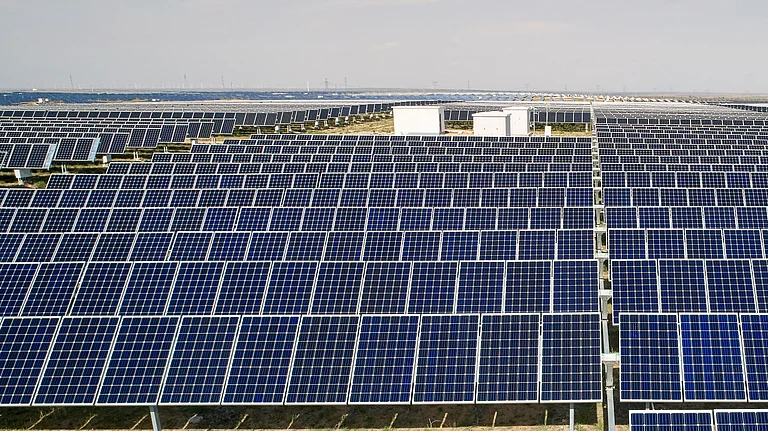
Renewables Power Indian Textiles
Renewable energy adoption has gained momentum in the Indian textile industry, but intensity-related challenges still persist, PTI reported citing an ICRA ESG Ratings Report.
The report shows a steady increase in renewable energy adoption among Indian textile companies, even as energy use per unit of revenue, has also increased, an ICRA statement said.
The findings are based on a review of 19 major textile firms, including Page Industries Ltd, Welspun Living Ltd, Arvind Ltd and KPR Mill Ltd, from FY2023 to FY2025.
Advertisement
The study is part of the broader analysis presented in 'Sustainability Unstitched: Indian textile industry's green gauge'. The report says that the average share of renewable energy in the sector's total energy consumption rose from about 14% in FY2023 to nearly 18% in FY2025.

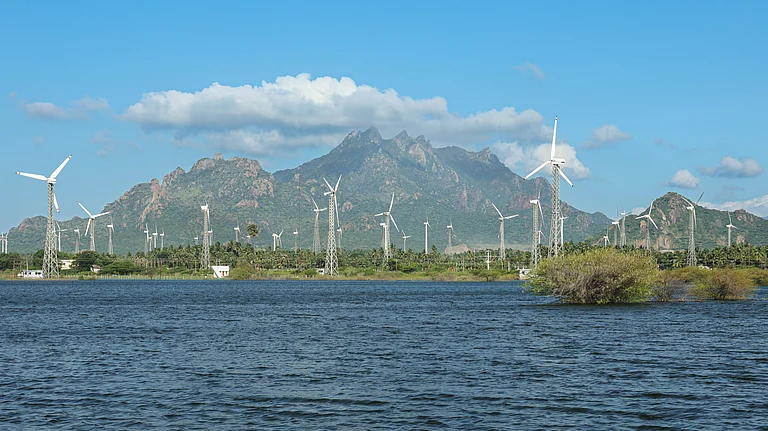


Apparel companies led with an increase from 26% to 28%, aided by the feasibility of rooftop solar for electricity-driven operations like cutting and stitching.
The yarn and fabric segment showed the sharpest relative improvement, climbing from 3% to 8%, driven by leaders scaling up solar and biomass-based solutions, it stated.
The integrated segment advanced from 17% to 21%, supported by bulk green power contracts and captive solar investments by large composite units.
Despite this shift toward cleaner energy, the energy required to generate each crore of rupees in revenue increased by 6–8% compared to FY2023. The report attributed this to operational scaling and energy-intensive process in some segments.
(With inputs from PTI.)