

Himachal’s snow cover shrank sharply, signalling worsening winter precipitation deficits.
IMD data shows severe snowfall shortfalls across western Himalayan states.
Declining snowpack threatens water security, ecosystems, hydropower and downstream livelihoods.
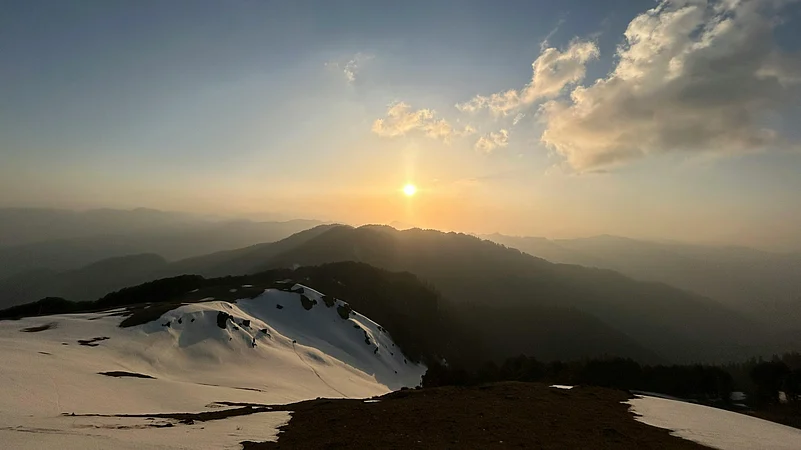
The snow cover is slowly diminishing in Himachal Pradesh. The total snowfall area in the four river basins of Chenab, Beas, Ravi and Satluj reduced to 17,437.4 square kilometers in 2023-24. According to a report by the Himachal Pradesh State Centre on Climate Change (SCCC), it was 12.72% lower than in the winter of 2022-23. Environmentalists called it a ‘snow drought’.
While the Himalayan ecosystems, as well as agriculture, depend primarily on winter precipitation, mostly in the form of snowfall, there have been signals of a crisis.

1 April 2026
Get the latest issue of Outlook Business

Citing India Meteorological Department’s (IMD) data, Mint reported that we are staring at a crisis. In December, Uttarakhand received no winter precipitation, while Himachal Pradesh recorded a 99% deficit, Jammu & Kashmir a 78% deficit and Ladakh a 63% deficit. For the first half of January, the figures were similar: Uttarakhand was -100%, Himachal -90%, Jammu & Kashmir -96% and Ladakh -63%.

According to a 2024 ScienceDirect study, snow cover has significant effects on the regional and global climate. Since it reflects up to 80% of incoming solar radiation, it helps keep the environment cool. The loss of snow cover on the surface increases absorption of solar energy, which exacerbates the warming of the climate. Snow also plays a crucial role in water resources, wildlife, forest fires and recreational activities.
With the snow drought now becoming an annual event, as reported by Mint, falling groundwater recharge is leading to other troubles later in the year, such as avalanches in Himalaya, forest fires, melting glaciers and drying up of freshwater streams. On top of it, climate change is making the Himalaya more unstable with every passing year, having grave implications not just for the 50mn people who live in the Indian Himalaya but also for the downstream.
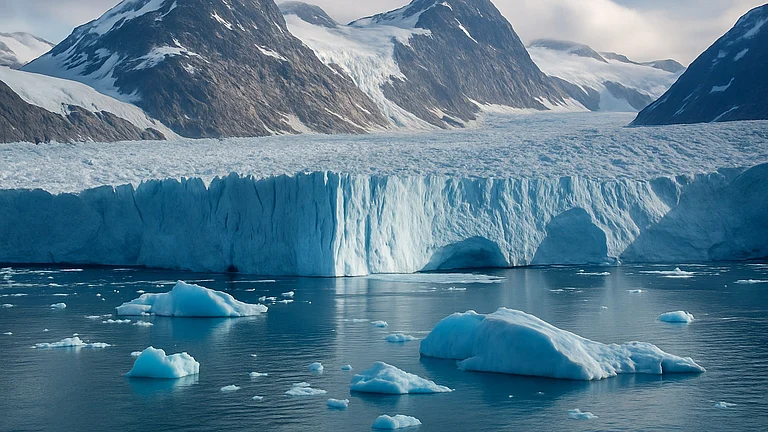
Risks Associate With Snowmelts
UNESCO and the World Meteorological Organisation warn that declining mountain snowpack threatens long-term water security for downstream populations. The IPCC’s Sixth Assessment Report also highlights accelerated Himalayan cryosphere loss, noting reduced snow storage can disrupt seasonal river flows, affecting irrigation, hydropower generation and drinking water suppliers across Asia.
Declining Himalayan snow persistence raises the risk of water scarcity for communities and downstream river basins throughout Asia, according to a 2025 study by the International Centre for Integrated Mountain Development.
According to Phys.org website, snowmelt is a source of about a quarter of the total water flow of 12 major river basins that originate in the region.