

India may raise ₹7,543cr VGF outlay for offshore wind.
Higher support is needed to cut tariffs from ₹10 to ₹5/unit.
One GW offshore project is expected to generate 3.72bn units yearly.
VGF aims to accelerate offshore wind development and investment.
India is considering increasing the ₹7,543-crore outlay under the Viability Gap Funding (VGF) scheme for offshore wind projects, officials from the Ministry of New and Renewable Energy told Moneycontrol.
In this in the line with accelerating the expansion of India’s wind energy capacity and supporting the national target of 500 GW of non-fossil fuel capacity by 2030.

1 October 2026
Get the latest issue of Outlook Business

Officials said that the VGF allocated earlier is insufficient. For this exercise, the government has engaged the World Bank and KPMG to assess the financing needs of offshore wind projects and recommend an increased outlay aimed at attracting more investor participation, the report said.
Since offshore wind involves significantly higher costs, the VGF will also need to be higher, the report added, citing the source.
The official noted that the major constraint in developing offshore wind projects is the comparatively lower cost of other energy sources. They also added that offshore wind tariffs in Europe are around ₹10 per unit. To bring ₹10 down to about ₹5, India would need to provide VGF support of roughly ₹5.
VGF Scheme for Offshore Wind Energy Projects
The Union Cabinet approved the VGF scheme for offshore wind energy projects at a total outlay of ₹7453 crore on June 19, 2024.
Advertisement
The amount includes an outlay of ₹6853 crore for the installation and commissioning of one GW of offshore wind energy projects (500 MW each off the coast of Gujarat and Tamil Nadu), and a grant of ₹600 crore for the upgradation of two ports to meet logistics requirements for offshore wind energy projects.
The successful commissioning of one GW offshore wind project will generate renewable electricity of nearly 3.72bn units annually, expected to reduce 2.98mn tons of CO2-equivalent emissions over 25 years.
The VGF scheme is basically a step towards the implementation of the National Offshore Wind Energy Policy notified in 2015 with an aim to exploit the vast offshore wind energy potential that exists within the exclusive economic zone of India.




Advertisement
Offshore wind is a source of renewable energy which offers several advantages over onshore wind and solar projects, such as higher adequacy & reliability, lower storage requirement and higher employment potential. Development of offshore wind sector is expected to bring economy-wide benefits by attracting investments, development of indigenous manufacturing capabilities, creation of employment opportunities across the value chain and technology development for offshore wind in the country.
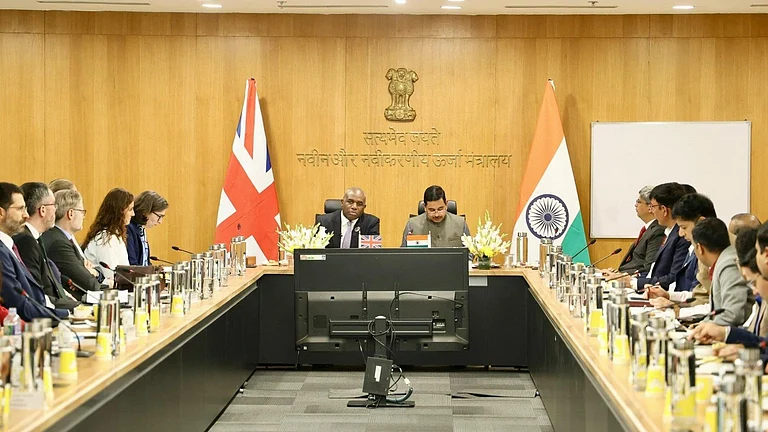
Recently, India and the United Kingdom launched the India-UK Offshore Wind Taskforce for the development of offshore wind energy in India. It seeks to accelerate strategic clean energy cooperation.