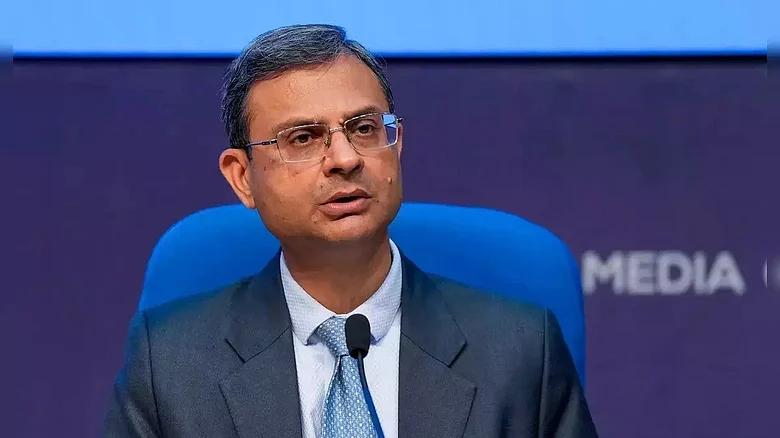

RBI Governor Sanjay Malhotra said the central bank is monitoring developments and sees no broader banking system impact.
Banks’ capital adequacy stands at 17%, well above the 11.5% regulatory requirement, the RBI said.
IDFC First Bank disclosed a ₹590 crore fraud at a Chandigarh branch, suspended four employees, and appointed KPMG for a forensic audit.
Reacting to the fraud at Mint Street involving IDFC First Bank, Reserve Bank of India (RBI) Governor Sanjay Malhotra said, “We are watching the developments. There is no systemic issue here.”
“Banks have enough capital. Capital adequacy currently stands at 17%, while the regulatory requirement is 11.5%,” Malhotra stated, seeking to reassure markets amid concerns that the episode could trigger broader stability worries in the banking system.

1 October 2026
Get the latest issue of Outlook Business

Shares of IDFC First Bank plunged after the lender, on Sunday, disclosed a ₹590 crore fraud allegedly committed by its employees in accounts held by the Haryana government with the bank.




The private lender said it has informed the banking regulator and filed a police complaint, adding that internal investigations were underway.
Managing Director and Chief Executive Officer V. Vaidyanathan described the incident as isolated and confined to a single branch in Chandigarh.
“The transactions were executed using forged cheques and were manually carried out at the branch,” Vaidyanathan said, indicating that standard digital safeguards may have been bypassed.
Advertisement
The bank added that it expects recoveries, including from linked accounts at other banks. Vaidyanathan noted that the final financial impact would depend on the extent of recoveries or any additional claims, and that ₹590 crore is currently the best estimate of the exposure.
According to brokerage firm reports, the amount under reconciliation is roughly 0.9% of the bank’s net worth and about 20% of its FY26 pre-tax profit, suggesting the financial hit, while material, may remain manageable relative to its overall balance sheet.
The lender has suspended four employees in connection with the fraud and appointed KPMG as an external auditor to conduct an independent forensic audit to determine the root cause and identify control lapses, if any.
Advertisement
Quoting Vaidyanathan, The Economic Times reported that the bank has necessary internal controls in place, including a maker-checker-authoriser framework for clearing cheques or debit instructions.
“But in this case, it appears that connivance between employees and third parties led to the clearing of instruments which, in hindsight, appear to have been forged. Prima facie, third-party entities are involved in this compromise,” the report said.