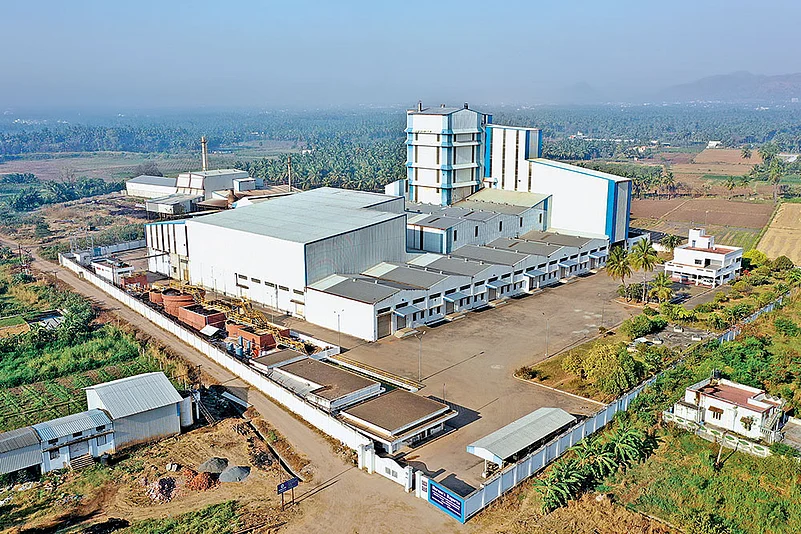
A century ago, in 1926, an under-construction bridge in a remote village in Tamil Nadu brought British engineers and workers to the region.
Every day, local entrepreneur V Lakshmi Narasimhan, fondly known as Narasu, provided them freshly roasted coffee.
The simple effort of serving the hot beverage to the guests soon brewed into a larger business idea. Nair started a small roasting factory in Salem. The plan was to provide coffee-consuming people around him with the right kind of roasted and ground coffee. The idea clicked and Sri Narasu’s Coffee Company was born in 1926. It would, for the next 100 years, satiate people’s craving for authentic coffee.

1 October 2026
Get the latest issue of Outlook Business

The venture had a dreamy beginning—its head office was constructed in 1939 and inaugurated by none other than VV Giri, who served as the labour minister during the British era and later became the President of India. The coffee company witnessed a smooth and steady journey for the next 40 years. Then came a roadblock.

Passing the Baton
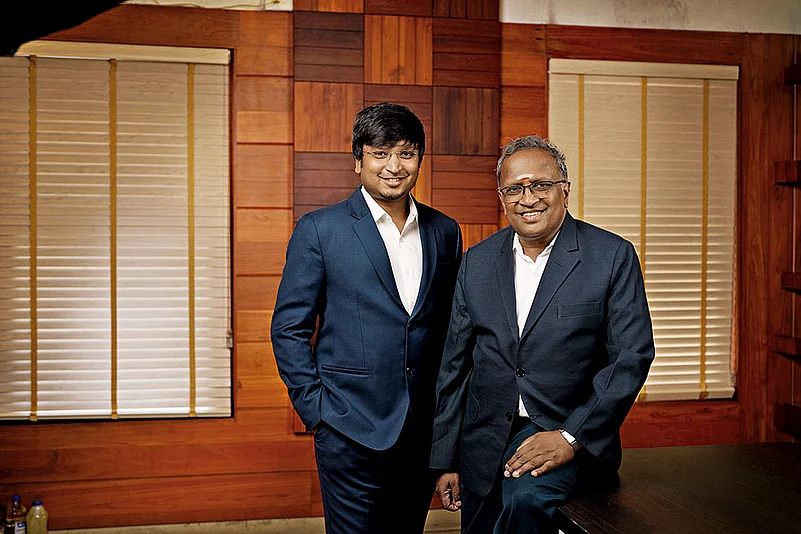
Following the untimely demise of its founder, the business faced severe financial difficulties and was eventually put up for a court auction in 1966. The company was subsequently acquired by a partnership firm owned by RP Sarathy, the father of the current chairman, P Sivanantham, and family members. Despite the change in ownership and the economic challenges faced by the company during the turbulent time, the operations continued uninterrupted, without a single day’s closure, cementing the brand’s intention to be a long-term player in the coffee space.
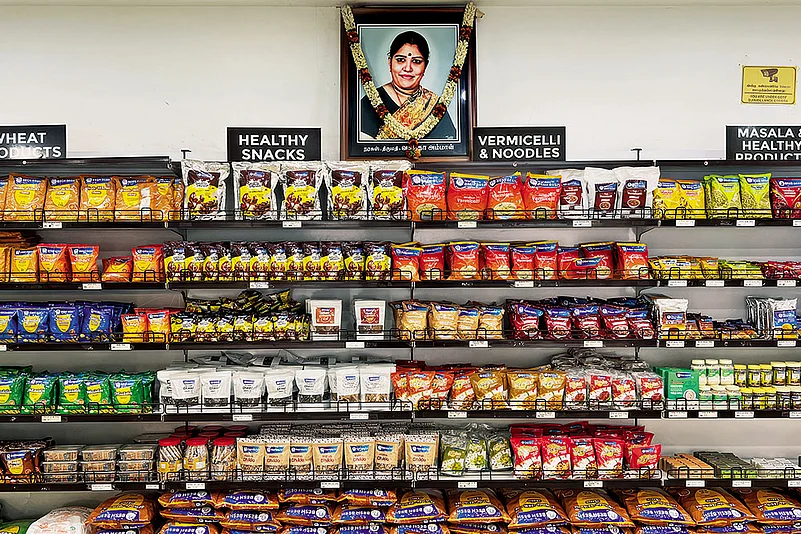
Today, the company operates around 85 retail stores, where coffee beans are freshly ground and packed for customers, ensuring the freshness and quality that have long distinguished the brand.
As the coffee company turns 100 this year, it stands out as a remarkable example of continuity across generations. While Sarathy laid the foundation for the company’s revival and growth after the acquisition, he passed on the baton to Sivanantham, who played a pivotal role in expanding and strengthening the brand over the years. His son S Srudheep joined the business in 2011 and became actively involved in steering Narasu into the next phase of growth.
Around 80% of Narasu’s business comes from Tamil Nadu, the rest is from other states and international markets
Today, when international coffee brands as well as small, home-grown artisanal coffee-selling companies are spending big on advertising and marketing to create a loyal customer base, Narasu’s Coffee boasts of an absolute first. It was the first fast-moving consumer goods company in South India to introduce a theatrical advertisement, that too way back in the 1980s, during the advertising boom. The jingle was so catchy that it is remembered even today.
Narasu’s Coffee has also been focussing on innovation to stand out. While it launched the filter coffee in the 1920s, recently, it launched a ready-to-use coffee decoction to cater to its younger customers.
Innovation is key considering the coffee consumption market has been evolving consistently, including in Tamil Nadu, one of the country’s strongest coffee-drinking markets.
Bridging Generations
The café culture of the ’90s changed the way people consumed coffee. It has stopped being just a beverage and has become a part of larger experiences like professional meetings or romantic dates. From time to time, coffee has also been at the centre of social-media trends. Dalgona coffee first exploded globally in 2020 as a ‘quarantine’ sensation, where people whipped equal parts instant coffee, sugar and hot water over iced milk. It’s a trend even today. The taste evolved, too. The matcha boom is giving tough competition to the humble coffee.
“Younger consumers, particularly millennials and Gen Z, are increasingly exploring new coffee experiences—from black coffee and speciality brews to premium café-style beverages,” says Srudheep, who is the managing director. “Growing awareness of health and wellness has further contributed to the popularity of coffee among these demographics.”
While consumer preferences continue to evolve, Narasu's Coffee believes that certain fundamentals remain timeless. Whether customers prefer a traditional cup of filter coffee, the convenience of instant coffee or the experience of a speciality brew, quality continues to remain the defining factor.
By combining its heritage with a commitment to freshness and innovation, the company continues to bridge generations of coffee drinkers while staying relevant in an increasingly changing market.
Having operated in the coffee industry for generations, Narasu’s has also developed deep expertise in sourcing and selecting high-quality coffee beans. “The company has built an integrated value chain that spans procurement, curing, manufacturing, logistics and retail distribution. This enables us to maintain greater control over quality at every stage of the process,” says Srudheep.
One of the company’s key differentiators is its ability to deliver freshness. Through the close coordination of its manufacturing facilities, transportation network and retail outlets, freshly roasted coffee reaches customers within 24 hours of production. This helps preserve the aroma, flavour and consistency that consumers associate with the brand.
Coffee and Covid
The way businesses react to interruptions is their ultimate test of resilience and the pandemic was one such test for Narasu. When supply chains were disrupted and physical retail channels faced restrictions, it relied on its deeply entrenched distribution network and accelerated digital transformation efforts.
With manufacturing facilities located in and around Salem, supported by its own transportation network, the company was able to maintain uninterrupted operations and continue servicing demand throughout the lockdown period.
“Despite the unprecedented challenges during the pandemic, coffee remained an integral part of consumers’ daily routines, and as a result, the company did not experience any significant decline in sales,” says Srudheep.
Narasu was the first FMCG in South India to introduce a theatrical advertisement, that too way back in the 1980s
The pandemic also triggered a broader shift in consumer behaviour, with greater emphasis being placed on health and wellness. Coffee increasingly came to be viewed as part of a healthier lifestyle. “These changes reinforced our confidence in the long-term prospects, while highlighting the value of adaptability, strong distribution capabilities and close engagement with changing consumer preferences,” Srudheep adds.
Striking a balance between tradition and innovation has been central to Narasu’s journey, helping it sustain its legacy while adapting to the changing preferences of consumers over nearly a century.
Currently, around 80% of Narasu’s business comes from Tamil Nadu, with the remaining 20% split equally between other Indian states and international markets.
The company is also setting its sights on larger metropolitan markets, including Delhi, Mumbai and other parts of Maharashtra. While northern India has traditionally been dominated by tea consumption, changing lifestyles, rapid urbanisation and the growing influence of café culture are driving greater interest in coffee, particularly among younger consumers.
“To fuel this metropolitan and global push, we have consistently spent an average of ₹8-10cr annually in capital expenditure [capex] over the past three years purely on facility upgrades. We have never pursued growth for the sake of it. Our focus has always been on building the business sustainably and taking a long-term view,” says Srudheep.
The Right Balance
To achieve its target of expanding its footprint across new markets, Narasu has set an ambitious target of achieving an additional ₹1,000cr in revenue over the next five years. Although instant coffee and ready-to-drink formats currently account for much of the growth in emerging coffee markets, it is seeing increasing consumer interest in premium, authentic coffee experiences.
When asked to mention the biggest challenge in any family-run business, Srudheep says: “Navigating generational transition.” While the senior generation brings decades of experience, industry knowledge and hard-earned lessons, the younger generation often seeks to introduce new ideas and adapt more quickly to changing market conditions, he elaborates.
“The key is finding the right balance between the two. It is important to understand the strengths, limitations and expectations of both generations,” he adds.