COVER STORY
From being a craze, ESG is now the subject of eye-rolling cynicism in many quarters


From being a craze, ESG is now the subject of eye-rolling cynicism in many quarters


From being a craze, ESG is now the subject of eye-rolling cynicism in many quarters

There is a new Frankenstein monster in India in the form of the ESG regime. The government is pushing ill-equipped businesses to adopt an expensive philosophy of corporate governance and climate reporting that makes India an unequal partner in global trade. For the time being, corporate India is gasping for ways to stay relevant

Aswath Damodaran is a fierce critic of the environmental, social and governance (ESG) concept. The corporate finance and valuation guru at the Stern School of Business at New York University believes that he “can stir the pot” on this issue. In an email interview with Rajiv Tikoo, Damodaran questions the basis of the ESG concept and its “hindsight revisionism” in the context of the Adani episode and the Ukraine war
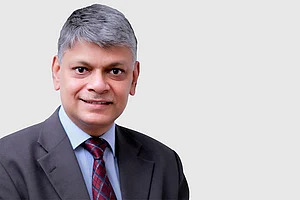
Concepts of sustainable finance or responsible investment are here to stay, and, increasingly, businesses need to demonstrate their ESG quotient to attract money. Capital markets, globally, are networked like never before, and alternatives will be difficult if red flags are raised about a business by any investor

The Indian green bond market accounts for 3.8% of the overall outstanding corporate bonds market. The slow uptake is seen due to heavy concentration of capital for solar and on account of most issuances being rupee denominated, as against the majority preference for issuances in dollars, as per a Fitch survey

There are various challenges that companies report while maintaining this transparency, such as the complexity of supply chains, limited access to low-carbon energy sources and a lack of expertise in decarbonisation strategies. However, there are also a number of levers that companies can use to amplify action

Data gaps are throwing a spanner in the works for a world which is falling distressingly short of commitments to slow down, if not reverse, rapidly deteriorating global climate conditions and India is not an outlier

India is a leading market for smartphones and has an untapped segment. However, the decline in volume of annual shipments, especially for entry-level smartphones, belies the 5G-induced optimism
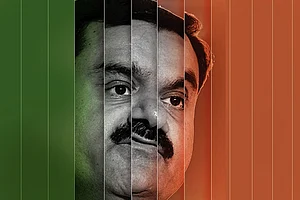
Every Adani group company is under stress after the Hindenburg Research targeted it, but the story of Gautam Adani’s green businesses is particularly tragic for a man who is a friend and businessman rolled into one

Hidden behind the story of the post-Covid rebound in the Indian economy is the deceleration at the bottom of the pyramid, reflected in stagnating consumer demand among the lower rungs that have been crippled by job losses, low wages, inflation and apathy among others

By bringing the much-coveted Oscar home, Naatu Naatu broke the decades-old jinx that has followed Indian films at the Academy Awards. Alongside, it has catapulted the country into the league of the Asian cinema that is challenging American and European dominance in the global market
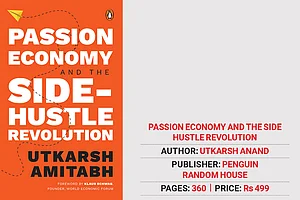
The passion economy is transforming our relationship with work, says author Utkarsh Anand, as he explores the ways in which the professional world is reshaping itself. He discusses the unbundling of work from employment and emergence of passion economy as the new normal, while drawing from experiences and well-researched case studies—his own and those of others—to make a case for redesigning one’s career and building something meaningful

Bala Sarda, Founder and Chief Executive Officer, Vahdam India
From being a craze, ESG is now the subject of eye-rolling cynicism in many quarters
There is a new Frankenstein monster in India in the form of the ESG regime. The government is pushing ill-equipped businesses to adopt an expensive philosophy of corporate governance and climate reporting that makes India an unequal partner in global trade. For the time being, corporate India is gasping for ways to stay relevant
Aswath Damodaran is a fierce critic of the environmental, social and governance (ESG) concept. The corporate finance and valuation guru at the Stern School of Business at New York University believes that he “can stir the pot” on this issue. In an email interview with Rajiv Tikoo, Damodaran questions the basis of the ESG concept and its “hindsight revisionism” in the context of the Adani episode and the Ukraine war
Concepts of sustainable finance or responsible investment are here to stay, and, increasingly, businesses need to demonstrate their ESG quotient to attract money. Capital markets, globally, are networked like never before, and alternatives will be difficult if red flags are raised about a business by any investor
The Indian green bond market accounts for 3.8% of the overall outstanding corporate bonds market. The slow uptake is seen due to heavy concentration of capital for solar and on account of most issuances being rupee denominated, as against the majority preference for issuances in dollars, as per a Fitch survey
There are various challenges that companies report while maintaining this transparency, such as the complexity of supply chains, limited access to low-carbon energy sources and a lack of expertise in decarbonisation strategies. However, there are also a number of levers that companies can use to amplify action
Data gaps are throwing a spanner in the works for a world which is falling distressingly short of commitments to slow down, if not reverse, rapidly deteriorating global climate conditions and India is not an outlier
India is a leading market for smartphones and has an untapped segment. However, the decline in volume of annual shipments, especially for entry-level smartphones, belies the 5G-induced optimism
Every Adani group company is under stress after the Hindenburg Research targeted it, but the story of Gautam Adani’s green businesses is particularly tragic for a man who is a friend and businessman rolled into one
Hidden behind the story of the post-Covid rebound in the Indian economy is the deceleration at the bottom of the pyramid, reflected in stagnating consumer demand among the lower rungs that have been crippled by job losses, low wages, inflation and apathy among others
By bringing the much-coveted Oscar home, Naatu Naatu broke the decades-old jinx that has followed Indian films at the Academy Awards. Alongside, it has catapulted the country into the league of the Asian cinema that is challenging American and European dominance in the global market
The passion economy is transforming our relationship with work, says author Utkarsh Anand, as he explores the ways in which the professional world is reshaping itself. He discusses the unbundling of work from employment and emergence of passion economy as the new normal, while drawing from experiences and well-researched case studies—his own and those of others—to make a case for redesigning one’s career and building something meaningful
Bala Sarda, Founder and Chief Executive Officer, Vahdam India