Why Sustainable Design Fails Without Data
The Delhi-based sustainability advisory firm integrates environmental and energy analysis into the architecture and design process.

Director Gurneet Singh
For architects and designers working at the forefront of the industry, sustainability is non-negotiable. But without concrete, evidence-based action, design solutions can often be inaccurate, ineffective, or sometimes even add to the problem they are trying to solve.
Environmental Design Solutions Global is a sustainability advisory firm focused on the built environment. Since its inception in 2002, EDS has consulted with some of the world's leading architects, planners, and governments on over 500 green and energy-efficient projects at every scale — from policymaking and masterplanning to building components and products.
Additionally, EDS has helped develop the Energy Conservation Building Code (ECBC) in India and supports several international building energy code development, training, impact assessment, and Implementation.
Organic India Factory, Lucknow
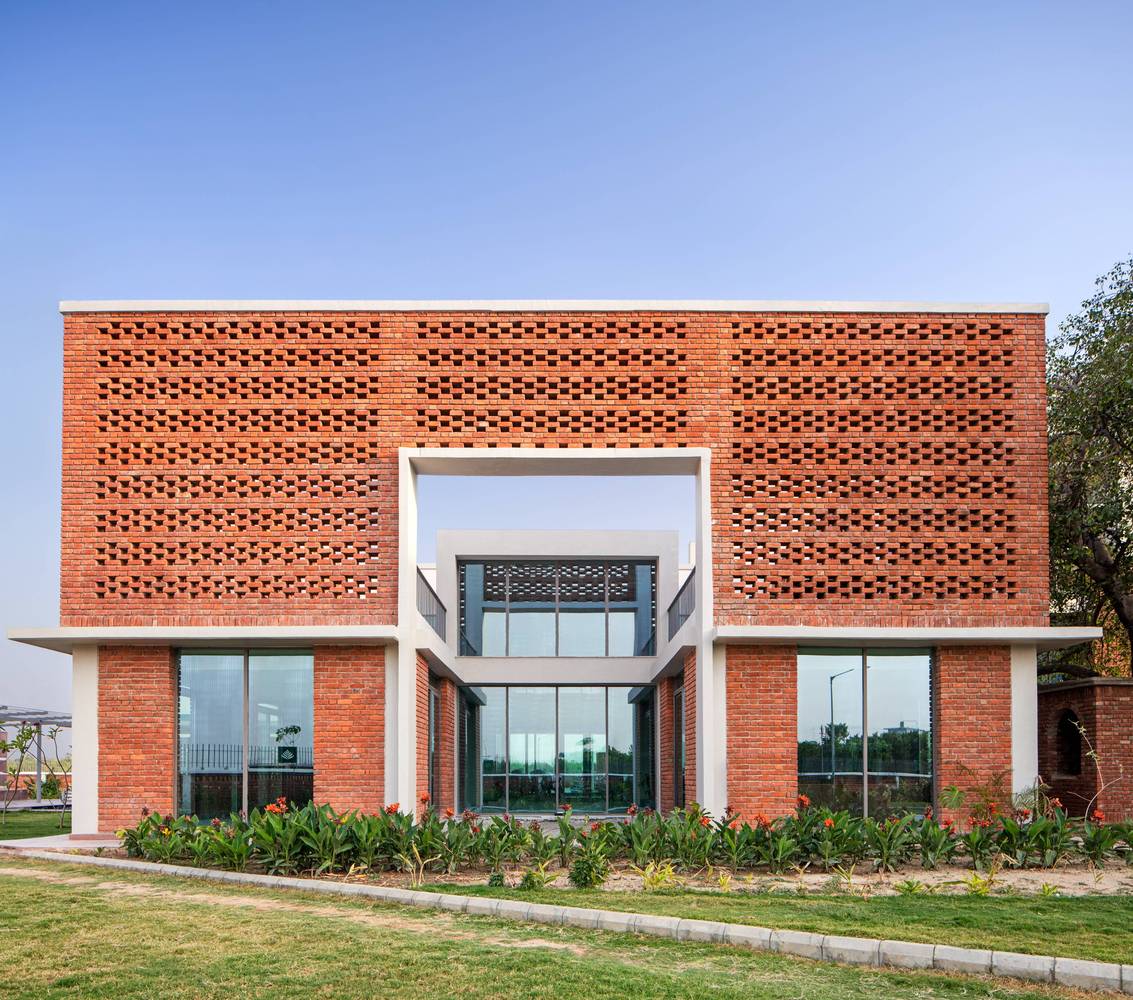
Image courtesy: Andre J Fanthome
This LEED Platinum project was led by Organic India’s core vision to provide a healthy environment for its factory workers while creating the least environmental impact. The EDS team, involved in the project from its inception, worked with several parameters to achieve visual and thermal comfort, such as varying the orientation of each building, optimum window-to-wall ratios, and appropriate shading strategies.
One of the most interesting findings during the energy analysis for this factory was the placement of solar panels on the roof. What one would intuitively assume to be the best location turned out to be in the shadow due to mutual shading by surrounding buildings, thereby reducing the amount of sunlight received throughout the day. 125 kW of solar panels on the roof generate around 184,204 kWh/year of renewable energy, offsetting around 13% of the project’s annual total energy costs.
IIT Jodhpur
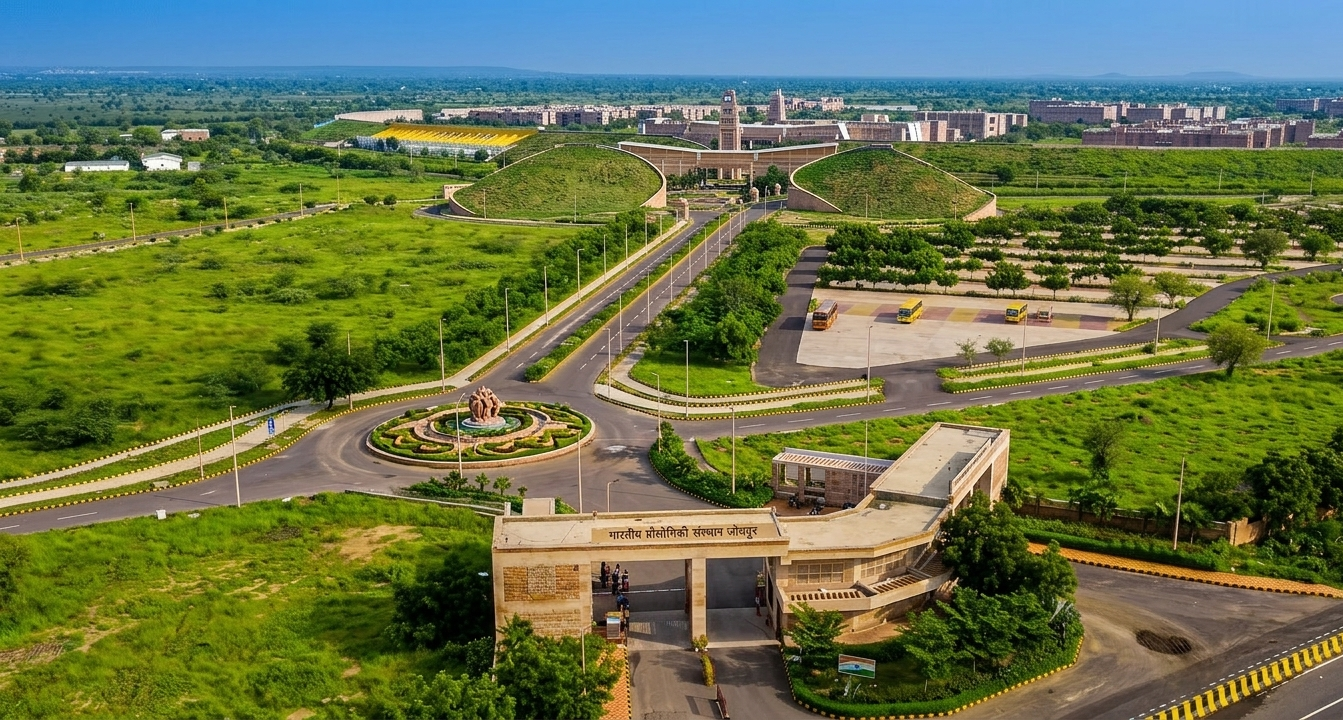
Image courtesy: IIT Jodhpur
The 850-acre campus of IIT Jodhpur is a GRIHA 5-star-rated project, drawing inspiration for thermal comfort strategies from traditional desert settlements. Compact clusters of buildings are contained within earth berms, mitigating noise, dust, and heat. As a sustainability consultant, EDS worked along with the project stakeholders from the concept stage to provide detailed energy-efficient, passive design strategies. EDS influenced the master plan design to improve the micro-climate and rainwater conservation. At the building level, EDS detailed out envelope specifications for improving thermal comfort while reducing cooling requirements.