Can Architecture Carry Culture Forward?
The Bengaluru-based architectural firm A Threshold sheds light on how architecture can sustain culture by drawing from memory, context, and collective knowledge in an increasingly homogeneous world.
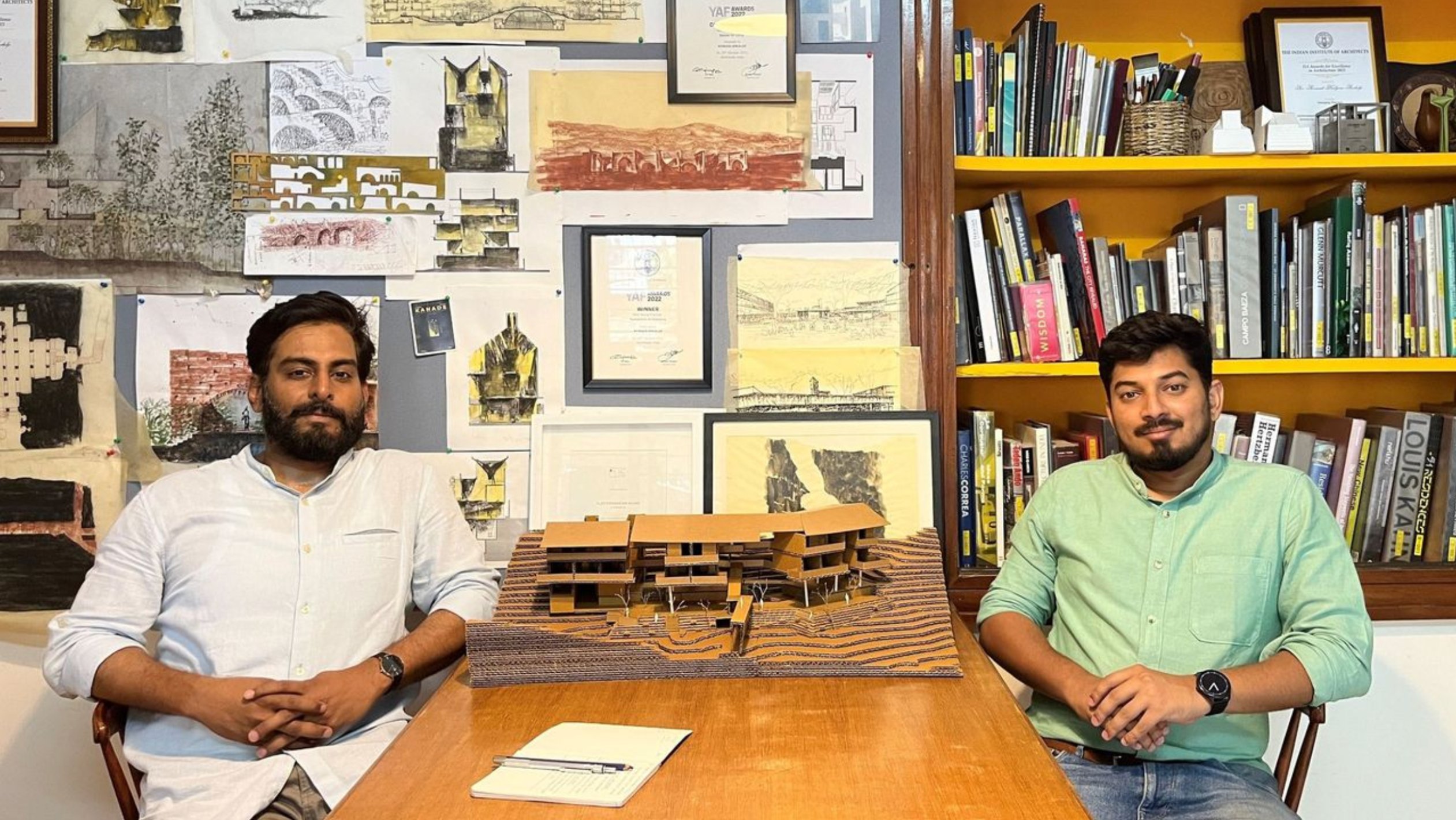
Founders Avinash Ankalge and Harshith Nayak
The discourse on sustainability often fixates on numerical indicators such as efficiency, effectiveness, and longevity. Yet, there's a vital human aspect often overlooked. It makes us reconsider our connection to the world and our role within it. In an era of globalisation, our urban landscapes are becoming homogenised, eroding our sense of belonging, as well as individual and communal identities.
Avinash Ankalge and Harshith Nayak, Founders of A Threshold, actively address this concern through their designs. The Bangalore-based firm, established in 2020, is grounded in the discovery and research for contextually appropriate architecture based on the site, climate, and culture of the place as well as community aspirations.
SUBTERRANEAN RUINS, KAGGALIPURA
This weekend home is also a multifunctional community centre designed for the village of Kaggalipura, Karnataka. From art and yoga workshops for children to pottery lessons and art exhibitions, the centre’s programming is engaging, inclusive and accessible to villagers and art enthusiasts.
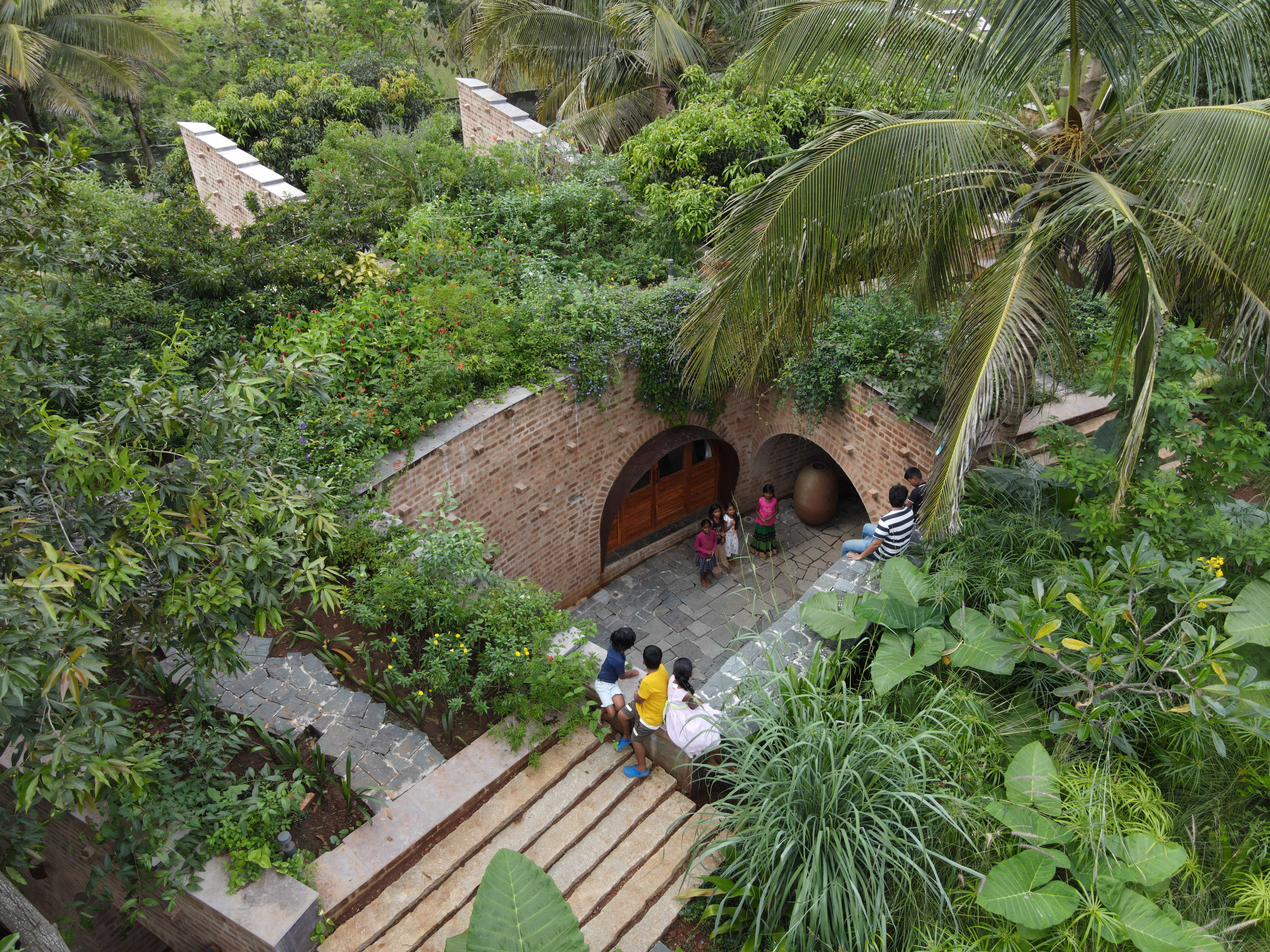
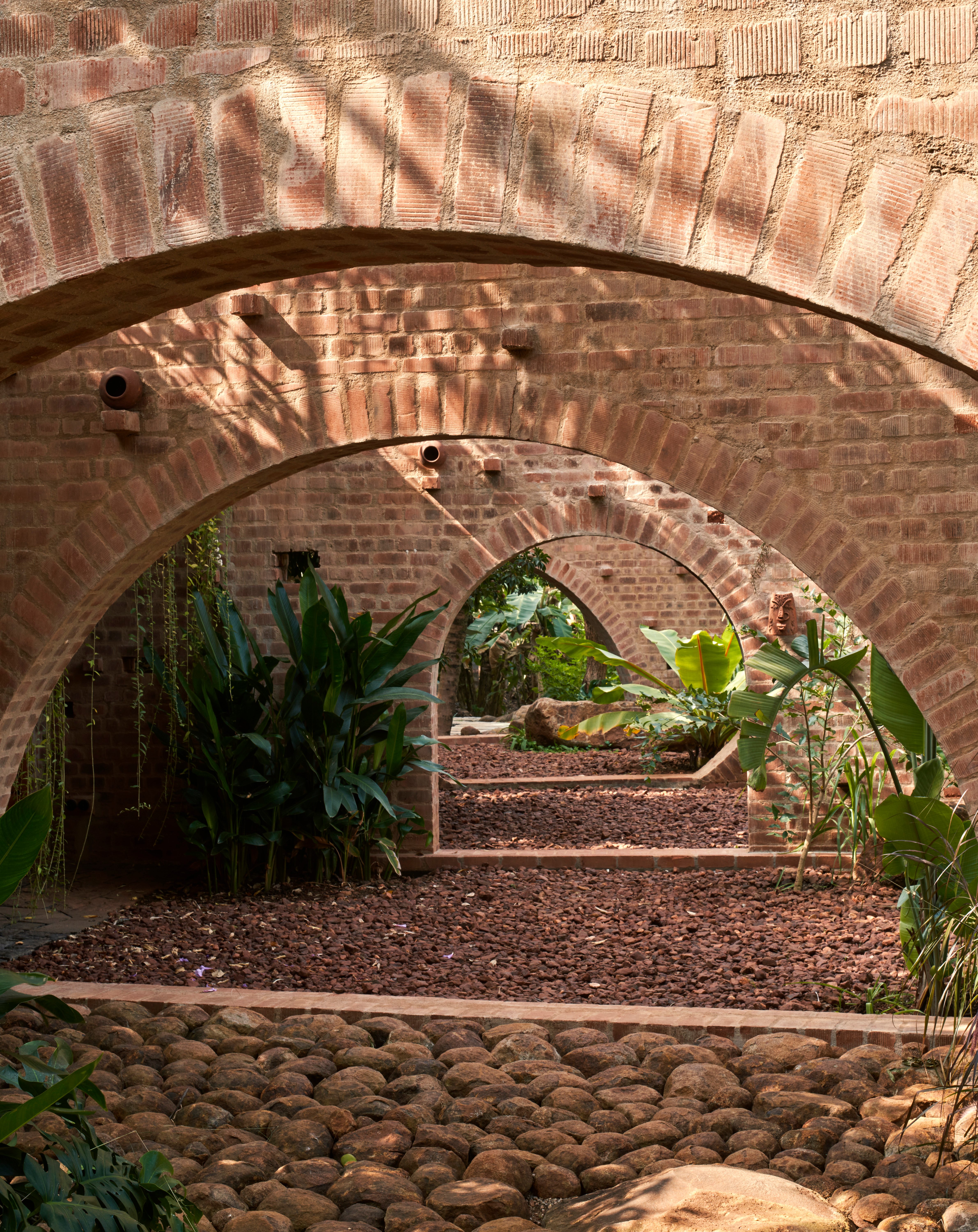
Image Courtesy of A Threshold
True to its name, the design mimics ancient ruins and multifunctional caves tucked within the earth with its existing terrain, eventually becoming part of its surroundings over the years. The structure is dug into a sloping site and characterised by free-standing brick walls, arches and open-air seating. A series of brick walls punctured by arched openings divide the centre into smaller, multifunctional courtyards.
The material palette incorporates locally sourced materials such as kiln bricks from within a radius of 40 kilometres, cobblestones, and natural stone flooring. Larger boulders that were excavated from the site were used for the retaining wall, while the cobblestones were used as flooring in the courtyards. Mortar joints are filled using site soil and concrete to maintain the exposed appearance of the brick without plaster. Traditional artisans, masons and sculptors were involved in the design and construction process, reducing the overall cost, transportation and carbon footprint, and ensuring the project was built with the local know-how.
INEFFABLE LIGHT, BENGALURU
Situated on a compact urban plot in Bengaluru, Karnataka, this four-storey residence is designed to blur the boundaries between interior and exterior, fostering harmony amongst its users, nature, and the built environment.
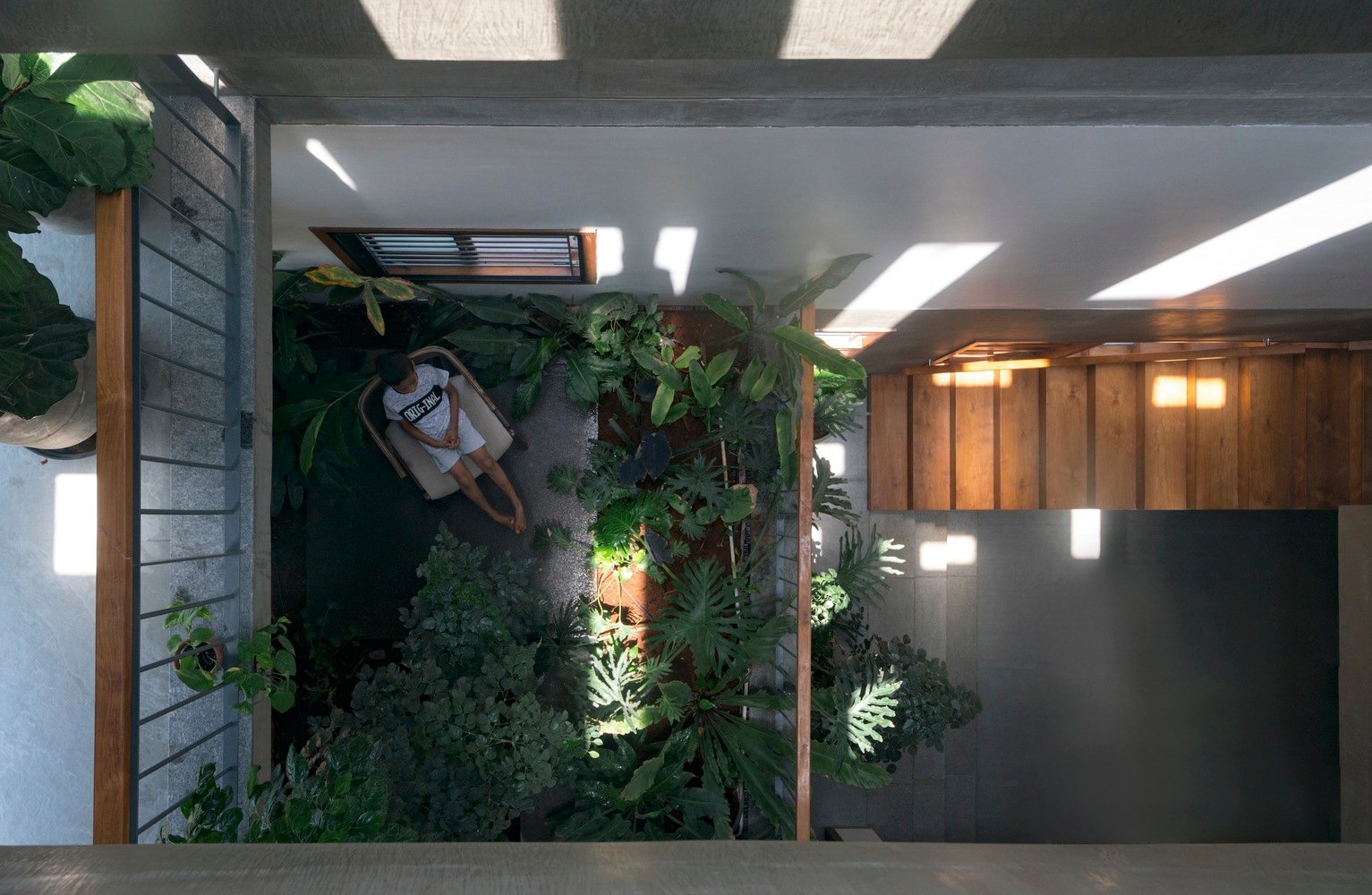
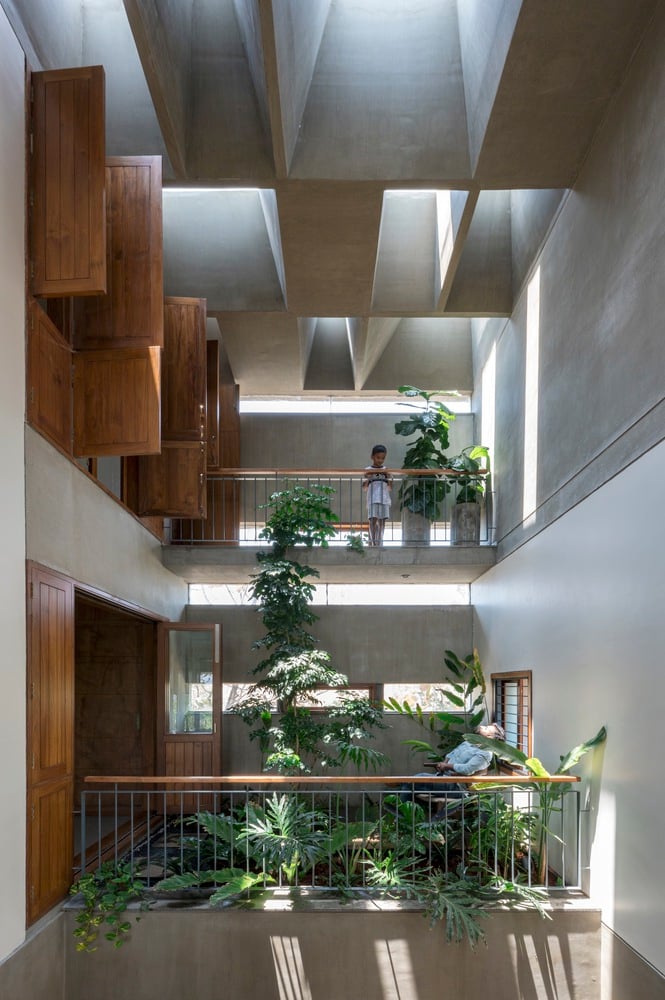
Image Courtesy of A Threshold
Ineffable Light draws from the divine quality of light in South Indian Hindu shrines and temples, with the intensity of light being mediated by the different openings in an almost philosophical way. A skylight is strategically placed at the centre of the house, referencing a garbha griha (sanctum sanctorum) in a temple to bring daylight into the interiors. Natural elements, such as a gulmohar tree at the centre of the site, establish an axis that serves as a visual and spatial anchor, bringing together the family members and establishing a connection with nature.