Fighting Heat on a Budget
The grassroots development organisation, headquartered in Ahmedabad, provides women in the urban informal sector with cost-effective solutions against the rising heat

Bhavna Maheriya, Programme Manager & Khushbu Rathod, Field Associate
Despite being a massive energy guzzler and a significant contributor to global carbon emissions, cooling remains a privilege in many parts of the world, especially in the Global South. A shocking 1.2 billion people still do not have access to cooling solutions, a number that will only go up as our world warms up even further. So, how do we find a sustainable solution to this problem?
Mahila Housing Trust (MHT) was set up in the mid-90s to drive grassroots change at scale in Ahmedabad. It aims to improve urban built environments through collective action, mobilising women to exercise their civic rights and empowering them to take charge of improving their habitat. Today, MHT works in cities and rural areas across 9 states in India to advance access to basic services and promote climate resilience and participatory governance.
MHT’s work has been recognised nationally and internationally and has received numerous awards, such as the Ashden Award for Cooling in Informal Settlements, the United Nations Global Climate Action Award for Women’s Action Towards Climate Resilience for Urban Poor in South Asia, and the United Nations Sasakawa Award for Disaster Risk Reduction, among many others.
Heat Resistant Technologies
Extreme heat events are aggravated by urbanisation and the concomitant urban heat island effect. The urban poor living in heated concrete boxes with no ventilation and little access to shade, fans and other cooling technologies, are the least contributors to increasing heat, but the most affected population group. Solutions proposed by Mahila Housing Trust (MHT) adapt active and passive cooling techniques, including eco-friendly construction materials and energy-efficient technologies. Under its Sustainable Housing programme, MHT has conducted pilot projects at the household, institutional, and public housing levels. Some of these technologies are:
ModRoof
This modular roofing system is manufactured from packaging and agricultural waste. The glossy white finish and rock wool insulation between the panels promote high thermal performance, reducing inside temperatures by 5-6 degrees.
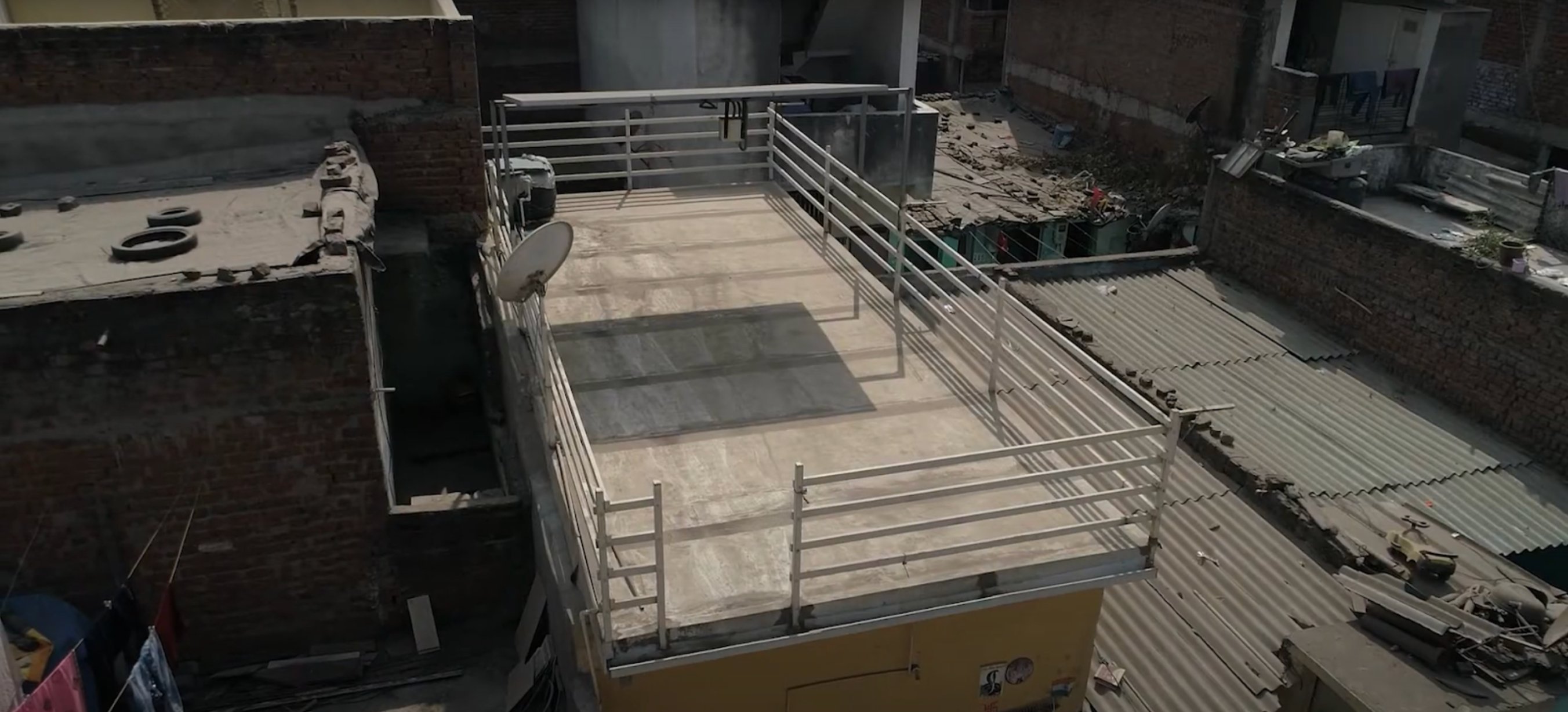
Image Courtesy of Mahila Housing Trust
Solar-Reflective White Paint
This pro-poor, climate-resilient walling and roofing solution is designed to reduce the solar radiation absorbed by the building, resulting in cooler temperatures by 3-4 degrees.
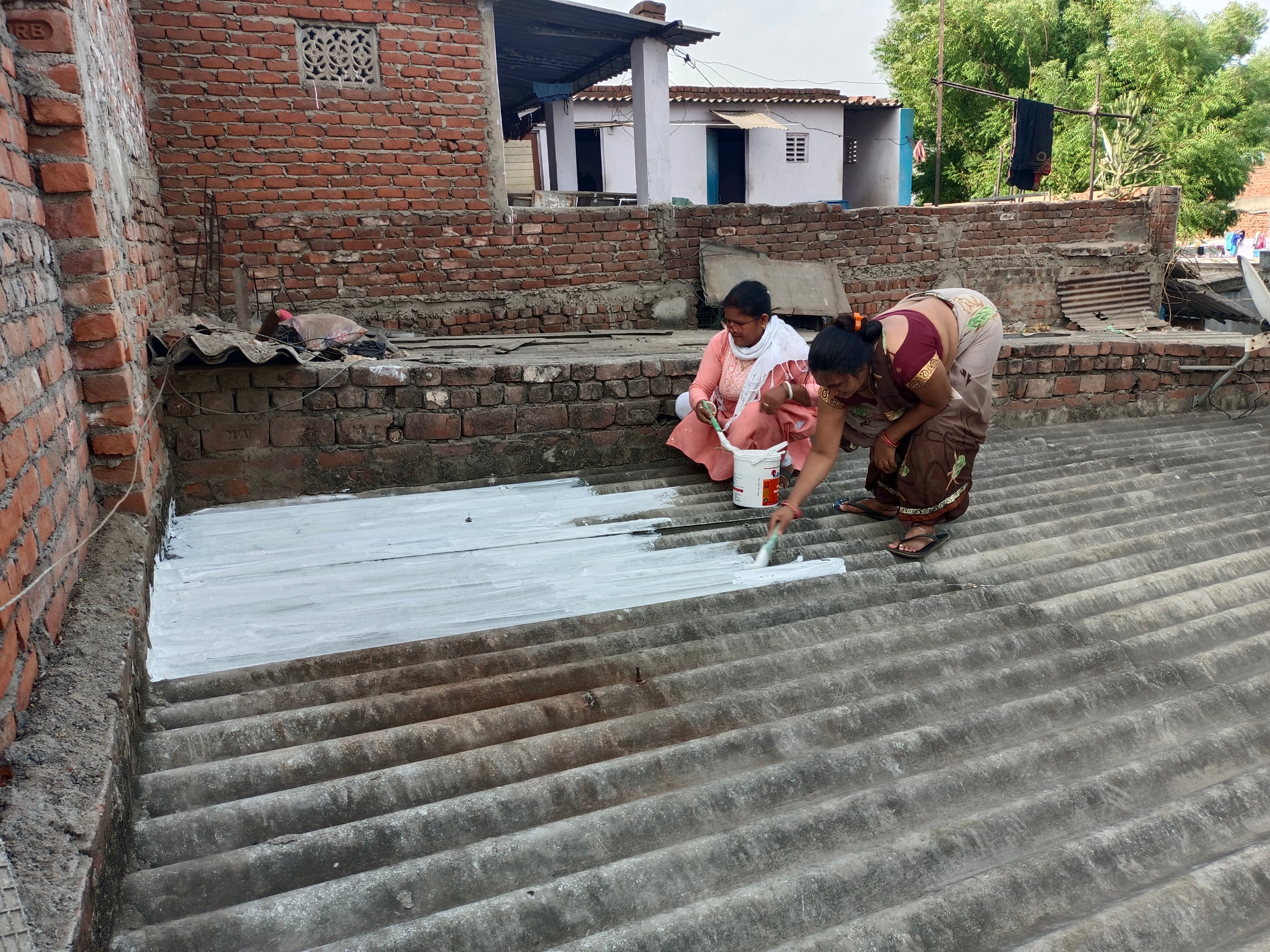
Image Courtesy of: Mahila Housing Trust
Airlite Ventilation
This is a white, translucent corrugated fibre sheet that can replace existing asbestos or GI roof sheets. A 5” x 3” Airlite with ventilation and mosquito net costs around INR 2900, making it economically viable for smaller homes and very densely populated locations with limited window space.
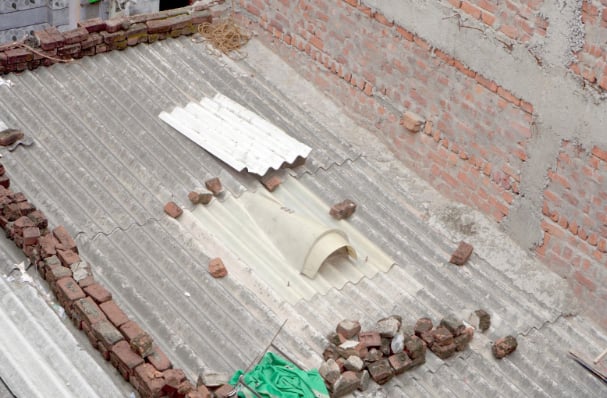
Image Courtesy of: Mahila Housing Trust
Bamboo Roof
Made from resin-coated bamboo mats that are pressed to form strong, lightweight, and water and weather-resistant panels, bamboo roofs are easy to install and can be unscrewed and relocated if needed.
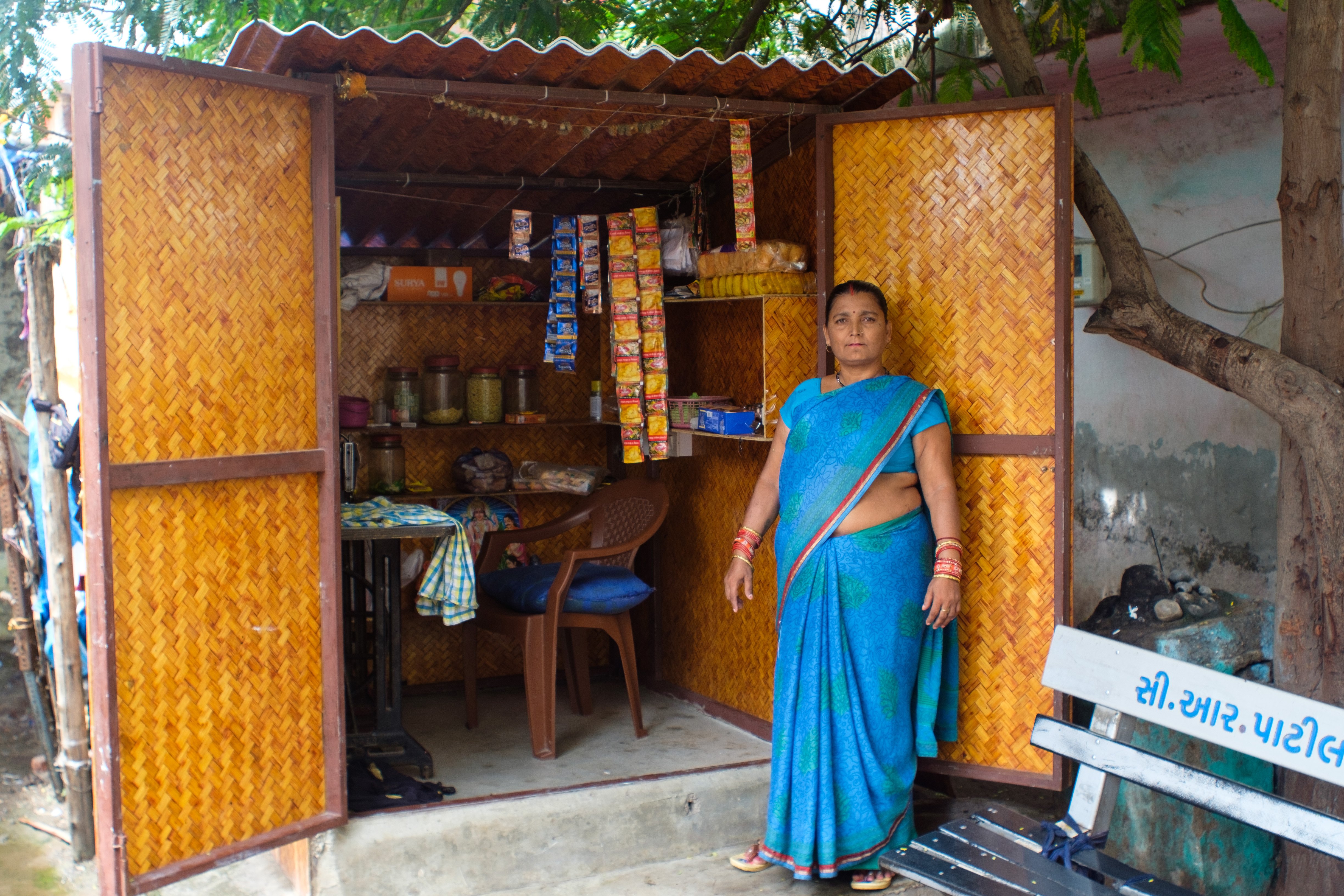
Image Courtesy of: Mahila Housing Trust