Iran on Wednesday said it was reviewing a US peace proposal that could formally end the ongoing conflict, Reuters reported, citing sources. However, the proposal may still leave several key US demands unresolved, including the suspension of Iran’s nuclear programme and the reopening of the Strait of Hormuz.
After 2 Months of Conflict, Iran and US May Be Near a Breakthrough Deal
Iran is reviewing a US-backed peace proposal that could formally end the conflict and reopen the Strait of Hormuz, even as tensions remain high over Tehran’s nuclear programme and Washington’s demands

AI
Advertisement
Reports suggest that an Iranian foreign ministry spokesperson said Tehran would soon convey its response. US President Donald Trump said he believed Iran wanted an agreement.
“They want to make a deal. We've had very good talks over the last 24 hours, and it's very possible that we'll make a deal,” Reuters quoted Trump as saying.
However, Trump had sounded more sceptical earlier about the chances of a breakthrough. In a social media post, he threatened to restart the US bombing campaign in Iran, calling the possibility of Tehran agreeing to the latest US proposal a “big assumption.”
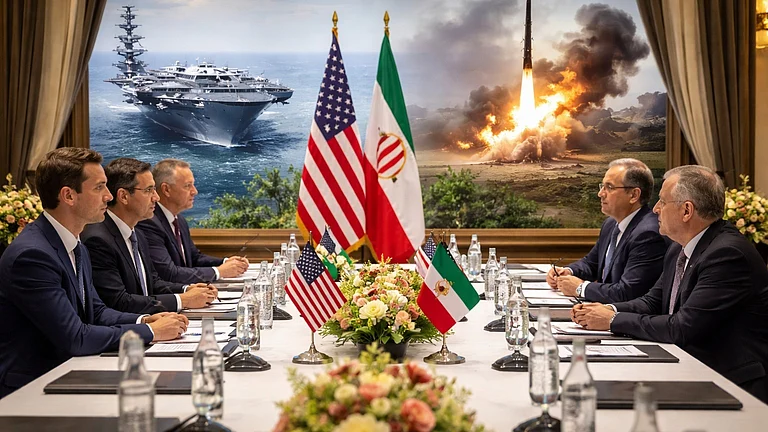
According to the Reuters report, multiple sources confirmed that negotiators were close to finalising a one-page memorandum that could formally end the conflict.
If discussions progress as expected, the agreement could reopen the vital Strait of Hormuz shipping route, ease US sanctions on Iran, and impose fresh curbs on Tehran’s nuclear programme.
Advertisement
However, several reports suggest that Iran is yet to formally respond to the latest US proposal. Iranian lawmaker Ebrahim Rezaei described the draft as “more of an American wish-list than a reality.”
Iranian Parliament Speaker Mohammad Baqer Qalibaf also appeared to mock reports suggesting that a deal was imminent.
Amid escalating military tensions and prolonged uncertainty over the past few months, the latest developments have raised hopes for a ceasefire and a quicker resolution to the conflict.
The closure of the Strait of Hormuz had severely disrupted global trade and supply chains, triggering fears of an economic slowdown and even a possible recession if the crisis prolonged further.
Crude oil prices had breached $125 per barrel last week amid heightened geopolitical concerns, and the global energy market remains highly volatile. Analysts expect oil prices to remain elevated in the near to medium term despite the recent correction.
Advertisement
Following reports of a possible agreement, global oil prices plunged nearly 11% to $98 per barrel, touching a two-week low. Reuters reported that the US negotiations are being led by Trump’s envoy Steve Witkoff and son-in-law Jared Kushner.
If Tehran and Washington agree to the preliminary framework, negotiations for a broader and more comprehensive agreement are expected to begin within the next 30 days.