Experts at Outlook Planet C3 urge treating water as a primary economic constraint
India’s irrigation efficiency remains low, with agriculture consuming the bulk of freshwater
BWSSB has turned Bengaluru's wastewater into a revenue-generating resource for industries
Water Security Can No Longer Be an Afterthought: Outlook Planet C3 Speakers Call for Circular Use of Wastewater
Experts at the 2026 C3 Summit, including G Asok Kumar and BWSSB's Rahul Priyadarshi, discuss treated wastewater as a solution to India's water crisis

Water Security
Summary
Advertisement
Water must move from the margins to the centre of climate and development planning, G Asok Kumar, IAS, Advisor to the Government of Delhi and Professor of Practice at IIT Kanpur, said at Outlook Planet C3’s session on “Integrating Water Security Strategy With Circularity.”
He argued that while climate conversations often focus on carbon and energy, “climate change manifests maximum in water,” yet water continues to receive “step-by-step treatment” at such forums.
Kumar said, “water security is sustained availability of good water, both quality and quantity and secondarity is a sustainable practise of recycling, reusing, recovering water and transforming the traditional disposed system to a circularity, which means that the old way of taking raw material, processing it and reusing it and disposing it off has been now recognised as a totally unsustainable programme because the resource is not finite.”
He added that “water has never been respected; we used to waste water,” stating that India must now treat water as a primary economic constraint rather than an unlimited resource.
Advertisement

Kumar further warned that as the country moves towards a larger economy, water scarcity will only become a bigger bottleneck.
Calling treated sewage water a “huge alternative source,” Kumar said the country must reduce its dependence on freshwater abstraction, especially in agriculture, which consumes the bulk of India’s water.
He pointed out that India’s irrigation efficiency remains low, while sewage treatment capacity is far below the volume generated. “If we can use treated water for non-potable purposes, primarily agriculture, we can save a lot of good water,” he said, adding that the issue is as much about behaviour as infrastructure. Citing Singapore’s experience, he said acceptance of treated wastewater requires a “mindset change.”
Kumar said the National Mission for Clean Ganga had circulated a national framework for the use of treated water, and several states, including Gujarat, Haryana and Tamil Nadu, had begun acting on it. He also cited a textile-sector reuse initiative in Pallipat, where 45 industries eventually came on board after seeing lower input costs and gains from recycling and recovering heat and water.
Advertisement
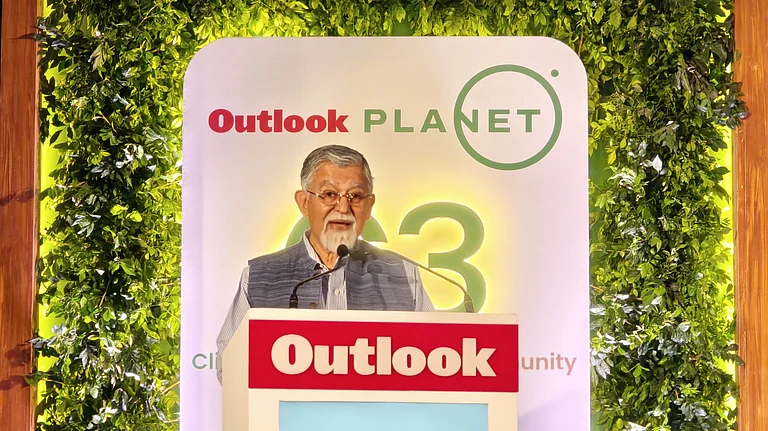
Rahul Priyadarshi, Additional Chief Engineer, BWSSB gave a separate special address on the same topic in the event. He said Bengaluru has turned wastewater into a revenue-generating resource.
Priyadarshi noted that the city depends on Cauvery water brought from about 100 km away, making every kilolitre costly. “What BWSSB has done in the last one decade is make water also one of the sources for generating revenue for our system,” he said.
Priyadarshi said BWSSB has mandated treated water use for construction and supplies it to industries and institutions, including the airport, Bharat Electronics Limited, Indian Railways and the Governor’s House for non-potable needs.
He added that treated wastewater is also being pumped to nearby districts such as Kolar, Chitradurga and Anekal, where about 850 MLD is now used to fill 274 lakes. “This is the highest reuse of water in India,” he said, calling it a model circular-economy intervention that has improved crop patterns, revived fisheries, raised groundwater levels and reduced migration.
Advertisement