Arvind Virmani from NITI Aayog emphasizes the importance of low-cost finance in achieving net zero without hindering economic growth
He warns that high-cost climate investments could crowd out other sectors, and while some investments are efficient, trade-offs are inevitable
Judicious resource allocation is crucial, especially in capital-intensive sectors like green hydrogen
Low-Cost Finance Will Decide If Net Zero Hurts Growth: NITI Aayog's Arvind Virmani
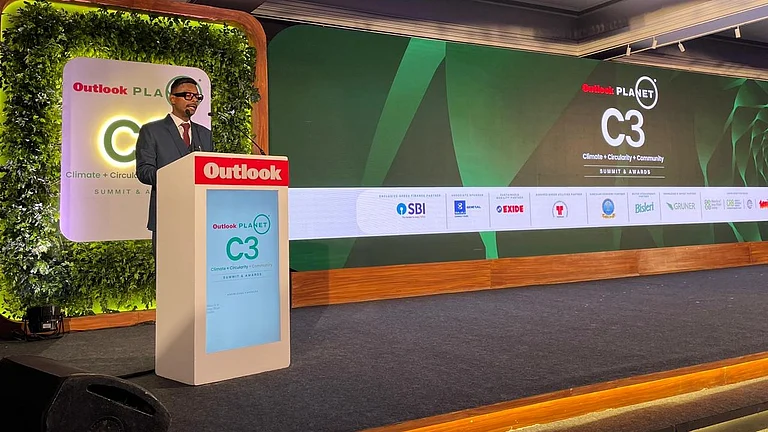
Outlook Planet C3 2026: Access to low-cost finance is crucial in determining whether net zero can be achieved without compromising economic growth, said Arvind Virmani

NITI Aayog Member Arvind Virmani
Summary
Advertisement
High-cost domestic financing of climate investments risks crowding out other productive sectors, while their long-term benefits diminish in discounted value. Therefore, access to low-cost finance is crucial in determining whether net zero can be achieved without compromising economic growth, said Arvind Virmani, Member, Niti Aayog on Friday.
Speaking at Outlook Planet C3 event he said, “While many climate investments are efficient and complementary, not everything is a win-win.”
“At some level, trade-offs are inevitable, and there will be a price to pay for achieving climate goals.”
Nothing is truly free, and while efficiency gains and complementary investments can deliver benefits, some economic costs are inevitable to secure long-term climate goals, said Arvind Virmani.
He noted that emerging sectors such as green hydrogen are highly capital-intensive, involve significant R&D, and carry substantial risks. While stakeholders often push for greater investment in their respective areas, he stressed that, from an economic perspective, resources must be allocated judiciously across competing priorities.
Advertisement
Ultimately, decisions on how much to invest and where are critical, said Arvind Virmani.
He explained that investments required to achieve net zero broadly fall into two categories: complementary and substitutable. Complementary investments, such as those improving energy efficiency, are relatively straightforward as they deliver broad benefits with minimal trade-offs, making them largely “no-brainers.”
He said that technologies such as carbon capture may become necessary if sufficient gains are not achieved through cleaner energy generation or electrification, including electric vehicles, highlighting that difficult choices between alternative pathways are inevitable.
While a significant share of net-zero investments can align with overall economic efficiency, he cautioned that beyond a point, achieving climate goals may require diverting resources from other uses, underscoring that not all investments are additive and trade-offs are unavoidable.
He added that these examples are illustrative rather than definitive, but they reflect how such decisions are evaluated in practice. Broadly, policymakers will increasingly face choices in the transition to net zero between incremental systems and large-scale, capital-intensive investments, each with its own set of trade-offs.
Advertisement