US President Trump said India has agreed to stop buying Russian oil under a trade deal.
The deal would also remove punitive duties imposed on India for purchasing Russian crude.
With the fine print still awaited, experts warn India’s crude import bill could rise by up to 10% if the announcement holds true.
US-India Trade Deal: American Crude May Push India’s Energy Bill by Up to 10%
While the fine print of the deal is yet to be released, experts say that if the US President’s announcement holds true, India’s crude import bill could rise by as much as 10%

Summary
Advertisement
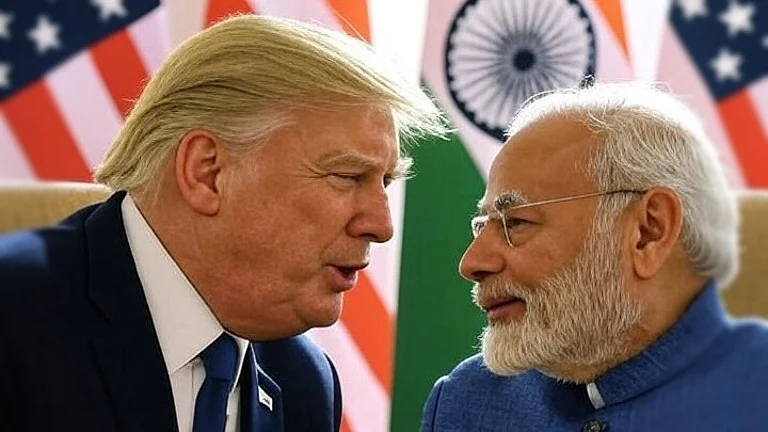
India has agreed to stop buying Russian oil, US President Donald Trump said on Monday night while announcing a trade agreement with New Delhi following a phone call with Prime Minister Narendra Modi. He said that under the deal, Washington would reduce its “reciprocal tariffs” on India from the current 25% to 18%, and also remove punitive duties imposed over India’s purchase of Russian crude.
While the fine print of the deal is yet to be released, experts say that if the US President’s announcement holds true, India’s crude import bill could rise by as much as 10%.
“It was an honour to speak with Prime Minister Modi. He is one of my greatest friends and a powerful and respected leader of his country. We spoke about many things, including trade, and ending the war with Russia and Ukraine. He agreed to stop buying Russian oil, and to buy much more from the United States and, potentially, Venezuela,” President Trump wrote on Truth Social.
Advertisement
In New Delhi, Prime Minister Modi and other government officials confirmed the tariff reduction, but no announcement was made on stopping Russian crude purchases. However, it has been noted that over the past few months, India’s government-run and private oil refiners have sharply reduced their intake of Russian crude.
On Tuesday, Brent was trading down 0.74% to $65.81, while WTI crude fell 0.66% to $61.73.
“India’s oil imports from Russia have been moderating over the last month, mainly due to US sanctions on the two Russian firms, Lukoil and Rosneft,” Japanese brokerage firm Nomura said in a note on Tuesday.
Monthly oil import data from the Ministry of Commerce and Industry show that since May 2025, when India bought about 9 million tonnes of Russian crude, shipments have steadily declined. Imports fell to a low of 6.6 million tonnes in September before recovering slightly in October and November to over 7.5 million tonnes.
Advertisement
In value terms, the country imported $3.7 billion worth of Russian crude in November last year, accounting for about 34% of India’s total oil import bill for the month.
“India’s purchase of Russian oil since 2022 was a purely commercial decision, as Russian crude was available at a substantial discount, helping Indian refiners lower input costs and protect margins. As a result, Russia’s share in India’s crude imports rose from under 2% pre-2022 to about 35–40%, contributing to an estimated $3–5 billion in annual savings on India’s crude import bill, while also providing Russia with export revenues when Western sanctions were imposed,” said Kresha Gupta, fund manager at Steptrade Capital.
American oil to raise Indian energy costs
According to Gupta, there are four possible scenarios that could play out if India exits Russian oil as part of a broader India–US trade understanding:
Higher landed crude costs as discounted barrels are replaced with US crude.
A major transition phase for refiners, as they exit existing contracts and simultaneously arrange new procurement and logistics from the US.
Short-term price sensitivity in global oil markets.
An increase in India’s overall oil import bill.
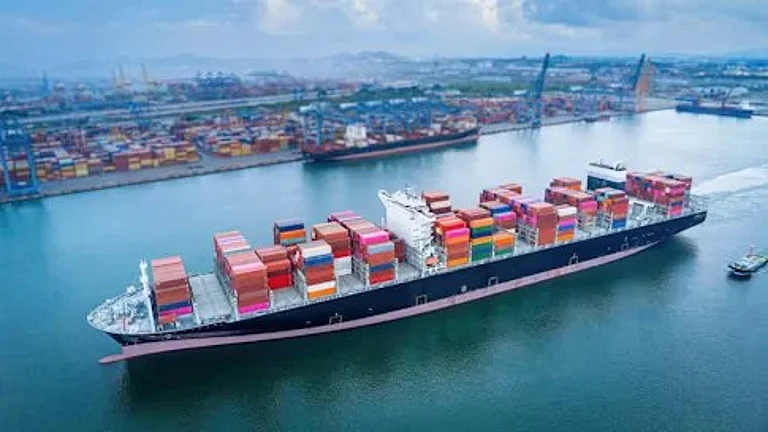
“Replacing Russian crude with US or other global grades would typically raise India’s landed crude cost by about 5–10% per barrel, depending on global prices and freight,” he added.
Nomura analysts also agree, even as they note that discounts on Russian oil have narrowed to low single digits in recent months.
“Switching to other energy sources will be slightly more expensive and time-consuming, as refineries may need to be reconfigured. Meanwhile, India’s commitment to buy more US energy, coal and capital goods will largely shift India’s trade balance between the US and the rest of the world. We project the current account deficit for FY27 at 0.8% of GDP, similar to FY26,” the brokerage said.
Advertisement
Wait for the fine print
All eyes are now on the fine print of the announced deal, which US Ambassador to India Sergio Gor said was “complex” and “driven by the personal bond between President Donald Trump and Prime Minister Narendra Modi”.
“Since I arrived in India a month ago, I have repeated many times that the President considers the Prime Minister a true friend. And I mean that. That is the reason this deal got done so fast,” he told India Today in an interview.
Meanwhile, global ratings agency Moody’s has said it is “unlikely” that India would “cease all purchases immediately”, as that could disrupt economic growth.
“A complete shift towards non-Russian oil could also tighten supply elsewhere, raise prices and feed through into higher inflation, given that India is one of the world’s largest oil importers,” the agency said in a note, as reported by The Economic Times.
Advertisement
However, Moody’s added that the reduction in US tariff rates on most Indian goods would “reinvigorate” India’s goods export growth to the US, which remains India’s largest export market, accounting for about 21% of total goods exports in the first eleven months of 2025.
According to Gupta, the deal could also lead to structurally higher export earnings and stronger foreign exchange inflows over time.
“These benefits can offset higher energy costs,” he said.