US Ambassador to India Sergio Gor described the India–US trade deal as “complex,” citing the scale of economic and political stakes.
US President Donald Trump and Prime Minister Narendra Modi announced the deal on social media, including a reduction in tariffs to 18% and shifts in India’s oil sourcing.
Analysts cautioned against premature celebration, noting the absence of a joint statement, negotiated text, and clarity on enforcement.
India–US Trade Deal ‘Complex,’ Expected to Be Signed Soon, Says US Ambassador Sergio Gor
US Ambassador Sergio Gor says the India–US trade pact involves complex negotiations, even as analysts urge caution until official documentation is released.

Summary
Advertisement
US President Donald Trump announced on Monday that reciprocal tariffs on India have been reduced to 18% from the sweeping 50% that had been in place since August. In a post on Truth Social, Trump stated that “out of friendship and respect to Prime Minister Modi of India, Washington has accepted the request for reducing the tariffs,” and confirmed that the much-awaited India-US trade deal had been concluded. Prime Minister Modi also announced the development on social media platform X soon after Trump made his statement.
Under the deal, Trump announced that New Delhi will stop buying oil from Russia and redirect sourcing to the US and potential Venezuelan oil. Modi said the deal opens up opportunities for 1.2 billion Indians and will encourage the Make in India flagship to gain momentum.
Speaking to India Today TV, Gor described the development as a “great evening for both nations.” Responding to the delay in concluding the trade negotiations, Gor highlighted the scale and complexity of the stakes involved for New Delhi and Washington. “This is a complex deal,” Gor said. “India is one of the most important and one of the largest economies. This is not a small country.”
Advertisement
Gor drew parallels with the conclusion of the India-EU trade deal in January, which took nearly two decades to finalise. India-US trade negotiations began as early as April last year, when Trump first announced the reciprocal tariffs. The nine months that followed saw phases of acceleration, stalling, and moments of deadlock. “On the grand scale of things, this is not that long,” Gor said, welcoming the “successful result.”
Gor added that Modi has invited Trump to visit India again, recalling “fond memories” of his earlier trip.
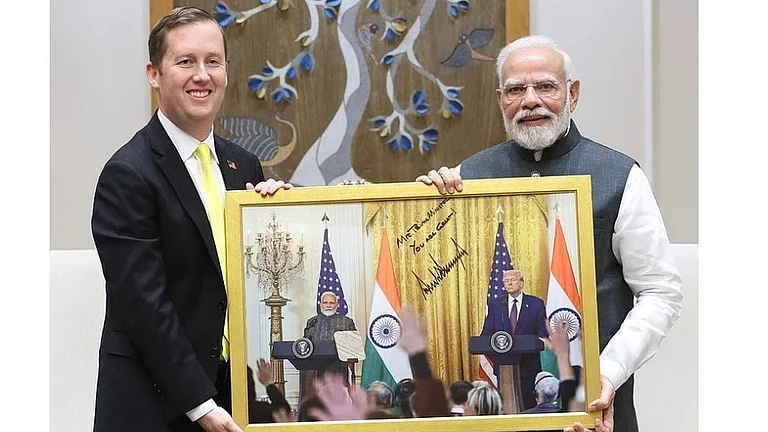
As per a report by CNBC-TV18, the Centre is now proceeding to prepare the official documentation reflecting the change in tariffs announced. The report stated that the documentation process will be completed as soon as possible, providing clarity on Section 232 tariffs and the duties levied on Indian goods.
Advertisement
Raising concerns over the lack of clarity, analysts warned that it is too early to celebrate the announcement, as the social media posts by the two leaders leave major questions unanswered. “Until there is a joint statement, negotiated text, and clarity on enforcement, this should be seen as a political signal—not a final deal. Caution, not celebration, is needed,” Ajay Srivastava, former trade official and founder of Global Trade and Research Initiatives (GTRI), said.