COVER STORY
Polarisation has also divided us into the camps of liberals and right-wingers. Caught in this tension between ideologies is the story of our intellectual degeneration

Polarisation has also divided us into the camps of liberals and right-wingers. Caught in this tension between ideologies is the story of our intellectual degeneration

Polarisation has also divided us into the camps of liberals and right-wingers. Caught in this tension between ideologies is the story of our intellectual degeneration

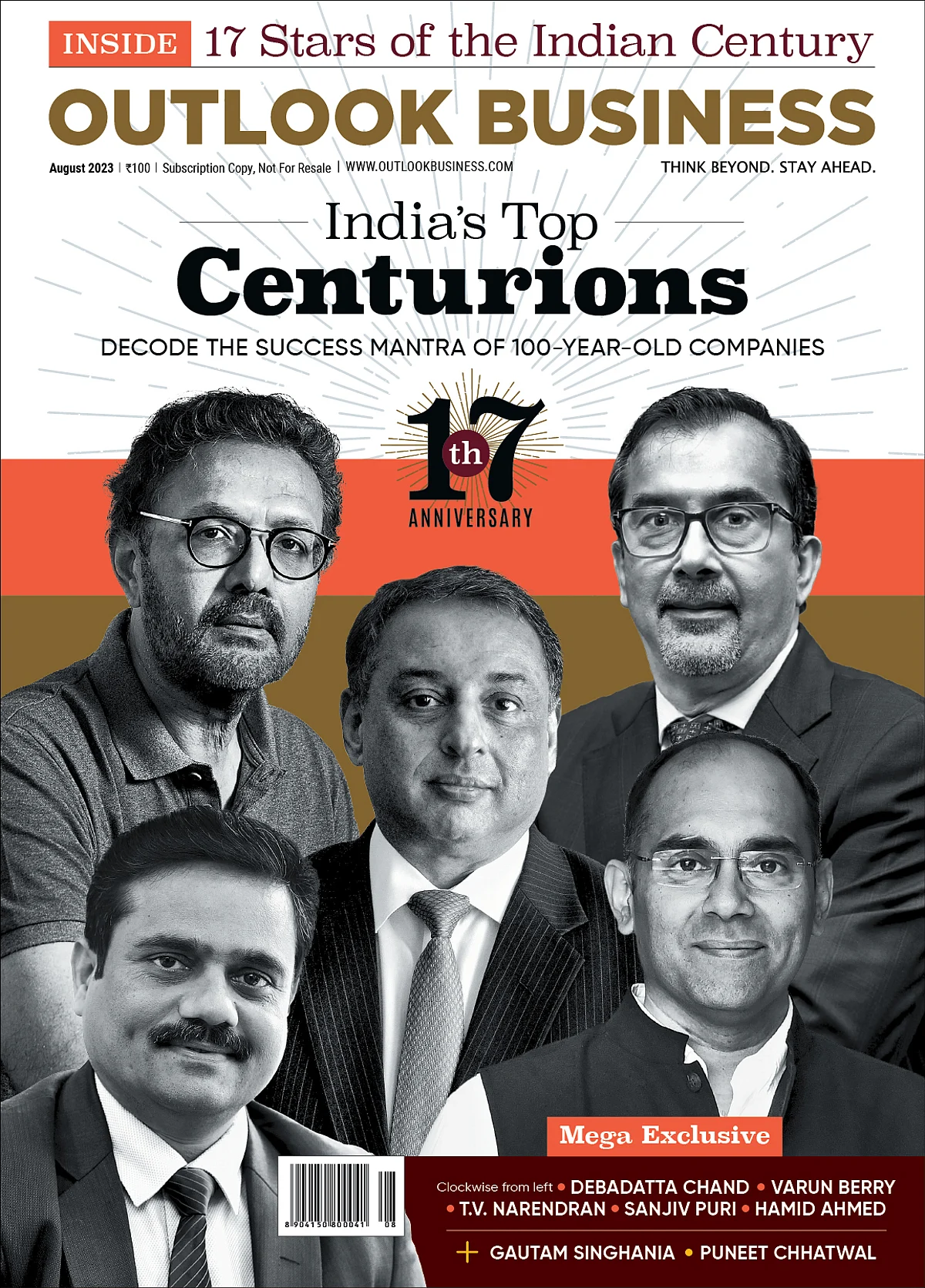
Building a company is difficult anywhere in the world. Nurturing it for 100 years takes a combination of philosophy of growth, astute understanding of headwinds and the determination to survive the deadliest of down cycles. What makes this survival story in India more interesting is the cross-currents of everyday politics and ideology
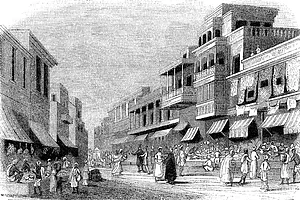
At the stroke of midnight on August 15, 1947, a new democracy was born. As India woke to life and freedom, some of its business houses were already decades into operations, giving shape to the dreams of its founding fathers.

Tata Steel has become one of the leading steel manufacturers across the globe in the last 116 years. The company is hopeful of lasting another 100 years on the back of its multi-generational employees and a people-centric work culture. With clear focus and targets in sight, T.V. Narendran, chief executive officer and managing director of Tata Steel, explains how a large part of its future growth will take place in India due to the infra push of the government and its investment in future and sustainable technology

From making tobacco products to becoming a multi-sector corporation, ITC has come a long way since its inception in 1910. This year, it became the seventh listed company in India to cross Rs 6 trillion market cap. It is now deploying sustainable solutions and Industry 4.0 measures to create seamless networks with retailers and customers. Sanjiv Puri, company MD and chairman, talks about ITC's planned growth trajectory
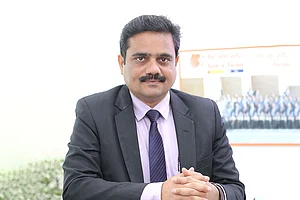
Sayajirao Gaekwad III, the king of the erstwhile princely state of Baroda, set up several institutions to modernise the state. One of them was Bank of Baroda, which completed 115 years of operations last month. It is India’s second largest public-sector bank as per total business as of March 31, 2023. Debadatta Chand, the bank's MD and CEO, talks about its glorious past and the transformational changes that continue to keep it relevant

Since inception, Britannia has changed hands several times. Amid the challenges that come with changes in ownership, the brand remains steadfast in its focus on consumer preferences and is currently a leading FMCG brand in India. Varun Berry, managing director and vice chairman of Britannia, talks about the company’s thrust areas, strategies and plans to add more food categories to its portfolio in the coming years

Hamdard, meaning a companion in pain, made a humble beginning in 1906 as a small affordable Unani clinic. Less than half a century later, it was converted into a trust, with a pledge to use profits for charitable purposes. Hamid Ahmed, who is the great-grandson of founder Hakeem Abdul Majeed, and CEO and trustee of Hamdard Laboratories India (Food Division), elaborates on the company’s expansion plans, strategies and hopes for newly launched and upcoming products

One of Raymond’s many privileges in its 98-year-old journey has been growing with and for India

Incorporated in 1899 by the founder of the Tata Group Jamsetji Tata, IHCL opened its first hotel, The Taj Mahal Palace, in Mumbai—then Bombay— in 1903. Dubbed as the best hotel east of Suez, it transformed the face of Bombay and introduced authentic Indian hospitality to the world while bringing global luxuries to the country

A brand is owned in consumer minds. The mind-ownership of brands is more important a facet to focus upon, rather than the business and financial ownership of these brands

Centennial companies have weathered the storms of time, evolving their ownership structures to adapt to the changing dynamics at the macro, meso and micro levels and at socio-economic-political-institutional, business, society and family levels.

A critical area for the future, particularly in Indian corporates with family governance and management, will be the separation of control and day-to-day management
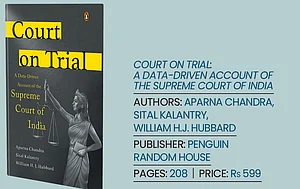
The Supreme Court’s jurisdiction extends to a population of over 1.4 billion. Does the court make access for the disadvantaged a priority? To what extent is it responsible for the adage ‘justice delayed is justice denied’? Are some lawyers more influential than the others? Authors Aparna Chandra, Sital Kalantry and William H.J. Hubbard discuss these and several other topics concerning the country’s highest court in their book Court on Trial

Amitabh Dube, country president of Novartis India, has travelled extensively, but it is his stay in Vietnam that he most fondly remembers, not just for its food, people and landscape but also for the footprints of Indian culture in the southeast Asian country

Zubin Saxena, managing director and senior area vice president, South Asia, Radisson Hotel Group, loves golf for the lessons in patience and self-discipline that it gives

Known for its university and iconic flavoured drink Rooh Afza, the Hamdard Group started out as a Unani clinic in old Delhi

Starting out as Tata Iron and Steel Company, popularly known by its acronym TISCO, Tata Steel now has a market capitalisation of over Rs 1.4 trillion.
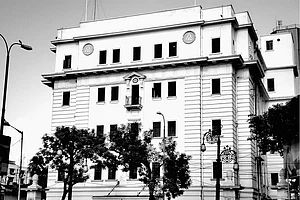
With the current market capitalisation of around Rs 5.8 trillion, this multi-sector company has undergone many changes in over a century of its existence

Established by Sayajirao Gaekwad III, ruler of the erstwhile princely state of Baroda, Bank of Baroda is the second largest public sector bank in India after the State Bank of India
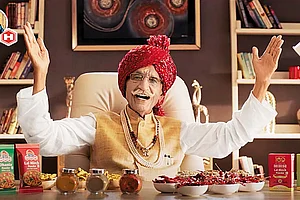
India has a rich legacy of a century-old companies that started small. However, very few of them grew out of a small shop. MDH, or Mahashian Di Hatti, as Mahashay Chunnilal Gulati’s small shop in Sialkot was called, is one such company
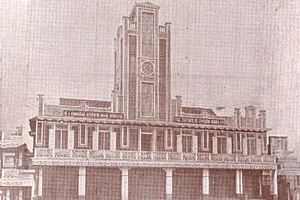
Catholic Syrian Bank, the first private bank of Kerala, was established in Thrissur district by a group of Syrian Catholic businessmen
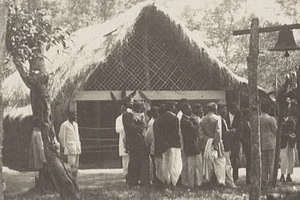
The journey of Tata Coffee began as Consolidated Coffee Estates Ltd Edinburgh, later renamed as Consolidated Coffee Ltd. The company entered the Tata Group’s fold in 1991 when Tata Tea acquired controlling interest in it

The journey of the multinational conglomerate began when Parmanand Deepchand Hinduja arrived in Mumbai. He started out with the trading business. Five years later, he set up his company’s first overseas office in Iran
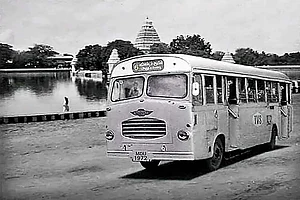
T.V. Sundaram Iyengar was all of 34 years old when he decided to become an entrepreneur in 1911 by starting a bus service in Madurai under the banner T. V. Sundaram Iyengar and Sons Limited
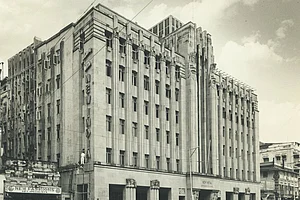
Founded by Dorabji Tata in Mumbai, New India Assurance is currently India’s largest non-life insurer with the largest market insurance share in the industry at 13.42%

Britannia’s origin can be traced back to Kolkata where a group of British businessmen set up a biscuit-making company with an initial investment of Rs 295 in 1892. However, it was in 1918 that the Britannia Biscuit Company Ltd was formed

Another century-old entity in the Tata Group’s basket, Tata Power’s market capitalisation is around Rs 709.2 billion. It is India’s largest integrated power plant, with conventional and renewable energy-generating capacity
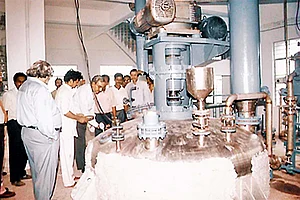
Berger Paints India began its journey in the country in 1923 as Hadfield’s (India) Ltd set up by George Hadfield

The journey of the Birlas as a corporate family started when Ghanshyam Das Birla established Birla Jute Manufacturing Co.

The origin of the group can be traced back to a cotton mill, Juggilal Kamlapat Cotton Spinning & Weaving Mills, that was started in 1921 by Lala Kamlapat Singhania
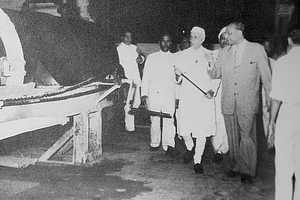
Central Bank of India was established in 1911 as the first commercial bank to be wholly owned and managed by an Indian. The bank was founded by Sorabji Pochkhanawala, a Parsi banker from Mumbai who was influenced by the swadeshi movement.

The Bangalore Press was established in Mysore in 1916 by M. Visvesvaraya
Polarisation has also divided us into the camps of liberals and right-wingers. Caught in this tension between ideologies is the story of our intellectual degeneration
Building a company is difficult anywhere in the world. Nurturing it for 100 years takes a combination of philosophy of growth, astute understanding of headwinds and the determination to survive the deadliest of down cycles. What makes this survival story in India more interesting is the cross-currents of everyday politics and ideology
At the stroke of midnight on August 15, 1947, a new democracy was born. As India woke to life and freedom, some of its business houses were already decades into operations, giving shape to the dreams of its founding fathers.
Tata Steel has become one of the leading steel manufacturers across the globe in the last 116 years. The company is hopeful of lasting another 100 years on the back of its multi-generational employees and a people-centric work culture. With clear focus and targets in sight, T.V. Narendran, chief executive officer and managing director of Tata Steel, explains how a large part of its future growth will take place in India due to the infra push of the government and its investment in future and sustainable technology
From making tobacco products to becoming a multi-sector corporation, ITC has come a long way since its inception in 1910. This year, it became the seventh listed company in India to cross Rs 6 trillion market cap. It is now deploying sustainable solutions and Industry 4.0 measures to create seamless networks with retailers and customers. Sanjiv Puri, company MD and chairman, talks about ITC's planned growth trajectory
Sayajirao Gaekwad III, the king of the erstwhile princely state of Baroda, set up several institutions to modernise the state. One of them was Bank of Baroda, which completed 115 years of operations last month. It is India’s second largest public-sector bank as per total business as of March 31, 2023. Debadatta Chand, the bank's MD and CEO, talks about its glorious past and the transformational changes that continue to keep it relevant
Since inception, Britannia has changed hands several times. Amid the challenges that come with changes in ownership, the brand remains steadfast in its focus on consumer preferences and is currently a leading FMCG brand in India. Varun Berry, managing director and vice chairman of Britannia, talks about the company’s thrust areas, strategies and plans to add more food categories to its portfolio in the coming years
Hamdard, meaning a companion in pain, made a humble beginning in 1906 as a small affordable Unani clinic. Less than half a century later, it was converted into a trust, with a pledge to use profits for charitable purposes. Hamid Ahmed, who is the great-grandson of founder Hakeem Abdul Majeed, and CEO and trustee of Hamdard Laboratories India (Food Division), elaborates on the company’s expansion plans, strategies and hopes for newly launched and upcoming products
One of Raymond’s many privileges in its 98-year-old journey has been growing with and for India
Incorporated in 1899 by the founder of the Tata Group Jamsetji Tata, IHCL opened its first hotel, The Taj Mahal Palace, in Mumbai—then Bombay— in 1903. Dubbed as the best hotel east of Suez, it transformed the face of Bombay and introduced authentic Indian hospitality to the world while bringing global luxuries to the country
A brand is owned in consumer minds. The mind-ownership of brands is more important a facet to focus upon, rather than the business and financial ownership of these brands
Centennial companies have weathered the storms of time, evolving their ownership structures to adapt to the changing dynamics at the macro, meso and micro levels and at socio-economic-political-institutional, business, society and family levels.
A critical area for the future, particularly in Indian corporates with family governance and management, will be the separation of control and day-to-day management
The Supreme Court’s jurisdiction extends to a population of over 1.4 billion. Does the court make access for the disadvantaged a priority? To what extent is it responsible for the adage ‘justice delayed is justice denied’? Are some lawyers more influential than the others? Authors Aparna Chandra, Sital Kalantry and William H.J. Hubbard discuss these and several other topics concerning the country’s highest court in their book Court on Trial
Amitabh Dube, country president of Novartis India, has travelled extensively, but it is his stay in Vietnam that he most fondly remembers, not just for its food, people and landscape but also for the footprints of Indian culture in the southeast Asian country
Zubin Saxena, managing director and senior area vice president, South Asia, Radisson Hotel Group, loves golf for the lessons in patience and self-discipline that it gives
Known for its university and iconic flavoured drink Rooh Afza, the Hamdard Group started out as a Unani clinic in old Delhi
Starting out as Tata Iron and Steel Company, popularly known by its acronym TISCO, Tata Steel now has a market capitalisation of over Rs 1.4 trillion.
With the current market capitalisation of around Rs 5.8 trillion, this multi-sector company has undergone many changes in over a century of its existence
Established by Sayajirao Gaekwad III, ruler of the erstwhile princely state of Baroda, Bank of Baroda is the second largest public sector bank in India after the State Bank of India
India has a rich legacy of a century-old companies that started small. However, very few of them grew out of a small shop. MDH, or Mahashian Di Hatti, as Mahashay Chunnilal Gulati’s small shop in Sialkot was called, is one such company
Catholic Syrian Bank, the first private bank of Kerala, was established in Thrissur district by a group of Syrian Catholic businessmen
The journey of Tata Coffee began as Consolidated Coffee Estates Ltd Edinburgh, later renamed as Consolidated Coffee Ltd. The company entered the Tata Group’s fold in 1991 when Tata Tea acquired controlling interest in it
The journey of the multinational conglomerate began when Parmanand Deepchand Hinduja arrived in Mumbai. He started out with the trading business. Five years later, he set up his company’s first overseas office in Iran
T.V. Sundaram Iyengar was all of 34 years old when he decided to become an entrepreneur in 1911 by starting a bus service in Madurai under the banner T. V. Sundaram Iyengar and Sons Limited
Founded by Dorabji Tata in Mumbai, New India Assurance is currently India’s largest non-life insurer with the largest market insurance share in the industry at 13.42%
Britannia’s origin can be traced back to Kolkata where a group of British businessmen set up a biscuit-making company with an initial investment of Rs 295 in 1892. However, it was in 1918 that the Britannia Biscuit Company Ltd was formed
Another century-old entity in the Tata Group’s basket, Tata Power’s market capitalisation is around Rs 709.2 billion. It is India’s largest integrated power plant, with conventional and renewable energy-generating capacity
Berger Paints India began its journey in the country in 1923 as Hadfield’s (India) Ltd set up by George Hadfield
The journey of the Birlas as a corporate family started when Ghanshyam Das Birla established Birla Jute Manufacturing Co.
The origin of the group can be traced back to a cotton mill, Juggilal Kamlapat Cotton Spinning & Weaving Mills, that was started in 1921 by Lala Kamlapat Singhania
Central Bank of India was established in 1911 as the first commercial bank to be wholly owned and managed by an Indian. The bank was founded by Sorabji Pochkhanawala, a Parsi banker from Mumbai who was influenced by the swadeshi movement.
The Bangalore Press was established in Mysore in 1916 by M. Visvesvaraya