President Trump signed 25% tariff on high-end AI chips like Nvidia's H200 & AMD's MI325X
Domestic US data centers & start-ups are exempt to prevent disruption of the national AI buildout
"Taiwan-to-China detour" is the primary target, hitting chips transiting the US for testing
US Semiconductor Policy: Trump Targets AI Chips, Imposes 25% Tariff on Nvidia H200 & AMD MI325X Chips
Union Budget 2026 expectations for higher education focus on AI research, clean energy funding, and infrastructure support

Trump Tariff on Nvidia H200 X_KobeissiLetter
Summary
Advertisement
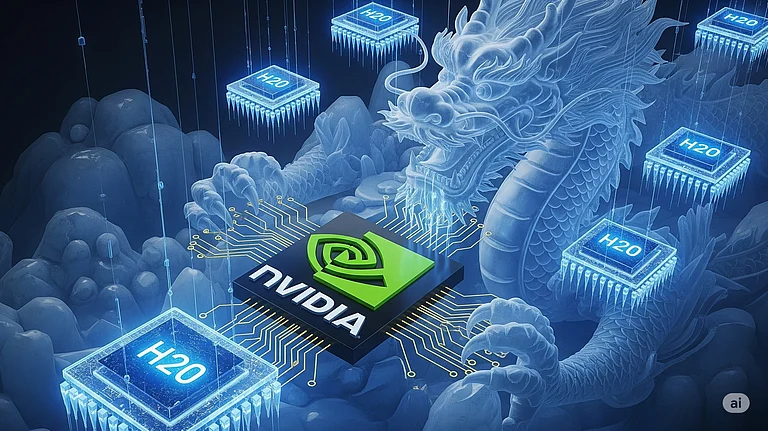
US President Donald Trump on Wednesday signed a proclamation under Section 232 of the Trade Expansion Act of 1962 imposing a 25% tariff on a narrowly defined set of advanced semiconductors, including Nvidia’s H200 processor and AMD’s MI325X, citing economic and national security concerns. The decision follows a nine-month investigation that concluded US reliance on foreign manufacturing for critical chips poses a strategic risk.
According to a White House fact sheet, the tariffs are tightly scoped and will not apply to chips imported for use in US data centres, startups, consumer electronics, civil industrial applications, or public-sector deployments. The proclamation also grants Commerce Secretary Howard Lutnick broad authority to issue additional exemptions, signalling an effort to protect domestic technology deployment while nudging more chip production onshore.
Rationale & Enforcement Strategy
Administration officials said current US manufacturing capacity supplies only a small portion of domestic demand for advanced semiconductors. The measure is intended to incentivise local production and address transshipment practices, particularly chips manufactured in Taiwan that pass through the US for testing before being re-exported to China. Such imports will now attract the 25% levy upon entering the US customs system.
Advertisement
Market Reaction
Chip stocks reacted mildly to the announcement, with shares of Nvidia and AMD slipping in after-hours trade. Both companies have previously said they comply with US regulations and did not immediately comment on the new tariffs. Industry groups and analysts cautioned that even narrowly targeted measures could add friction to global supply chains and complicate planning for chipmakers and customers.
The White House said the order leaves room for broader semiconductor tariffs and complementary incentive measures aimed at strengthening domestic manufacturing. An annex clarified that the new levy will not be stacked on top of existing Section 232 tariffs. Analysts see the move as part of a wider industrial-policy-driven trade strategy that has already extended tariffs across multiple sectors.