Brent and WTI crude rebounded after a sharp sell-off as markets weighed conflicting signals from the US and Iran.
While President Donald Trump said negotiations with Tehran were underway, Iran denied holding or planning any talks with Washington.
Fresh security concerns in the Strait of Hormuz and subdued shipping activity continued to raise fears over potential disruptions to global energy supplies.
Oil Prices Swing as Trump, Iran Send Mixed Signals on Peace Talks
Conflicting statements from Washington and Tehran over potential peace talks, coupled with fresh security concerns in the Strait of Hormuz, kept global oil markets volatile

Free Pik
Summary
Advertisement
Oil prices recovered on Tuesday after a sharp sell-off in the previous session, as conflicting signals from the United States and Iran over potential peace talks kept investors cautious about the future of crude supplies from the West Asia.
Brent crude futures rose 1.2% to $84.79 a barrel, while US West Texas Intermediate (WTI) crude gained 0.6% to $80.80 a barrel in early trade.
The rebound followed Monday's steep decline, when Brent fell nearly 7% after US President Donald Trump said he had paused planned military strikes on Iran to allow diplomacy.
US, Iran Differ on Status of Talks
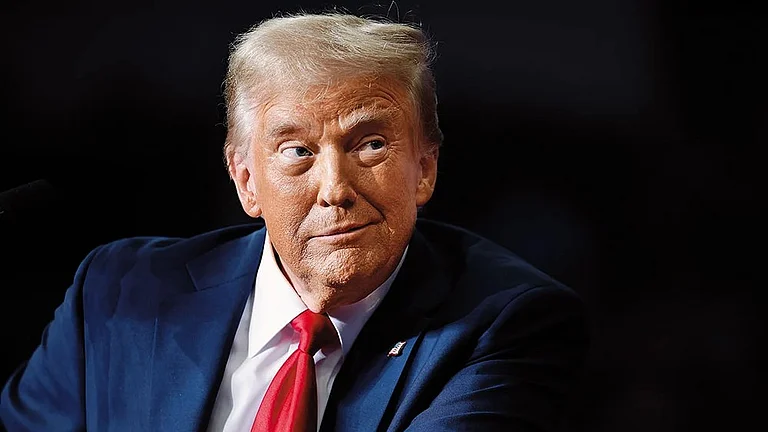
Speaking at the White House on Monday, Trump said negotiations with Tehran were already underway and described them as Iran's "last chance" to reach an agreement.
"They are going on right now," Trump told reporters, adding that discussions were taking place at the request of Iran and regional partners, including Saudi Arabia, the UAE and Qatar.
Advertisement
However, Iran swiftly rejected the claim. Foreign Ministry spokesperson Esmail Baghaei said no negotiations with Washington were taking place and no meetings had been scheduled.
He added that the only ongoing discussions involved Oman over the management of the Strait of Hormuz.
Later, Trump reiterated on Truth Social that talks would continue in the "immediate future" while accusing Iran's leadership of being "unbelievably duplicitous."
Strait of Hormuz Remains the Flashpoint
Despite hopes of diplomacy, tensions around the Strait of Hormuz continue to unsettle markets.
The UK Maritime Trade Operations (UKMTO) agency reported that a cargo vessel near Oman's coast had been struck by an unidentified projectile.
Shipping activity through the strategic waterway also remained subdued, with vessel traffic staying well below normal levels.
Before the conflict, the Strait of Hormuz handled roughly 20% of global crude oil and natural gas shipments, making any disruption a key risk for global energy markets.
Advertisement
Markets Caught Between Diplomacy and Supply Risks
While Trump's comments initially eased fears of an immediate military escalation, Iran's denial of talks and continued shipping disruptions have kept geopolitical risk firmly in focus.
Analysts said investors remain uncertain over whether diplomacy can succeed, with the Strait of Hormuz continuing to be the central point of contention between Washington and Tehran.
The rebound in oil prices reflects persistent concerns that West Asia energy supplies remain vulnerable.
Until there is greater clarity on the diplomatic front and shipping normalises, crude markets are likely to remain volatile, reacting to every development in the US-Iran conflict.