Delhi temperatures set to cross 40 degrees Celsisus as IMD issues heatwave alert.
More heatwave days likely across northern and western India this year.
IMD ramps up outreach to protect vulnerable populations from extreme heat.
Delhi Braces for First Heatwave of 2026; Worst Is Yet to Come
Delhi braces for intensifying heatwave as IMD flags rising temperatures nationwide

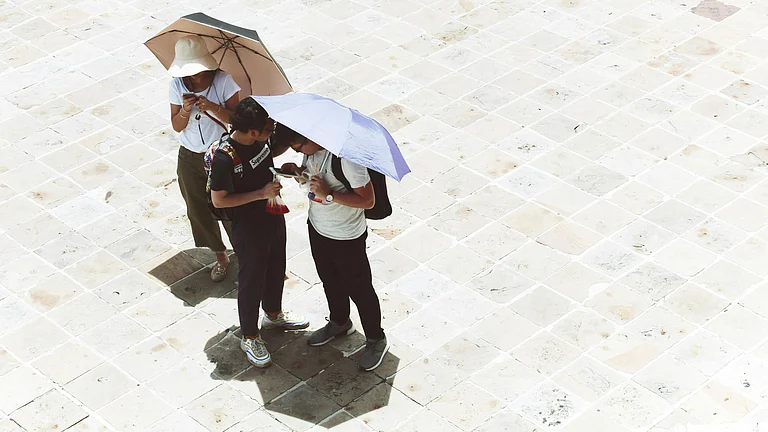
Woman navigates intense heat as temperatures rise
Summary
Advertisement
Delhi experienced warmer conditions on April 21 as the India Meteorological Department (IMD) issued a heatwave alert for parts of the national capitals.
With clear skies forecast, parts of Delhi-NCR are likely to see temperatures rise, with the maximum expected to hover between 40 and 42 degrees Celsius, and the minimum between 22 and 24 degrees Celsius.

Heatwave Risks Expand Nationwide
Meanwhile, northern parts of the Indo-Gangetic plains, the eastern coastal states, the western states of Gujarat and Maharashtra, and adjoining areas will have a higher-than-normal number of heatwave days this year, a top official at the India Meteorological Department (IMD) said on Monday.
Speaking to PTI Videos, Mrutyunjay Mohapatra, Director General of IMD, highlighted that there are climatologically prone areas (regions historically susceptible to extreme weather events) where temperatures are expected to exceed 40 degrees Celsius, even in regions that may not experience heatwaves.
Advertisement
"There are climatologically prone areas, for example, the normal temperature in the Vidarbha region (Maharashtra) is around 41 to 42 degrees Celsius at this time of year. Similarly, the normal temperature in Uttar Pradesh and Haryana touches 40 to 44 degrees Celsius towards the month of May,” he told PTI.
“Therefore, we should be prepared for such high-temperature days," he added.
Boosting Heat Alert Outreach
When asked what measures IMD has been taking to help the vulnerable population, the IMD chief said that apart from setting up WhatsApp groups to circulate information among outdoor workers, such as street vendors and labourers working in fields, display boards were also put up indicating the occurrence of heat and the expected actions to be taken.
“The objective is to reach out to everyone and provide the forecast information generated by IMD. We provide information through government channels, including the Common Alert Protocol of the National Disaster Management Authority, which enables any person with a mobile phone to access the information,” Mohapatra said.
Advertisement
He noted that there are certain sectors where people may or may not have access to mobile phones or immediate access to IMD alerts, adding that there is still scope to reach out to such people affected by heat through innovative or traditional means.
Referring to an example he cited during his speech at the Global Heat and Cooling Forum on April 20, the IMD chief told PTI that associations of rickshaw pullers, street vendors and domestic workers met the weather department in Delhi in 2025 and requested information. "We provided it through WhatsApp to their association secretaries, who then communicated it to their members. Display boards were also put up, indicating the occurrence of heat and the expected actions to be taken.”
According to Mohapatra, higher temperatures are expected every year, especially in April and May, and the period before the advance of monsoon (June), even though there can be certain variations from year to year.
Advertisement
(With inputs from PTI.)