Indian benchmark indices Sensex and Nifty 50 plummeted over 2% on Wednesday
Global markets reacted sharply to the confirmed death of Iran’s Supreme Leader, Ayatollah Ali Khamenei
Crude oil prices surged, hitting a 19-month high amid fears of Strait of Hormuz disruptions
Sensex Plunges 1,700 Points as Oil Hits 19-Month High Amid Iran-Israel-US Conflict
Indian equity indices Sensex and Nifty 50 crashed 2.1% on Wednesday as escalating West Asia tensions pushed crude oil prices to 19-month highs

Sensex, Nifty Plunge
Summary
Advertisement
Benchmark equity indices tumbled on Wednesday as escalating clashes between the United States, Israel and Iran pushed crude oil prices to a 19-month high and triggered a broad risk-off sentiment among investors. The Sensex plunged nearly 1,730 points, or around 2.1%, to trade near 78,500, while the Nifty 50 dropped about 520 points, also roughly 2.1%, wiping out billions in market capitalisation during early trade.
Three key factors drove the sell-off. First, renewed geopolitical tensions in West Asia, marked by fresh strikes and counterstrikes, heightened fears of a wider regional conflict. Second, the sharp spike in crude oil prices raised concerns about inflationary pressures and a higher import bill for India. Third, weak global risk sentiment compounded the decline, with Asian markets under pressure and US futures indicating further losses. Rising government bond yields and a record-weak rupee further unsettled investors and weighed on equity valuations.

Advertisement
Indian Market Under Stress
Global contagion intensified domestic market stress. South Korea’s benchmark index saw steep losses, triggering circuit breakers and prompting the local exchange to temporarily halt trading. Meanwhile, Wall Street futures signalled additional downside risks.
The prospect of commodity-driven inflation and potential disruptions to key energy trade routes amplified concerns of a prolonged supply shock.
India remains particularly vulnerable, as it imports around 85% of its crude oil requirements. Persistently high oil prices could push up headline inflation, widen the trade deficit, and erode corporate profit margins.
Sectors such as airlines, logistics, petrochemicals and other energy-intensive industries are likely to face the greatest strain, while banks may experience indirect pressure from weaker consumption trends and higher provisioning needs.
Market breadth reflected widespread selling across cyclical and financial stocks. Although some investors sought relative safety in sovereign bonds, rising yields limited the appeal of fixed income. Traders cautioned that intraday volatility could remain elevated and advised market participants to maintain sufficient liquidity and margin buffers, particularly for leveraged positions.
Advertisement
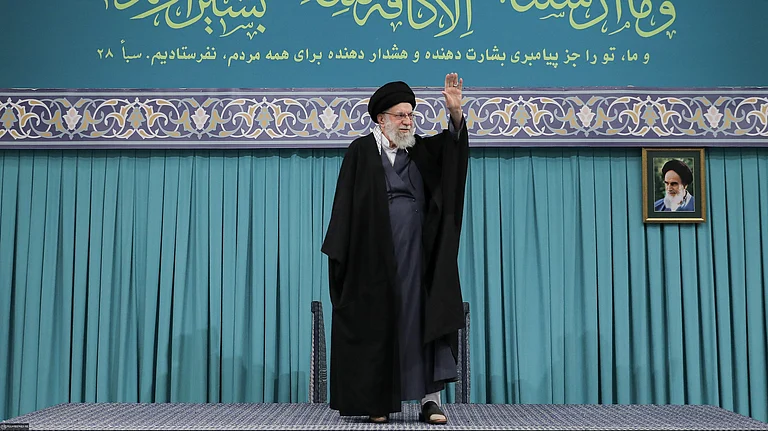
Iran’s Conflict
Iran’s Supreme Leader, Ayatollah Ali Khamenei, was killed in recent strikes carried out by Israel and the United States. Khamenei “was carrying out his assigned duties and was present at his workplace (his office)” at the time of the attack, state broadcasters announced early on Sunday morning.
The update comes on day two of cross-border attacks in the region. Iranian armed forces targeted US bases across the Gulf as well as Israeli cities. Meanwhile, early on Sunday morning, Israel’s military said it carried out strikes in central and western Iran that targeted “ballistic missile arrays and aerial defence systems.” It said over 30 targets were hit.