Renault says India needs a “full power” approach, backed by localisation and hybrids
India is now central to Renault’s global plan with export potential from Chennai
SUVs look strong, mini cars uncertain; CNG, hybrids and EVs will follow demand
Chennai Can Become Renault’s Global Export Base: Renault India VP Francisco Hidalgo
Francisco Hidalgo, VP (Sales & Marketing), Renault India, speaks with Outlook Business on India’s SUV wave, Duster’s comeback, hybrids vs EVs and why India now stands at the centre of the company’s global plans

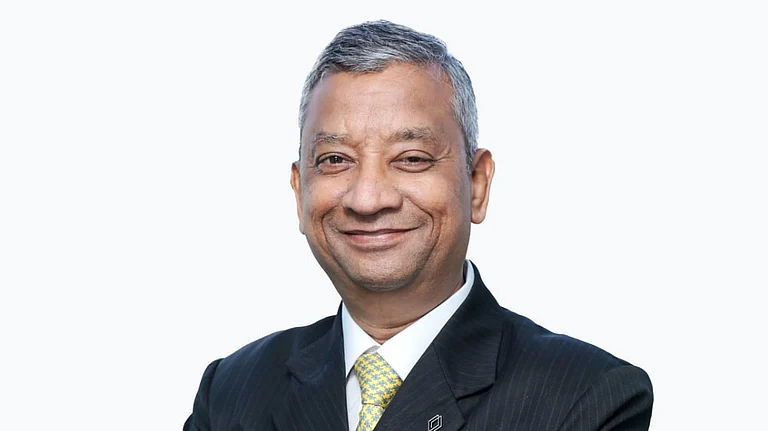
Renault India Vice President Francisco Hidalgo
Summary
Advertisement
The return of the Duster, once a defining product for Renault, signals a shift toward higher segments, stronger technology play and cleaner powertrain options. Unlike the previous decade, India’s SUV space is crowded, powertrain choices are diversifying and customer expectations around connectivity, safety and efficiency have escalated sharply.
In this environment, marketing clarity and product relevance become as critical as manufacturing scale. That responsibility sits with Francisco Hidalgo, VP (Sales & Marketing), Renault India, who is tasked with reintroducing the Duster to a market that has moved on, while also shaping Renault’s India-facing strategy around hybrids, localisation, CNG, small cars, future exports, and the future of small cars.
In conversation with Outlook Business, Hidalgo discusses India’s SUV fever, why hybrids make sense today, how the Duster fits into the company’s renewed push and why India is now central to Renault’s international growth plans.
Edited Excerpts:
Renault was once a strong disruptor in India. What’s the renewed strategy for the Indian market and how does Duster fit into it?
Advertisement
Renault has made a significant difference in India before with the original Duster, the Kwid and the Kiger. We did not launch any new car in the last few years, but our purpose remains the same. Wherever we operate, our models are meant to bring something new, different and meaningful for customers.
This is why we are relaunching the Duster in a fully new avatar. The car is completely new, yet the original Duster values remain. It is about driving, enjoying the drive and sharing moments. It is also about advanced technology. We are introducing an amazing turbo 160 engine and a strong hybrid, the strongest hybrid in the market.
Renault’s E-tech hybrid technology is arguably the best in the market. We are one of the leaders in Europe and I am extremely excited to bring this to India.
Indian SUV players such as M&M and Tata Motors have been gaining market share rapidly. Why is Renault launching Duster now?
Advertisement
We would have liked to launch it earlier, but we have been learning from the last few years. Renault has seen big success in India but also quiet periods, and we realised the Indian market is extremely demanding. If you want to succeed here, you either go full power or don’t go at all. So we decided to go full power.
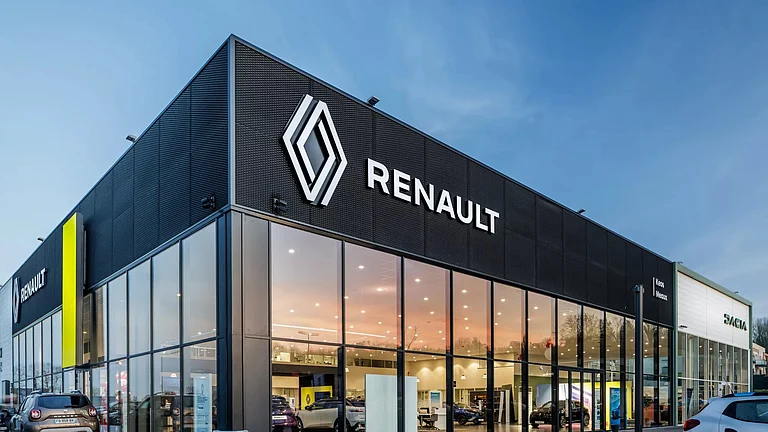
We bought the Chennai plant, which is now fully ours, with more than 10,000 employees. We wanted to bring a new Renault Group modular platform and hybrid technology, which takes time to localise. Now we are ready, and we are launching a great Duster with great technology and engines.
Renault has acquired full control of the Chennai plant. How does this strengthen the Duster relaunch and export ambitions?
It does not help Duster directly, but it helps in many ways. First, it is a very strong investment that shows our long-term commitment to India and our belief in its potential. We see potential not only in domestic sales but also in the idea that if you are competitive in India — with a good car, strong features and a good price — then you can be competitive everywhere.
In that sense, Chennai can become a base for exports to the rest of the world. That is the thinking behind it, and for that we need fantastic cars like the Duster.
Advertisement
How do you see India’s SUV market evolving over the next decade?
SUVs will continue to be very strong in India. Because of Indian roads, speed breakers and road quality, you really need high ground clearance, good suspensions and a good platform, and the Duster delivers that. Designs will evolve over time as people get tired of the same shapes, but the SUV segment still has a big future.
Technologically, the market will also evolve. Diesel is still very strong in India, probably the last country where it remains strong, and it will continue for a few years. But diesel is the present, not the future. For us, the future is hybrid, with electric cars in the longer term.
From our experience around the world, hybrid is the perfect transition from today to tomorrow, and that is why we wanted to be one of the first brands to introduce hybrid in India.
Advertisement
How will Renault comply with the fuel-efficiency regulations in India? What is the plan for decarbonisation?
By electrifying and using hybrids, we can significantly reduce CO2 emissions. Now that we are introducing this engine and hybrid technology, our intention is to localise it so it becomes cheaper and more competitive. Once localised, it can also go into other models. We are not launching just a car, we are launching a platform and a technology. You do not build a platform for one model, so new models will follow. This is just the beginning of the road.
There’s growing debate between hybrids and pure EVs. What is Renault’s view for India?
There will not be one single technology overnight. In Brazil, we have been selling full ethanol vehicles for many years, so it is something we could bring here if there is a market for it. Different needs exist and no technology is perfect. We see a long transition period where petrol, diesel, CNG, hybrid and EVs will all coexist, as in India. EV will not jump to 100% immediately. Today EV is around 4% of sales, mainly because of new launches and natural demand.
When demand becomes significant, we will be there. We have the technology and we are the best-selling EV brand in Europe. The question is not if, but when. For now, we feel it is the time for hybrid.

On a global level, how strategic is India for Renault?
India is the most important country for us for the coming years. We have very good suppliers with strong quality, competitive pricing and a very demanding market. If we manage to be strong in India, we will be strong everywhere. It is not only about the size of the Indian market, but also the export potential. The possibilities are very large.
Are you also planning to launch new CNG models in India?
We already have a CNG offer on Kiger and Triber. It depends on the segment because CNG is very segment-oriented, but it’s clear that wherever there is strong demand, we will be there.
Do you see a future for small cars and hatchbacks in India?
We have big plans for small cars as well, but I’m not sharing them today. I don't remember the last time anyone launched one, and there’s a reason. With rising demands for safety, emissions and technology, mini cars are no longer cheap. So when people spend significant money, they prefer to move to a higher segment. Without commenting on our plans, I don't see a big future for mini cars. They will continue for some time, but not strongly.
Globally, Europe is seeing a comeback in small cars, but for different reasons—there size matters because most people live in cities with limited parking. However, at the same price, consumers will choose a hatchback over a mini car, or a sub-4 metre SUV over a mini SUV.