RBI identifies El Nino as potential inflation risk due to weak monsoon.
Skymet forecasts below-normal rainfall for India in 2026, raising agricultural concerns.
El Niño could reduce crop yields, water availability and push food prices higher.
RBI Flags El Nino as Potential Threat to Inflation — Here’s Why
RBI warns El Nino could disrupt monsoon, affecting inflation and agriculture

Agricultural field under cloudy sky
Summary
Advertisement
When the Reserve Bank of India announced its policy rates on April 8, it said that El Nino could be a threat to inflation.
The warning came after Skymet Weather predicted that this climate pattern could cause India to have less rain than usual during the monsoon season in 2026.
What Is El Nino
El Nino is a periodic climate phenomenon marked by unusual warming of surface waters in the central and eastern equatorial Pacific Ocean. This warming disrupts atmospheric circulation and alters weather patterns across the globe.
When the conditions are normal, trade winds push warm ocean water westward toward Southeast Asia and Australia, keeping the eastern Pacific relatively cooler. During an El Nino phase, these winds weaken or sometimes reverse. Warm water shifts eastward toward South America. The balance of ocean temperatures and atmospheric circulation gets disturbed.
Advertisement
Impact on Indian Monsoon
El Nino does not have a defined link with the Indian southwest monsoon, which makes the trends unpredictable.
According to the research paper by K. Krishna Kumar and Balaji Rajagopalan, not all El Niño events affect the Indian monsoon in the same way. The effect depends on where the Pacific Ocean is the warmest. When the waters in the central equatorial Pacific are the hottest, Central Pacific (CP or Modoki) events are more likely to cause droughts in India. Eastern Pacific (EP or traditional) events, which cause the most warming in the eastern Pacific, have a weaker and less predictable effect. It is not always true that El Nino years mean weaker monsoons and less rain. This makes it hard to predict India's rainfall during these years with any certainty.

Difference between Phases
According to US National Ocean Service, El Nino and LA Nina are climate patterns in the Pacific Ocean that can affect weather worldwide. El Nino is a climate pattern that describes the unusual warming of surface waters in the eastern tropic Pacific Ocean.
Advertisement
It is the “warm phase” of a larger phenomenon called the El Nino-Southern Oscillation (ENSO). It occurs more frequently than La Nina.
On the contrary, La Nina, the “cool phase” of ENSO, is a pattern that describes the unusual cooling of the tropical eastern Pacific.
Unlike El Nino, which usually lasts less than a year, La Nina events can last between one and three years. In the winter in the Northern Hemisphere, both of these things tend to happen more often.

Signs of El Nino
During an El Nino year, weakening winds along the equator lead to warming water surface temperatures that lead to further weakening of the winds. In general, El Nino years are associated with weaker monsoons and lower rainfall in India but this is not a fixed rule. There are historical records shows inconsistency of such trends since severe droughts happened in years such as 1982, 1987, 2002 and 2009 which coincided with El Nino. Some droughts such as 1986, 2004 and 2014 occurred with a declared El Nino. Some droughts, such as 1986, 2004, and 2014, occurred without a declared El Niño, reported The Economic Times.
Advertisement
Effects on Indian Agriculture
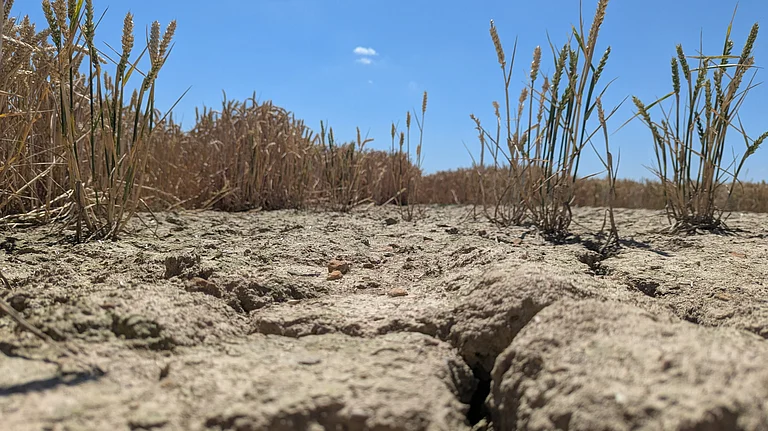
El Nino usually makes the southwest monsoon weaker and causes drought-like conditions in India, which hurts farming by making the rain fall in strange ways.
This warming in the Pacific often leads to lower crop yields (especially rice, pulses, and oilseeds), lower water reservoir levels, and lower farm income, which can lead to food inflation.