Electricity generation growth slows to 3% in Q4 FY26 amid demand moderation.
Coal still dominates power mix despite rapid solar and renewable expansion.
Grid challenges and supply risks persist despite strong clean energy push.
India’s Power Growth Slows in Q4 FY26 as Clean Energy Boom Tests Grid Limits
India’s power sector shows slowing growth even as clean energy expands rapidly

Power infrastructure
Summary
Advertisement
India’s power sector recorded a moderation in electricity demand and generation growth in the fourth quarter of the 2025-26 financial year (FY26), even as renewable energy (RE) continued to expand rapidly and structural pressures on the grid became more visible, reported Down To Earth citing a report published by the Centre for Research on Energy and Clean Air (CREA), an independent research organisation.
In addition, the growth of electricity demand and generation in India’s power sector moderated in the fourth quarter of the 2025-26 financial year (FY26), even as renewable energy (RE) continued to grow at a brisk pace and structural pressures on the grid became visible, reported Down To Earth, citing the report published by Centre for Research on Energy and Clean Air (CREA), an independent research organisation.
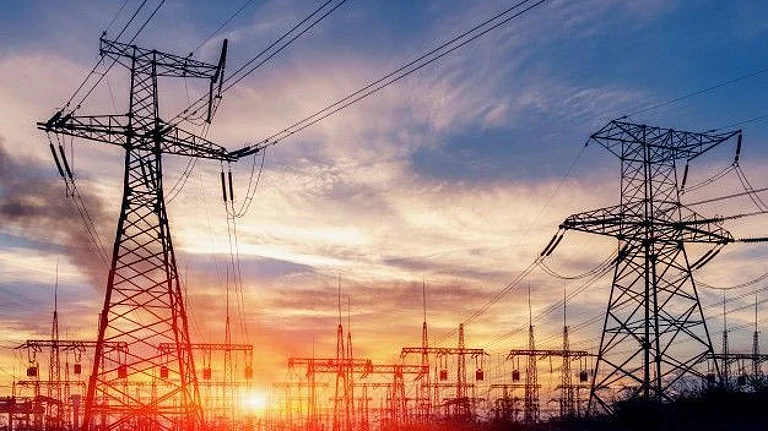
Power Generation Slows
Electricity generation in India grew by just 3% year-on-year (YoY) in Q4 FY26, marking the slowest growth rate for the quarter in six years and extending a trend of gradual deceleration.
Advertisement
Despite the rapid scale-up of clean energy, coal remained the backbone of the power mix, contributing 339 billion units (BU) or 73% of total generation.
Renewable sources posted strong gains, led by solar generation which increased 24%, alongside wind (11%), nuclear (10%) and large hydro (7%). These trends point to the widening gap between installed clean capacity and actual generation share.

Coal Still Dominates
India’s installed power capacity rose to about 533 gigawatts (GW) by March 2026, with non-fossil fuel sources accounting for around 53% of the total. Coal remained the largest contributor at over 220 GW, though its share continued to decline, while solar capacity surged to approximately 150 GW, driving most of the renewable expansion.
During the quarter, 16.2 GW of renewable capacity was added compared with 2.3 GW of thermal and 0.5 GW of large hydro, reflecting a decisive shift in investment patterns toward clean energy.
Advertisement
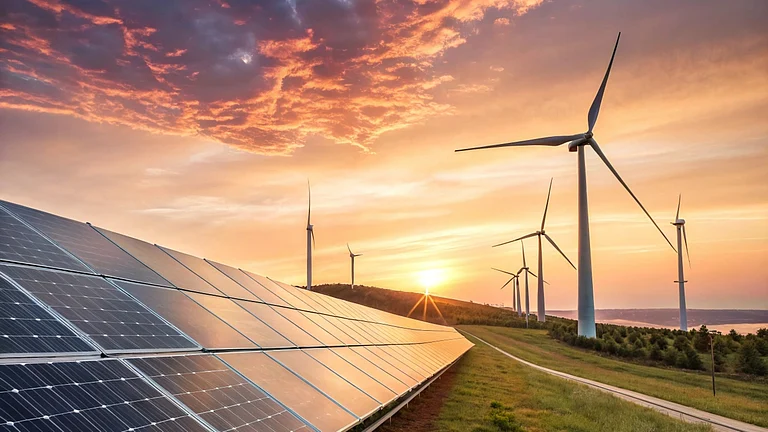
Grid Challenges And Future Risks
According to IEA’s World Energy Investment 2025, India has achieved the world’s third-largest growth in power generation capacity, with 83% of power sector investment in 2024 going to clean energy, pushing non-fossil capacity to 44%.
However, grid integration challenges—including high variability in solar/wind, transmission bottlenecks and the need for storage—persist as power generation outpaces grid readiness.
A March 2025 report by the Council on Energy, Environment and Water (CEEW) also stated that India’s planned generation capacity, including its 500 GW non-fossil energy target, is broadly sufficient to meet projected electricity demand for 2030 under current assumptions.
However, the report warns that any shortfall in renewable energy expansion could strain supply reliability. If non-fossil capacity reaches only 400 GW, about 0.26% of demand may go unmet, requiring an additional 10 GW of coal capacity and stronger transmission infrastructure. Even at 500 GW, faster demand growth or system inefficiencies could still leave up to 0.32% of demand unmet, necessitating around 6 GW of additional coal-based capacity and further grid upgrades.
Advertisement