India buys DAP at nearly forty percent higher pre-war prices reported Bloomberg.
Indian Potash secures 1.35mn tonnes amid strong import demand surge reported.
West Asia conflict disrupts fertiliser chains via Strait of Hormuz vulnerabilities risks.
India Pays 40% More for DAP as West Asia Crisis Hits Fertiliser Supply
India’s DAP imports face sharp cost surge as West Asia conflict tightens global fertiliser supply chains

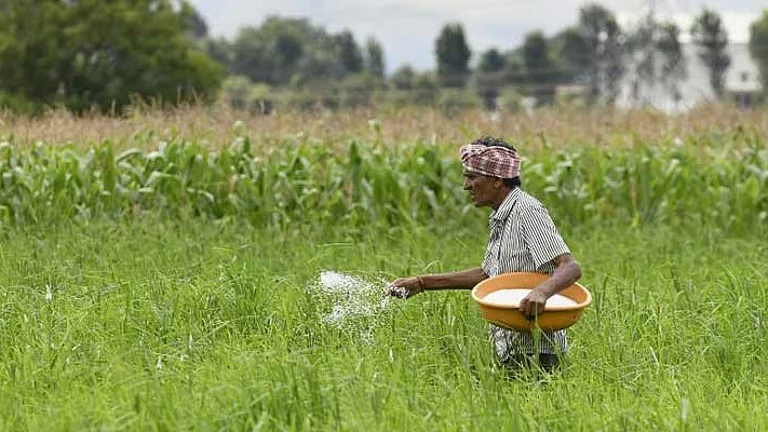
Fertilised agricultural field with farmers preparing soil during sowing season in India
Summary
Advertisement
India is now purchasing diammonium phosphate at almost 40% higher prices than pre-war levels as the West Asia conflict disrupted supplies and pushed the global benchmarks higher, according to Bloomberg.
Indian Potash Ltd., which imports fertiliser for the government and other companies, will secure 705,000 tonnes for delivery on the country’s west coast at $930 per tonne, reported Bloomberg, adding that another 641,500 tonnes will be shipped to the east coast at $935 per tonne.
The offers are roughly 39% above rates, including freight costs, seen before the start of the Iran war, according to Green Markets data. Indian spot prices were quoted at $667.50 a tonne on Feb. 27, the data showed.

The total volume contracted was about 12% higher than the 1.2mn tonnes sought in the last week’s tender, according to the people.
West Asia is a smaller source of phosphate fertilisers compared to nitrogen-based varieties, but it remains crucial in global supply chains as it supplies nearly half of the world’s sulphur output, a key input in fertiliser production, making the market highly susceptible to disruptions in the Strait of Hormuz.
Advertisement
In addition, Bloomberg reported that India has recently purchased approximately 2.5mn tonnes of urea in a tender at nearly double pre-war prices, prompted by the urgency ahead of the monsoon sowing season for essential crops such as rice, corn, and soybeans, which could affect farm output and production costs.

Why Is DAP Important
India is the largest importer of Diammonium Phosphate (DAP)—the second-most used fertiliser in the country after urea—in the world. China has been the top exporter of DAP to India. At present, nearly 60% of the DAP availability—crucial for high-value horticultural crops like fruits and vegetables—is met by the imported supplies.
Farmers primarily use DAP during sowing or transplanting as it plays a crucial role in strengthening plant roots and promoting initial growth. This is why its availability at the beginning of the season is critical. As the kharif season just about to start in June, the disrupted DAP supplies could impact Indian farmers.
Advertisement
However, according to a PTI report, the Centre on May 11 clarified that India has “ample” fertiliser stocks to meet demand for the upcoming kharif sowing season and appealed to farmers not to resort to panic buying amid concerns triggered by the situation in West Asia.
Supply Chain Squeeze Deepens
Instability in West Asia adds a background structural pressure on global flows of fertiliser, with the Strait of Hormuz a key point of vulnerability for agricultural inputs. The corridor hosts a significant share of energy-related maritime trade and disruptions tend to have spillover effects on fertiliser supply chains due to its role in transporting key upstream inputs such as sulphur and ammonia feedstocks used in phosphate and nitrogen production. So even if there is no direct exposure to suppliers, the impact is still felt when shipping lanes tighten or insurance and freight costs increase.
Advertisement
Outlook Business earlier reported that the ongoing conflict has raised concerns beyond short-term price spikes, with market participants cautioning about recurring supply uncertainty during peak farm demand cycles like the monsoon season.
Analysts suggested that unless India diversifies its supply sources and builds stronger regional sourcing networks, its fertiliser security will continue to be closely linked to the geopolitical situation in West Asia. It also pointed out India’s increasing vulnerability owing to its high import dependence for fertiliser raw materials, which constrains its capacity to absorb external shocks.