PM Modi's Indonesia visit coincides with the 75th anniversary of diplomatic relations and aims to strengthen the Comprehensive Strategic Partnership established in 2018.
India and Indonesia are expected to expand cooperation in maritime security, defence, critical minerals, digital technology and Indo-Pacific stability under India's Act East Policy and MAHASAGAR vision.
Alongside discussions on trade and investment, the visit highlights centuries-old civilisational links, symbolised by Modi's visit to the UNESCO-listed Prambanan Temple.
Modi in Indonesia: What's at Stake for India? | Explained
As Prime Minister Narendra Modi visits Indonesia, the two countries are looking to deepen cooperation in defence, trade, maritime security and the Indo-Pacific while marking 75 years of diplomatic ties

PM Modi and Indonesian President Prabowo Subianto MEA
Summary
Advertisement
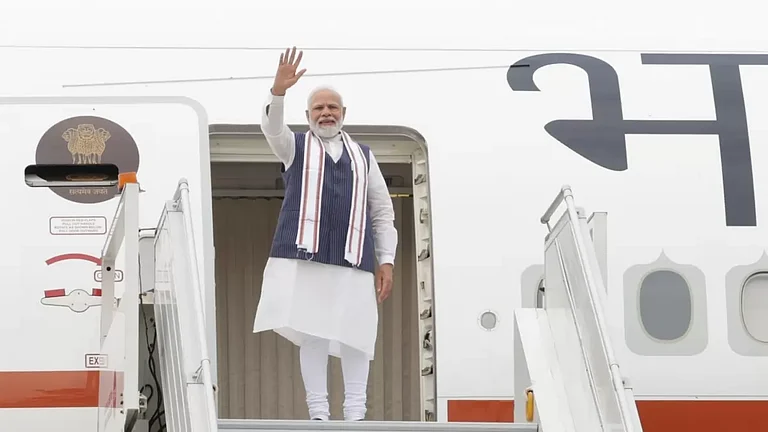
Prime Minister Narendra Modi's visit to Indonesia marks the first leg of his three-nation tour of Indonesia, Australia and New Zealand and comes at a milestone moment in bilateral ties, coinciding with the 75th anniversary of diplomatic relations between the two countries.
It is also Modi's first bilateral visit to Indonesia since the relationship was elevated to a Comprehensive Strategic Partnership (CSP) in 2018. The visit follows Indonesian President Prabowo Subianto's state visit to India as the Chief Guest for the Republic Day celebrations in January 2025, reflecting the growing momentum in high-level political engagement.
During the visit, the two leaders are expected to review progress across the partnership and discuss expanding cooperation in defence, maritime security, critical minerals, digital technology, healthcare, education, connectivity, trade and investment.
What makes India-Indonesia ties unique?
India and Indonesia share one of Asia's oldest civilisational relationships, dating back nearly 2,000 years. Trade, religion and cultural exchanges brought Hinduism and Buddhism to the Indonesian archipelago, influences that continue to shape Indonesian society today.
Advertisement
The Prambanan Temple in Yogyakarta—the world's largest Hindu temple complex dedicated to Lord Shiva—is among the strongest symbols of this shared heritage and is scheduled to be visited by Modi alongside President Prabowo.
Modern diplomatic relations were established in 1951, and both countries later became prominent voices in the Non-Aligned Movement while continuing to advocate for greater cooperation among developing nations through platforms such as the G20 and ASEAN-led forums.
Why is Indonesia strategically important for India?
Indonesia occupies one of the world's most critical geopolitical locations, straddling the Indian and Pacific Oceans and overseeing sea lanes connected to the Strait of Malacca, one of the busiest maritime trade routes globally.
For India, Indonesia is a crucial partner in ensuring maritime security, safeguarding global trade routes and promoting stability across the Indo-Pacific. Modi has said the visit will strengthen India's Act East Policy and MAHASAGAR (Mutual and Holistic Advancement for Security Across the Regions) vision, which seeks to deepen regional cooperation on security, connectivity and sustainable development.
Advertisement
As competition intensifies in the Indo-Pacific, cooperation with Indonesia has become increasingly important for India's strategic outreach in Southeast Asia.
How are defence and security ties evolving?
Defence cooperation has emerged as one of the fastest-growing pillars of the bilateral relationship.
The two countries conduct coordinated naval patrols, maritime exercises and regular strategic dialogues aimed at tackling piracy, illegal fishing and other maritime security challenges.
Discussions have also advanced on defence manufacturing and the proposed BrahMos missile agreement, signalling a broadening strategic partnership.
The recent India-Indonesia Joint Commission Meeting identified defence, maritime security, digital connectivity, healthcare and critical minerals among the priority areas for future collaboration, highlighting the expanding scope of bilateral engagement.
What is the current state of bilateral trade?
Indonesia is India's second-largest trading partner within ASEAN, making it one of New Delhi's most important economic partners in Southeast Asia.
However, bilateral merchandise trade has moderated in recent years. According to a Rubix Data Sciences report, total goods trade declined from $38.8 billion in FY23 to $24.8 billion in FY26, while India's exports fell from $10 billion to $4.5 billion and imports eased from $28.8 billion to $20.3 billion.
Advertisement
Although this narrowed India's trade deficit to $15.8 billion, it also underlined the need to diversify and strengthen commercial ties.
India continues to depend on Indonesia for key imports such as coal and palm oil, while exporting products including auto components, agricultural goods and processed food. Indonesia also remains India's largest supplier of palm oil, making it an important contributor to India's food and energy security.
What could be the key outcomes of the visit?
The visit is expected to reinforce the Comprehensive Strategic Partnership by accelerating cooperation in emerging sectors such as critical minerals, clean energy, digital technology and resilient supply chains, while strengthening traditional pillars like defence, maritime security and trade.
At a time when both countries are seeking to diversify supply chains and navigate an increasingly competitive Indo-Pacific, the discussions between Modi and President Prabowo are likely to shape the next phase of India-Indonesia relations.
Advertisement
Beyond bilateral ties, the visit is expected to strengthen India's engagement with ASEAN and reaffirm its commitment to a free, open and inclusive Indo-Pacific.