US President Trump announces trade deal with India, cutting tariffs on Indian goods from 25% to 18%
The deal shifts US‑India trade ties, with Trump saying India will stop Russian oil, buy more US supplies
Trump said India will cut tariffs and barriers on US goods to zero, easing export access
India–US Trade Pact: How India’s 18% Tariff Compares with Global Rivals
US cuts tariffs on Indian goods to 18%, boosting auto and textile exports while narrowing the gap with global rivals like Brazil, China, Canada and others.

India–US Trade Pact: How India’s 18% Tariff Compares with Global Rivals
Summary
Advertisement
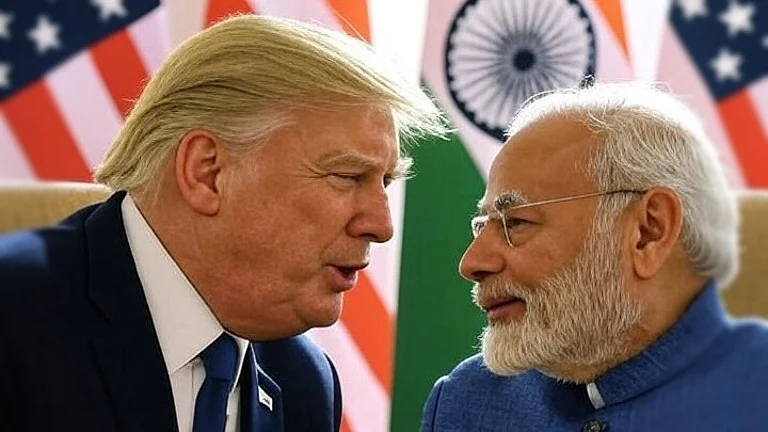
US President Donald Trump announced a trade agreement with India on Monday, reducing the tariff on Indian goods to 18% from 50%. The announcement came after a phone call with Prime Minister Narendra Modi and was shared on Trump’s social media platform, Truth Social.
“Wonderful to speak with my dear friend President Trump today. Delighted that Made in India products will now have a reduced tariff of 18%. This will benefit our people and unlock opportunities for cooperation,” Prime Minister Narendra Modi posted on X (formerly twitter) yesterday.
The deal marks a major shift in US‑India trade ties. President Trump said India will stop buying Russian oil and instead increase purchases from the US and possibly Venezuela. He suggested this could help ease the Russia–Ukraine conflict.
India will also take steps to cut tariffs and non-tariff barriers on US goods to zero, improving access for American exporters, Trump added. The move would place India among the lower-taxed major exporters to the United States, a sharp drop from the earlier 50% tariff.
Advertisement
Global Tariff Comparison
Before the deal, India faced one of the highest US tariffs among major economies. Brazil also faced 50%, China 37% and Canada 35%. Other competitors, including Vietnam, Bangladesh and Sri Lanka, had tariffs around 20%, while the European Union, Japan and South Korea faced 15%. The UK maintained 10%.
Trump has taken a selective approach to global tariffs. Switzerland’s rate fell to 15% from 39% last month after pressure from Swiss companies, while Taiwan signed a trade deal reducing duties on semiconductor imports from 20% to 15%, encouraging chip production in the US.
The US has also cautioned Canada against proceeding with its trade talks with China, with Trump saying strong action would follow. “If they do a deal with China, yeah, we’ll do something very substantial,” Trump told reporters aboard Air Force One. “We don’t want China to take over Canada.”
Advertisement
Auto Sector Gains
Even as the US takes a tougher stance with other countries, the deal with India is expected to bring sector-specific gains.
The auto sector is among the biggest beneficiaries of the trade deal. Nifty Auto opened 3% higher following the announcement. US import duties on auto and ancillary products have been cut from 50% to 18%, reducing trade barriers and improving cost competitiveness.
Divam Sharma, Co-Founder and Fund Manager at Green Portfolio PMS, said the India–US trade deal could meaningfully support textiles and apparel exports, as lower US tariffs would help Indian players compete better with low-cost producers like Bangladesh and Vietnam, especially in the mid-priced retail segment.
The deal is also expected to enhance India’s position in the US auto market, particularly for components and intermediate goods, as lower tariffs make Indian supplies more cost-effective for American buyers.

Advertisement
Trade Talks Background
India and the US began talks on a Bilateral Trade Agreement (BTA) in March last year. Around six rounds of discussions have taken place so far, with the most recent informal meeting held in New Delhi in December. Negotiations slowed at the end of the year due to holidays and missed deadlines but have continued online in the following months.
Analysts say the deal is likely to boost India’s export prospects and strengthen its role as a supplier of autos, components and textiles.
The deal also signals bigger strategic priorities, including boosting energy security and strengthening trade links between India and the US. Experts say talks on technology, services and other sectors are expected to continue in the coming months.