India and the six-member GCC sign ToR to launch negotiations for a free trade agreement.
Trade and investment talks de-linked, with BIT to be negotiated separately.
Pact expected to deepen trade, energy cooperation and market access across regions.
India–GCC FTA Talks Begin with ToR Signing; Saudi Investment Pact to Be Negotiated Separately
India and the Gulf Cooperation Council have signed the terms of reference to begin free trade agreement talks, with both sides agreeing to pursue investment treaty negotiations separately

Piyush Goyal Shashank Parade
Summary
Advertisement
India and the six-member Gulf Cooperation Council (GCC) signed the terms of reference (ToR) on Thursday to commence talks for a free trade agreement (FTA), reports said. The ToR outlines the scope and modalities of the proposed deal. The GCC comprises Saudi Arabia, the United Arab Emirates, Qatar, Kuwait, Oman and Bahrain.
Union Commerce Minister Piyush Goyal signed the ToR and said the “robust” trading arrangement would enable a greater free flow of goods and services while attracting more global investment. The India–GCC FTA talks come days after the India–EU FTA was signed and after the strengthening of the India–Oman Comprehensive Economic Partnership Agreement (CEPA), signalling India’s accelerated push for market access across regions. India has also concluded negotiations for an FTA with New Zealand, while formalisation of the India–US bilateral trade deal is expected by mid-March this year.
Announcing the signing of the ToR, Goyal said the trade pact with the GCC would help India diversify its energy sources, particularly in light of claims by the US that India has agreed to halt imports of crude oil and energy from Russia under the new deal. However, there remains a lack of clarity on the details of the India–US trade pact, with officials indicating that a joint statement will be issued in the next three to four days.
Advertisement
According to reports, the agreement marks a resumption of negotiations between India and the GCC that were earlier held in 2006 and 2008. West Asia, particularly Saudi Arabia and Qatar, serves as a major source of imported energy for India, while India exports pearls, precious and semi-precious stones, metals, imitation jewellery, electrical machinery, iron and steel, and chemicals to the region.
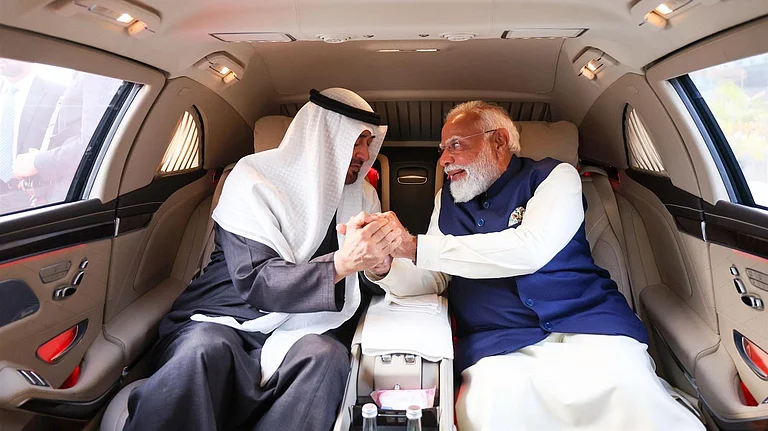
According to a Moneycontrol report citing government sources, both sides have agreed to de-link negotiations on the Bilateral Investment Treaty (BIT) from the trade agreement. “There is now an agreement to de-link the BIT from the trade agreement. The BIT will proceed on its own, as earlier both sides had considered linking it with the Bilateral Trade Agreement (BTA),” the source said.
While India is keen to attract Saudi investment, it wants to do so under stricter conditions, without MFN clauses or international investor-state dispute settlement mechanisms. Saudi Arabia, a major investor, prefers broader protections typically offered under a bilateral trade agreement. According to the source, once the trade agreement with the GCC is concluded, around 90% of common tariff rules will already be covered, as India has existing trade deals with Oman and the UAE, the report said. Outside the Gulf bloc, only 4–5% of goods affect countries such as Qatar and Bahrain, though New Delhi is in talks to seal agreements with Doha and Manama.
Advertisement
Bilateral trade between India and the GCC has reached $162–178 billion in recent years, with the UAE and Saudi Arabia emerging as India’s largest trading partners in the region.