Pakistan has shifted from dealing with surplus LNG cargoes in 2025 to paying $20.70 per mmBtu after disruptions in the Strait of Hormuz affected supplies from Qatar.
The disruption has pushed Pakistan into the expensive spot market, raising fuel import costs, increasing pressure on power generation, industry and public finances.
While India has a more diversified LNG sourcing strategy, Pakistan's experience highlights how geopolitical tensions in the Gulf can quickly disrupt energy markets.
How Pakistan Went From Excess LNG to Emergency Buying in Just One Year
Pakistan has gone from an LNG surplus to paying a record spot price as Hormuz disruptions hit Qatari supplies, exposing vulnerabilities in its energy security

Summary
Advertisement
Just a year ago, Pakistan was struggling with an unusual problem—too much liquefied natural gas (LNG). Today, it is paying its highest spot LNG price in four years as disruptions in the Strait of Hormuz force the country into emergency purchases.
The dramatic turnaround underscores how geopolitical tensions can rapidly reshape energy markets, particularly for import-dependent economies.
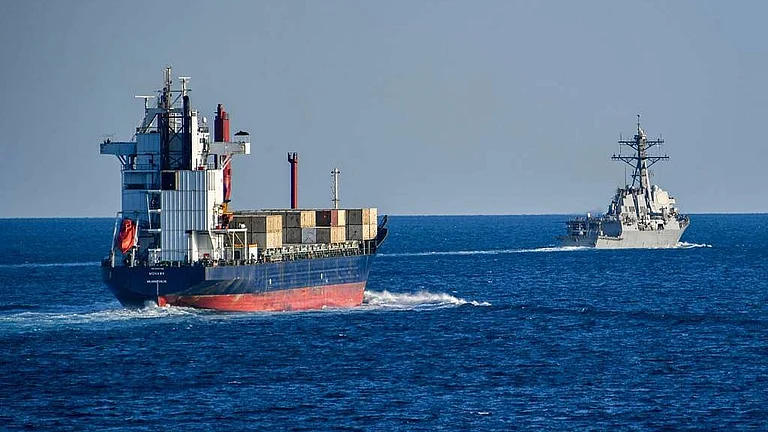
The Strait of Hormuz, a narrow waterway connecting the Persian Gulf with global shipping routes, carries nearly 20% of the world's LNG trade.
With maritime disruptions escalating in the region, Pakistan—whose imported LNG largely comes from Qatar—has found itself among the countries most exposed to supply disruptions and soaring fuel costs.
Qatar Disruptions Trigger Emergency Purchases
Pakistan's LNG strategy has long relied on long-term contracts with Qatar, its largest supplier. These cargoes normally travel through the Strait of Hormuz before reaching Karachi.
However, renewed disruptions in the waterway have interrupted those shipments.
Advertisement
According to Bloomberg, a scheduled Qatari cargo was cancelled because of the ongoing situation in Hormuz, forcing state-owned Pakistan LNG Ltd to enter the spot market for replacement supplies.
The company awarded PetroChina International a tender for a 140,000-cubic-metre LNG cargo scheduled for delivery on July 21-22 at $20.6999 per million British thermal units (mmBtu).
According to traders cited by Bloomberg, this is Pakistan's costliest spot LNG purchase since 2022. Unlike crude oil, which can sometimes be rerouted through pipelines, LNG exports from Qatar have virtually no alternative route out of the Gulf.
That makes Pakistan particularly vulnerable whenever shipping through Hormuz is disrupted.
LNG Prices Climb Sharply
The latest purchase illustrates how quickly replacement costs have escalated. As per reports, the July cargo cost nearly 24% more than a shipment purchased for delivery between June 30 and July 4.
It was also 13.5% higher than Pakistan's immediately preceding spot purchase, extending a sharp upward trend in emergency procurement.
Advertisement
The gap becomes even more striking when compared with Pakistan's long-term contracts.
According to officials quoted by Arab News, Qatari LNG under long-term agreements was costing the country around $10-$12 per mmBtu, while spot cargoes had already risen to $16-$17 per mmBtu in June.
At $20.70 per mmBtu, the latest cargo is roughly 73% to 107% more expensive than contracted supplies, substantially increasing Pakistan's import bill at a time when the country continues to face external financing pressures and limited foreign exchange reserves.
A Dramatic Reversal From Last Year
In 2025, Pakistan was dealing with excess contracted LNG after electricity demand weakened sharply.
According to Reuters, the country had surplus Qatari cargoes and even explored offshore storage and resale options. Five contracted cargoes were deferred from 2025 to 2026 without penalty.
The Institute for Energy Economics and Financial Analysis (IEEFA) later estimated that Pakistan diverted 24 Qatari and 11 Eni cargoes during 2026 as power demand remained subdued.
Advertisement
Pakistan's limited storage infrastructure and pipeline network meant excess LNG could not be stockpiled efficiently.
Instead, the country deferred deliveries, diverted shipments and even curtailed domestic gas production to manage the oversupply.
Importantly, none of this reduced Pakistan's dependence on Qatar. The country's two long-term contracts continue to cover about 6.75 million tonnes of LNG annually, leaving its energy security closely tied to Gulf shipping routes.
Energy Security Meets Economic Stress
Natural gas remains a crucial source of Pakistan's electricity generation, making LNG shortages an immediate concern for the power sector.
Higher import costs translate into more expensive electricity, while disruptions in supply increase the risk of load shedding during periods of high demand.
Industrial sectors are also under pressure. Pakistan's export-oriented textile industry depends heavily on reliable gas and electricity supplies, while fertiliser manufacturers compete with power producers for limited fuel.
Reduced gas availability for fertiliser production could eventually affect agricultural output and contribute to higher food prices.
Advertisement
The crisis also deepens Pakistan's long-standing circular debt problem. Rising fuel costs, combined with a weaker currency, increase generation expenses, while power distribution companies struggle to recover those costs from consumers.
The resulting financial stress places additional pressure on government finances.
Why Hormuz Matters So Much
The Strait of Hormuz has become the critical link connecting Pakistan's energy security to geopolitical developments. According to the US Energy Information Administration, the waterway typically carries around one-fifth of global LNG supplies.
Vessel-tracking data cited by international reports showed LNG traffic through Hormuz slowing significantly after renewed attacks, tightening supplies across Asia.
The disruption has forced Asian buyers to compete for alternative cargoes just as European countries continue replenishing gas inventories, pushing spot prices even higher.
For Pakistan, the challenge is magnified because Qatar accounts for almost all of its imported LNG. The country generally requires four to five LNG cargoes every month during the summer, when electricity demand peaks.
Lessons for India
Pakistan's experience also offers important lessons for India and other Asian importers. India imports a significant share of its LNG from the West Asia but maintains a more diversified procurement strategy, sourcing gas through oil-linked contracts, US Henry Hub-linked agreements and shorter-term purchases from multiple suppliers.
That diversification provides a greater cushion against disruptions in any single region.
Even so, Pakistan's recent tenders highlight how quickly replacement costs can escalate when contracted supplies are interrupted.
If tensions in Hormuz persist, Indian buyers could also face higher procurement costs, even if the country's overall exposure is less severe.
Pakistan's journey—from struggling with surplus LNG in 2025 to paying more than $20 per mmBtu for emergency cargoes within a year—illustrates how rapidly geopolitical crises can overturn energy markets.
It also serves as a reminder that energy security depends not only on long-term contracts but also on diversified supply sources, resilient infrastructure and the stability of critical global shipping routes.