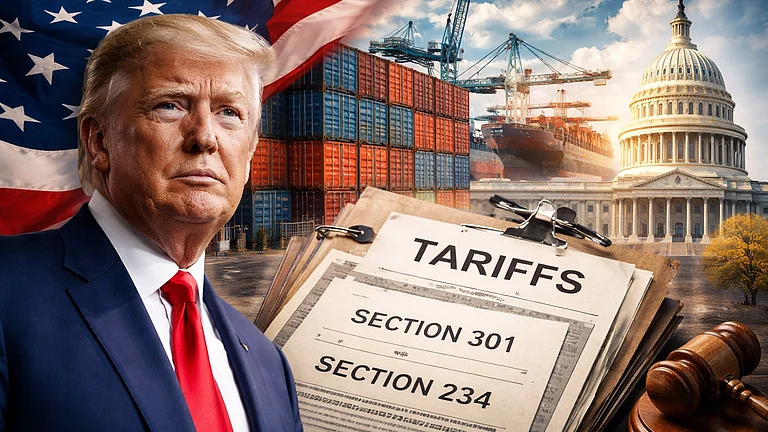
The United States is unlikely to impose additional tariffs on India under Section 301 of the Trade Act of 1974 if the two countries conclude their interim trade agreement before July 24, according to reports. India currently faces a blanket 10% tariff imposed on all US trading partners, though the measure is set to expire soon.
Can India Escape New US Duties? Key Trade Deal Deadline Looms
India could avoid additional US tariffs under Section 301 if New Delhi and Washington conclude their interim trade agreement before the July 24 deadline

Advertisement
According to a Business Standard report, an official said that one of the key advantages of finalising the trade deal at this stage is that even if India is later found to be in violation of Section 301 provisions, Washington may refrain from imposing additional duties. In such a scenario, tariffs could remain at the negotiated level of 18%.
The report added that countries found in violation of the same provision without a negotiated agreement in place could face tariffs higher than the agreed rates.
What Is Section 301?
Section 301 of the US Trade Act of 1974 is a key trade enforcement mechanism that authorises the Office of the United States Trade Representative (USTR) to investigate and respond to foreign trade practices deemed unfair, unreasonable, discriminatory, or harmful to US commerce.
Following the striking down of the reciprocal tariffs imposed under the International Emergency Economic Powers Act (IEEPA) by the US Supreme Court, the White House launched Section 301 investigations into 16 trading partners, including India, China, and Canada.
Advertisement
The probes focus on issues such as structural manufacturing overcapacity and the alleged use of forced labour.
Section 301 gained prominence during the US-China trade war in the late 2010s, when Washington imposed tariffs worth billions of dollars on Chinese imports.
Senior Trade Officials to Meet in New Delhi
Brendan Lynch, Assistant US Trade Representative for South and Central Asia and chief negotiator for the proposed India-US bilateral trade agreement, is scheduled to visit New Delhi from Monday for a four-day visit.
According to the report, officials from both countries are expected to finalise the remaining details of the interim trade agreement first announced in February.
The two sides are also likely to resume discussions on a broader bilateral trade pact covering market access, non-tariff barriers, customs and trade facilitation, investment promotion, and economic security.
In recent weeks, US Secretary of State Marco Rubio and US Ambassador to India Sergio Gor have expressed confidence that the interim agreement could be signed within a matter of weeks. Both officials indicated that negotiations are largely complete, with only a few outstanding issues left to be resolved.
Advertisement