West Asia divisions block joint statement
Iran-UAE differences dominate BRICS meet
Geopolitical tensions overshadow BRICS agenda
BRICS FM Meet Concludes Without a ‘Joint Declaration’ Amid West Asia Divisions
West Asia divisions prevent BRICS consensus Iran-UAE differences overshadow summit

PM Modi X
Advertisement
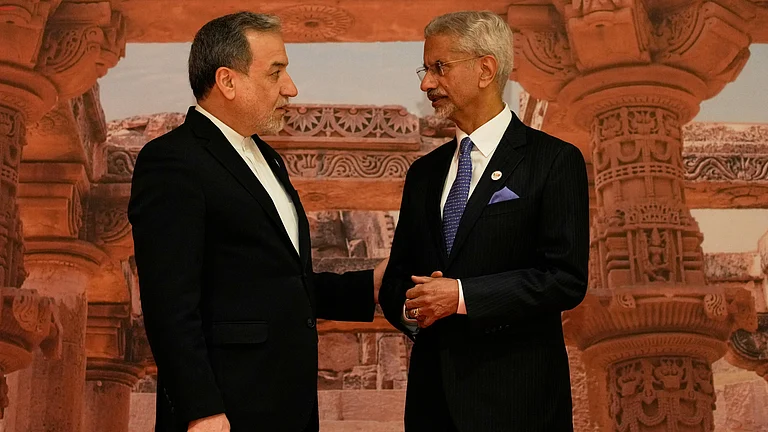
The two-day BRICS Foreign Minister’s Meeting concluded on Friday without a ‘Joint Statement’ as divisions over the conflict in West Asia and the Middle East prevented a 'Joint Declaration'.
According to the 63-point outcome document released by the Ministry of External Affairs, paragraph 21 highlighted that there were "differing views among some members as regard to the situation in the West Asia/Middle East region”, indicating sharp divisions within the grouping.
The reference came in the backdrop of continuing tensions in the West Asia region involving Iran, Israel, Saudi Arabia, UAE and other regional players. Notably, except Israel, the other three West Asian states are a part of the BRICS grouping.
The statement highlighted that the BRICS members "expressed their respective national positions and shared a range of perspectives."
It also noted the impact of ongoing tensions on the global economy, particularly over the global energy supply chain and the maritime trade route, referring to the Strait of Hormuz, which has become a geopolitical contest in this conflict.
Advertisement
The statement also discussed the situation in Gaza and Palestine and underscored that the members reiterated their "grave concern about the situation in the Occupied Palestinian Territory, with the resumption of continuous Israeli attacks against Gaza and obstruction of the entry of humanitarian aid into the territory."
Paragraph 26, which dealt with Gaza and Palestine, carried a footnote at the end stating that "A member had reservations on some aspects of this paragraph."
Notably, the statement reaffirmed the importance of "unifying" the West Bank and the Gaza Strip under the Palestinian Authority including the right of the Palestinian people to "self-determination", including the right to their "independent State of Palestine."
Similarly, paragraph 29 also carried a reservation from a member country, which focused on Red Sea security and Yemen.
According to sources, the main divisions were between Iran and the UAE which ultimately prevented the grouping in coming up with a joint statement.
Advertisement
Although India as the head of the BRICS Chair was unable to come up with a consensus, foreign policy experts argue that solving geopolitical conflicts is not a mandate of this grouping as its mandate is to reform the financial institutions.

According to Professor Swaran Singh, School of International Studies,JNU, “The Iran crisis had inevitably overshadowed the summit, but the absence of a joint statement is not surprising given that countries directly linked to the conflict, including Iran, Saudi Arabia and the UAE, are themselves part of BRICS. In addition, emerging strategic partnerships such as the India-UAE-Israel equation further complicate consensus-building within the bloc.”
Notably, on the first day of this summit on Thursday, there were sharp exchanges between UAE and Iran which had then raised questions about the bloc’s ability to achieve consensus.
While the Iranian side wanted the condemnation of the US and Israel but achieving consensus on this was not feasible, given New Delhi’s strategic ties with the US, UAE and Israel.
Advertisement