IKEA India’s Bhavana Jasiwal says workplaces must help women sustain and grow to see more women business leaders at the top.
This requires fair performance evaluations and equal access to growth opportunities.
Conscious leadership and addressing biases can help more women build long-term careers and move into senior roles.
Conscious Leadership Can Help More Women Rise to Senior Roles: IKEA's Bhavana Jasiwal
"When leaders are conscious of their own biases and give equal space to grow, more women are able to continue building long-term careers and step into senior roles," Jasiwal told Outlook Business in an interview

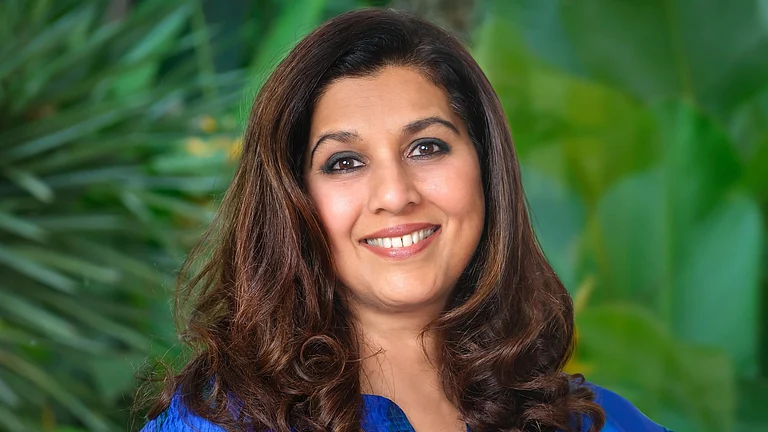
IKEA India Country E-commerce Integration Manager Bhavana Jasiwal
Summary
Advertisement
Even as Indian companies are seeing rising participation of women across functions, a growing concern has been the lack of representation at the top. The percentage of women directors in NIFTY 500 companies is just 21% in 2025. IKEA India Country E-commerce Integration Manager Bhavana Jasiwal says that to help push more women business leaders to the top, workplaces will have to help them sustain and grow.
"That means being fair in how we evaluate performance and paying attention to who gets opportunities to grow. When leaders are conscious of their own biases and give equal space to grow, more women are able to continue building long-term careers and step into senior roles," Jasiwal told Outlook Business in an interview.
In an exclusive conversation ahead of International Women's Day (IWD) 2026 on March 8, Jasiwal also talked about what pushed the Swedish firm to lean more towards an online-first approach as it expands into new markets.
Advertisement
"Entering digitally first allows us to learn directly from their shopping behaviours, the challenges they are trying to solve at home, and which parts of our range and services are most relevant to them. The insights we gain from e-commerce play a crucial role in shaping future physical formats, helping us design stores and experiences that are truly relevant to the needs of the region, rather than a one-size-fits-all approach," Jasiwal said.

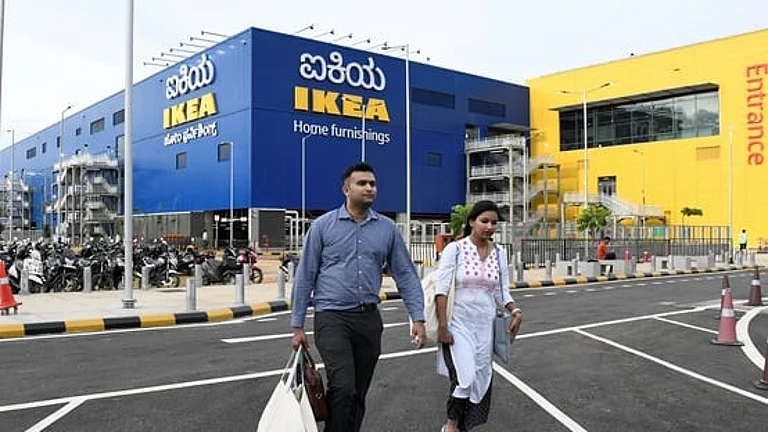
IKEA India adopted an online-first approach in cities like Mumbai and Bengaluru — entering markets digitally before opening physical stores. This is a reversal of IKEA's global playbook. How much of this strategy was driven by your team's reading of the Indian consumer, and how did you convince an 80-year-old Swedish company to do things differently for India?
At IKEA, we begin with understanding how people live, rather than following a fixed market entry formula. In India, we saw customers who are highly digital, curious and spend time researching before making big decisions like home furnishing. This naturally led us to lean more towards an online-first approach as we expanded into new markets.
India is also incredibly diverse, with homes, needs and habits varying widely from city to city. Entering digitally first allows us to learn directly from their shopping behaviours, the challenges they are trying to solve at home, and which parts of our range and services are most relevant to them. The insights we gain from e-commerce play a crucial role in shaping future physical formats, helping us design stores and experiences that are truly relevant to the needs of the region, rather than a one-size-fits-all approach.
In that sense, it is less about doing something differently and more about staying true to our purpose of reaching the many with our home solutions that support a better everyday life.
Advertisement
You've led digital transformations and e-commerce launches for Nike, Levi's and now IKEAbrands with very different product complexity and average order values. What's the hardest eCommerce problem unique to home furnishings that your previous experience didn't prepare you for?
Home furnishing is very different from categories like fashion or sportswear. Furniture is a significantly higher value and hence, higher involvement categories. This means that a purchase cycle requires more interactions, as compared to fashion or sportswear where a purchase can be completed during a single online session. When customers buy furniture, they’re not just buying a product but are making decisions that shape how they live every day. The challenge here is helping customers feel confident about those decisions when they are shopping online.
Questions around size, fit, durability, and how a product will work in a real home are much more complex in furniture. Even small mismatches can affect how the home functions day to day, which makes reassurance an important part of the online experience. The requirement for additional information or the need to discuss with a specialist or expert is much higher. That means strong planning tools like IKEA Kreativ, clear information, reliable delivery, assembly, online planning and consultation services and after-sales supportall working together.
Another aspect that is quite different with furniture is on-time deliveries. With smaller categories, it is okay if a delivery reaches the customer before the promised date– it can even be considered a customer delight in some cases. However, if furniture reaches a customer even one day earlier without prior confirmation, it has the potential to create challenges, as it is not something that can be left with security or a neighbour. So operational planning and accuracy is quite critical.
Here at IKEA, e-commerce success is not only about conversion or speed. It is about building trust in the brand over time, supporting customers through longer decision journeysand ensuring we deliver on our promises well beyond the checkout moment.
Advertisement
In India, the furniture and home market is still largely unorganised and trust-driven, people want to touch and feel. How do you crack conversion in a market where consumers may browse online but buy offline? Does data show that women and men shop differently on ikea.in?
In India, buying for the home is a considered decision and we respect that customers may take time to move from inspiration to purchase. Many start online by browsing, planning, comparingand then decide how and when to buy. Our role is to make that journey easierand seamless across omnichannel and not push customers into a single channel.
We focus strongly on trust through transparent pricing, warranties, flexible returns, planning services, and dependable delivery. Together, they help customers feel secure, especially in a market that is still largely unorganised. We also see that customers often begin with smaller purchases online and gradually move to larger ones as confidence builds.
There are some differences in how women and men shop, particularly in how much time is spent planning and researching. But increasingly, home decisions are shared. The focus is not on who buys, but on supporting households with the right solutions andassistance, both online and offline.
Advertisement
How is AI changing e-commerce experience, especially in India?
AI helps us make the online experience simpler and more meaningful for customers. Homes in India differ widely in size, layout, and how they are used. And technology can help customers move from inspiration to solutions that work in their own space.
With tools like IKEA Kreativ, customers can visualise how our products fit into their homes, making it easier to plan and feel confident about their choices. This is particularly helpful for more considered purchases like big furniture, where people want reassurance before deciding.
We do not see AI as a replacement to human judgement or the IKEA co-worker. It is there to support both customers and teams with better insights, so that choices like furnishing a home are more seamless and grounded in real everyday needs.
In eCommerce and digital leadership, women are relatively better represented than in, say, manufacturing or finance. But the pipeline narrows sharply at the CXO level. From your vantage point, what's the invisible filter that's weeding women out between senior management and the top leadership layer?
Women have ambition and capability in abundance. The real opportunity is how workplaces help them sustain and grow. At IKEA, we don’t see equality as a separate goal, but a part of how we work every day. Our founder’s vision was always about people coming together around a shared purpose, not about roles being defined by gender. That mindset still guides us.
We focus on creating a work environment where people can do their best work over time. That means being fair in how we evaluate performance and paying attention to who gets opportunities to grow. When leaders are conscious of their own biases and give equal space to grow, more women are able to continue building long-term careers and step into senior roles.
IKEA India has 48% women in its overall workforce and 60% women in senior leadership, numbers that aren't commonly seen in Indian companies. But in eCommerce and tech teams specifically, engineering, data, product, does that gender balance hold? And what according to you is needed to get more women into the Indian tech industry, especially in leadership roles?
Our ambition for gender balance applies across all functions, including e-commerce, technology, engineering, data, and product, which are areas typically dominated by men. The progress we’ve made comes from treating equality as part of how the organisation operates, not as a separate programme.
This starts with inclusive recruitment, gender-neutral training, and performance processes that actively counter unconscious bias. Managers at IKEA are encouraged to regularly reflect on their team composition and evaluation methods. We also have predictable work schedules, flexibility, and shared caregiving supportwhich can help retain women mid-career.
I think to bring more women into this industry in India, the focus has to go beyond entry-level hiring. Organisations need to re-look at roles, career paths, and evaluation systems so that people can grow without having to compromise on their personal responsibilities. When workplaces are thoughtfully designed, leadership become naturally more balanced over time.