Indian CDMOs are seeing improved demand as global pharma firms recalibrate manufacturing, said Nandini Piramal of Piramal Pharma.
Rising US biotech funding, M&A and IPO activity signal a recovery in CDMO demand.
Engagement is expanding across large pharma and emerging biotech clients, indicating a broader recovery.
US Biotech Funding, Rising M&A Signal Gradual CDMO Revival: Nandini Piramal
"We are also seeing improvement in US biotech funding, as well as higher M&A and IPO activity, which are leading indicators for CDMO demand," Piramal Pharma Chair told Outlook Business in an exclusive interview

Nandini Piramal, Chairperson, Piramal Pharma Ltd
Summary
Advertisement
As US and other global pharmaceutical companies start recalibrating their manufacturing approach to the new Trump administration's tariffs, price cut demands and funding policies, Indian Contract Development and Manufacturing Organisations (CDMOs) are seeing improved demand, according to Nandini Piramal, Chairperson at Piramal Pharma Ltd, which derives about 60% of its revenue from the business.
"We are also seeing improvement in US biotech funding, as well as higher M&A and IPO activity, which are leading indicators for CDMO demand," Piramal told Outlook Business in an exclusive interview. She emphasised that the engagement is not limited to one customer segment, as they are seeing conversations across both large pharma and emerging biotech clients, suggesting the recovery is gradually becoming broader-based.
"That said, CDMO is a long-cycle business. From RFP to contract finalisation and then to commercial revenue recognition, the timeline can be about six months or longer. Therefore, while we expect sequential improvement in Q4FY26, the more visible earnings impact will likely flow through over the next few quarters as new orders move into execution," she said.
Advertisement
The Piramal Pharma chair also talked about the broader Indian pharma industry and opportunities with the new US Biosecure Act, which restricts federal procurement and grants from specific companies that have engagements with Chinese firms. In the interview ahead of International Women's Day (IWD) 2026 on March 8, Piramal also discussed how the pharma industry can push for more women in the STEM field.
The Indian pharma sector is one of the rare fields where we see several women in leadership roles. Do you think that helps encourage young female professionals to opt for this sector?
As per recent EY Report, women account for nearly 45% of India’s STEM graduates, one of the highest proportions globally. In pharma specifically, women have strong representation across R& D, quality, regulatory and clinical research functions. That shift in perception matters for young professionals evaluating long term career paths.
That said, representation alone does not determine career choices. The Indian pharmaceutical industry, valued at around $50 billion and ranked third globally by volume, is inherently attractive, offering global exposure, high scientific rigor, and the opportunity to work on therapies that directly improve patient outcomes. The blend of science, scale, and social impact draws talent across genders.
What visible leadership truly does is remove psychological barriers. It strengthens mentorship networks, reinforces meritocracy and signals that advancement is performance driven. Over time, that normalisation deepens the talent pipeline and supports more sustainable leadership diversity across the sector.
Advertisement

What changes would you like to encourage to help more women enter the pharma sector or even STEM fields in India?
To attract and retain more women in pharma and STEM, interventions need to begin much earlier and be structural rather than episodic. While India has made strides in girls’ access to education, systemic barriers still shape career outcomes.
One critical area is early exposure to meaningful STEM experiences. Connecting students with working scientists and technologists through school outreach, hands-on science labs and industry-academia programmes demystifies pathways and builds confidence long before recruitment decisions are made. Structured mentoring from women role models has been shown to significantly influence young women’s decisions to pursue and persist in STEM careers.
Secondly, addressing the points in the pipeline where participation drops sharply is essential. Career interruptions linked to caregiving expectations, mobility constraints, and uneven access to research funding contribute to what many researchers call the “leaky pipeline.” Flexible career pathways and sponsorship networks, where senior leaders actively advocate for women’s progression can help smooth these transitions and improve retention. For instance, at Piramal Pharma we are focussed on upskilling women in local communities in the vicinity of our sites through Piramal Foundation’s Karuna Fellowship program. The program enables them to enter the organized workforce, thereby creating sustainable impact.
Advertisement
Since the start of your professional journey, have you noticed a change in women’s representation in leadership roles?
The percentage of women directors in NIFTY 500 companies has risen from 6% in 2013 to 21% in 2025. That trajectory reflects regulatory push, greater board accountability, and evolving corporate mind-sets. Even at Piramal Pharma, we have made meaningful progress toward greater gender diversity with 30% women representation on the board and 11.5% women in leadership roles. 20% of our global workforce is comprised of women.
However, numbers are only the starting point. True diversity goes beyond representation on paper. It is about creating an environment where women are not just present, but are empowered to influence strategy, run P and L mandates, and lead transformation agendas.
From my own experience, progress becomes meaningful when organisations institutionalise mentorship, sponsorship, flexible work frameworks, and leadership development pipelines. These mechanisms address real career inflection points and enable women to sustain and accelerate growth rather than plateau mid-career.
For a country like India, which aspires to faster and more inclusive economic growth, leveraging the full potential of its female workforce is not optional. Representation needs to be moving from symbolic to strategic.
Advertisement
One issue that has often been discussed is female professionals dropping out mid-career to focus on family. What steps has Piramal taken to help prevent this?
Mid- career attrition is an industry wide challenge, particularly in technical and manufacturing roles. At Piramal Pharma, we’ve taken a multi-pronged approach to support women throughout their career journeys, especially at transition points where many traditionally step back due to family responsibilities.
We institutionalised programmes that support women returning to work after a break. Initiatives like 'Second Innings at Piramal' are specifically designed to help women re-enter the workforce with confidence, offering structured onboarding, mentorship, and tailored development pathways so they can hit the ground running. Leaders champion women for stretch assignments, international exposure, and cross-functional experience all of which strengthen careers without forcing a trade-off between professional growth and personal commitments.
Beyond formal return support, we embed flexibility and choice into career planning. This includes flexible work options, role design that accommodates changing life stages and access to leadership development opportunities even when life demands shift.
Finally, what underpins all of this is culture ‘true diversity transcends numbers’ it’s about fostering an environment where women feel respected, empowered, and supported at every stage. That cultural commitment, backed by tangible policies and programmes, reduces barriers to continuity and makes long-term careers more viable for women in pharma. These initiatives have helped us see a 90% maternity retention which is industry leading.
After the third-quarter earnings, you mentioned seeing early signs of recovery in the contract manufacturing business, with a pickup in RFPs and order inflows. Could you give more colour on this? Is the recovery broad-based, and when do you expect it to reflect in earnings?
In FY26, our CDMO business was impacted by inventory destocking in a large on patent commercial product. However, alongside this near term pressure, we are seeing early signs of stabilisation.
Specifically, RFP activity has picked up meaningfully over the past few months, particularly for our North American facilities that offer differentiated capabilities in complex chemistry and sterile manufacturing. We are also seeing improvement in US biotech funding, as well as higher M&A and IPO activity, which are leading indicators for CDMO demand. The engagement is not limited to one customer segment; we are seeing conversations across both large pharma and emerging biotech clients, suggesting the recovery is gradually becoming broader based.
That said, CDMO is a long cycle business. From RFP to contract finalisation and then to commercial revenue recognition, the timeline can be about six months or longer. Therefore, while we expect sequential improvement inQ4FY26, the more visible earnings impact will likely flow through over the next few quarters as new orders move into execution.
We know the US market has faced uncertainty in recent months. Has that compelled Piramal and its CDMO peers to look beyond the market going forward?
The US remains our largest market, contributing roughly 36 to 41% of revenues, so it continues to be strategically central. However, recent developments such as the US Biosecure Act have clearly influenced how global pharma companies are thinking about supply chain risk and geographic concentration.
The Biosecure Act has prompted boards to actively evaluate “Plan B” manufacturing strategies beyond China. While China continues to offer advantages in scale and speed, rising geopolitical sensitivities and regulatory scrutiny are driving diversification. This is translating into a visible uptick in RFP activity, particularly at our US facilities, where clients are exploring onshore manufacturing for drug products and sterile fill finish.
The ability to split drug substance production in India and final formulations in the US, or serve rest of world markets from India while supplying the US locally, gives us structural flexibility.
Therefore, the shift is not about moving away from the US. It is about building resilience through a diversified, multi geography footprint. In the near term, we are seeing higher enquiry levels, but given typical CDMO conversion cycles, the financial impact is likely to play out over 12 to 24 months rather than immediately.
In the complex hospital generics business, Piramal Pharma recently acquired Kenalog. How does this injectable brand strengthen your CHG portfolio?
Kenalog is a long acting injectable corticosteroid used in treating severe inflammation, including arthritis, bursitis, and allergies. It is an established, off patent brand with physician familiarity and a legacy presence in the market.
The acquisition strengthens our presence in specialty injectable, where manufacturing complexity and supply reliability create meaningful entry barriers, reinforcing our focus on differentiated assets rather than commoditised generics. At the same time, an established brand like Kenalog enhances revenue visibility within hospital channels, helping balance volatility in other segments and improving overall portfolio mix.
At Piramal Pharma, we continue to invest in long-term growth drivers and Kenalog is a clear example of deploying capital into niche assets that strengthen the resilience and strategic depth of our Complex Hospital Generics platform.
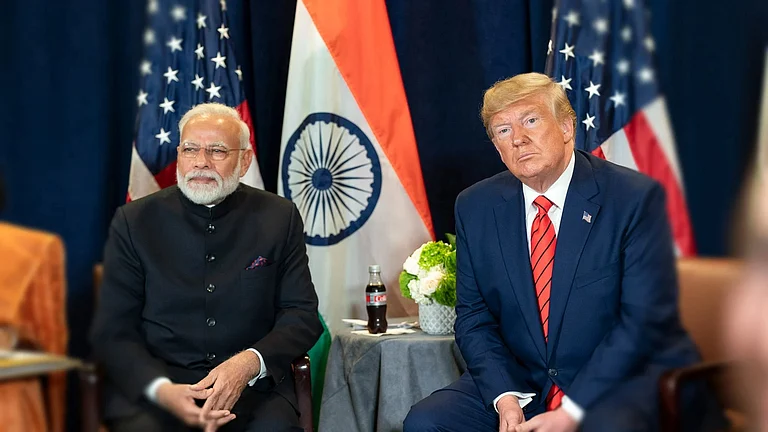
How does the recently announced US–India trade agreement and the FTA with the EU change the business outlook for Piramal and the overall pharma sector?
The newly announced US–India trade agreement signals a more constructive and predictable bilateral trade environment. For a sector like pharmaceuticals, where supply chains are global but patient outcomes are local, greater policy clarity is extremely valuable.
The US remains one of the most important healthcare markets globally, and India continues to be a trusted manufacturing and development partner. At Piramal Pharma, we operate an integrated network with development and manufacturing facilities across both the United States and India. This convergence allows us to align innovation, scale and regulatory compliance seamlessly across markets.
A stronger US–India relationship deepens strategic ties, enhances supply chain resilience, and improves long term planning for multi-year contracts in both CDMO and specialty portfolios. Ultimately, the biggest beneficiaries are our customers and patients, who gain from more stable supply, faster execution and a more collaborative cross border ecosystem. As global healthcare becomes increasingly interconnected, such partnerships strengthen not just trade flows, but trust and long-term value creation.