After Vikram Kirloskar’s death in 2022, Geetanjali and daughter Mansi stepped in to lead the family’s diversified business group.
Geetanjali Kirloskar says her transition was driven by a commitment to carry forward Vikram’s business and legacy.
She added that staying accountable to stakeholders and continuing support was a top priority.
You Can’t Push for Respect, It Comes From Hard Work: Kirloskar Systems' Geetanjali Kirloskar
"In my position, I had to be responsible and accountable to all stakeholders. It was important to me to commit continued support to them. It’s what Vikram would want, it’s how we both would want," the Chairperson and Managing Director of Kirloskar Systems Limited told Outlook Business in an interview

Geetanjali Vikram Kirloskar, Chairperson and Managing Director, Kirloskar Systems Limited
Summary
Advertisement
When Vikram Kirloskar passed away in 2022 due to a heart attack, his wife Geetanjali and daughter Mansi were overnight pushed into the family's vast business group that spans Toyota Kirloskar Motor (TKM), textile machinery, auto components and logistics.
The transition, Geetanjali Vikram Kirloskar says, was driven by her purpose to carry forward Vikram’s business and legacy.
"In my position, I had to be responsible and accountable to all stakeholders. It was important to me to commit continued support to them. It’s what Vikram would want, it’s how we both would want," she told Outlook Business in an interview.
Today, she serves as Chairperson and Managing Director of Kirloskar Systems Limited, the holding company of the diversified group.
Kirloskar says that she didn't wait to get credit for strategic decisions at the company but rather "just worked very hard to contribute and add value", respect and support followed.
Here’s an edited excerpt of the interview:
Advertisement
When Vikram Kirloskar passed away, you chose to step into the hot seat almost overnight. In that moment of upheaval, did you ever seriously consider stepping back instead of taking charge? And more broadly, do you think a woman inheriting a business empire faces a different kind of scrutiny than a son or brother would?
I transformed my grief into resolve. My purpose was to carry forward Vikram’s and our business and legacy forward with our daughter Manasi. My purpose became my anchor, not a person. In my position, I had to be responsible and accountable. To all stakeholders. It was important to me to committed continued support to them. It’s what Vikram would want, it’s how we both would want.
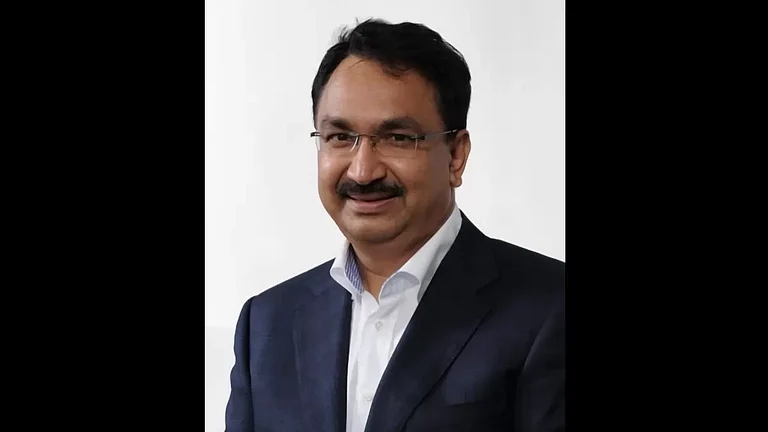
In your own experience with long-standing Japanese partners, did you have to earn that trust in a different way as a woman, or did the India–Japan cultural bridge helped make the transition smoother? And when you moved from being seen as Vikram’s partner to being the primary decision-maker in the room, what, if anything, shifted in how you were heard and taken seriously?
Advertisement
I was already working with Vikram, so all stakeholders and partners knew me as a professional . Now I was leading, so I worked hard to add value . To build on the legacy of Trust that Vikram had built. One’s work had to speak for itself, then acceptance and respect follows.
You and Manasi now run the Kirloskar-Toyota empire as a mother-daughter duo, she as Vice Chairperson of Toyota Kirloskar Motor, you as Chairperson of Kirloskar Systems. In family businesses, women often hold the fort but rarely get credited for strategic decisions. How do you ensure this partnership is seen as a genuine co-leadership and not just a placeholder arrangement?
I don’t ensure that, I just work very hard to contribute and add value. When people see your commitment, effort, hard work and value addition, they accept , respect and support. You can’t push and ensure respect and acceptance.
Advertisement
You've had a remarkable parallel life from acting to advertising. In Indian business circles, women leaders are often boxed into one identity. Has your multifaceted background been an asset or has it sometimes invited skepticism about your seriousness as an industrialist?
Yes. Vikram and I both believed in being multi dimensional. In fact, I learnt this from him. We enjoyed travel, art, theatre, music, sport, hiking, and more. We engaged in multiple hobbies & activities together. That kept us balanced and objective. It widens your horizons . Gives you different perspectives, you meet diverse people. You learn to respect and value diversity . This helps at work too.
India-Japan bilateral trade was around $22 billion last year, and you work closely with JETRO to help boost that. What's the one thing India can learn from Japan about including more women in manufacturing and industrial leadership and what's the one thing Japan can learn from India?
Advertisement
India can imbibe Japanese work culture, which is process driven, disciplined, their technological power. From India Japan can imbibe the entrepreneurial mindset, ability to handle sudden crisis, etc
There are many synergies in our cultures, and the differences can be complimentary. In the global rebalance today, I believe India & Japan can be strong powerful partners in the region and for global good.