Haryana forests hold vast curry leaf resources but lack commercial recognition policy.
Outdated laws and gaps prevent sustainable harvesting and local income generation opportunities.
Experts urge policy reforms to monetise non-timber forest produce without harming ecology.
Why Haryana Must Rethink its Forest Economy
Haryana overlooks curry leaf wealth in forests, missing rural income opportunities

Curry leaf plants grow densely in Haryana’s forest regions like Panchkula
Summary
Advertisement
Every day, thousands of tonnes of curry leaves (Murraya koenigii) are traded across India, powering a multi-crore culinary and medicinal industry. Yet, in Haryana’s Panchkula Forest Division — where over four lakhs of these plants grow wild — state policy officially treats them as economically worthless. This points to a glaring structural oversight: Haryana’s Forest policy structurally overlooks the massive potential of non-timber forest produce (NTFP).
The Kari Patta Conundrum
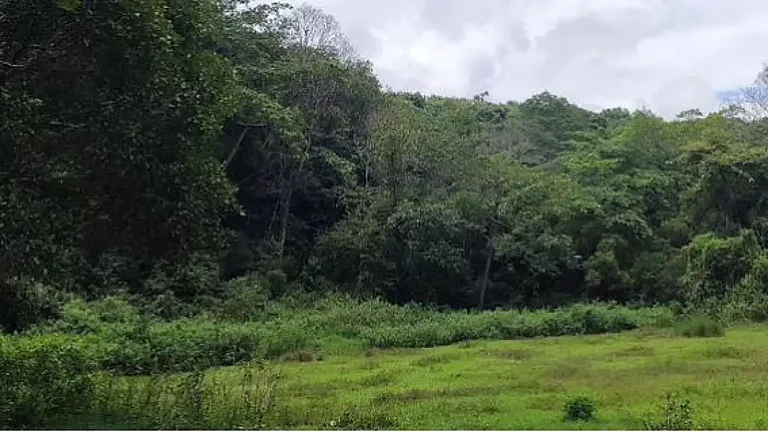
Trekking through the undulating terrain of the Panchkula Forest Division in Haryana, one is immediately struck by a familiar, sharp aroma cutting through the mountain air. Walking across the specific blocks of the Pinjore, Morni and Kalka ranges, the forest floor reveals an astonishing ecological reality. Beneath the towering canopies of mixed deciduous trees and Shivalik pines lies an impenetrable, thriving understory of Murraya koenigii—known to most Indians simply as Kari Patta or the curry leaf.
Advertisement
In everyday Indian life, the curry leaf is an indispensable culinary and medicinal staple. Yet, in the administrative corridors of Haryana’s Forest department, this highly valuable plant exists in a bizarre policy blind spot. Despite its overwhelming natural abundance in the lower Himalayas, the state completely ignores it as a commercial resource.
The sheer density of Kari Patta in this region is not a mere seasonal anomaly; it is a scientifically documented ecological feature. The Shivalik microclimate, characterised by its well-draining, sandy-loam soil and partial canopy cover, acts as the perfect incubator for this shade-tolerant shrub. A 2020 floristic diversity study conducted by researchers at Kurukshetra University laid sampling plots across the 800-to-1200-meter altitudinal belts of these very hills. Their findings were striking: Murraya koenigii emerged as one of the most dominant understory species, recording a massive density of over 73 individuals per hectare.
State-level inventories back this up. Data from the Forest Survey of India (FSI) estimates the presence of over four lakh naturally growing curry leaf plants in Haryana, almost entirely clustered within the Panchkula, Morni, Pinjore and Raipur Rani forest ranges. Furthermore, a 2017 collaborative appraisal by the Indian Council of Forestry Research and Education (ICFRE) and Patanjali Research Foundation explicitly recognised the plant's high value in these tracts.
Advertisement
With premium wholesale curry leaves routinely commanding ₹60 to ₹150 per kilogram depending on the season, this natural abundance represents Crore of Rupees in untapped annual revenue. Yet, this biological wealth translates to absolutely nothing for the local rural economy. If sustainably harvested, this could provide a massive boost in supplementary income for forest-dependent communities, directly improving rural livelihoods and empowering local village societies.

Commercialising Kari Patta
Currently, the forest resources in these ranges are co-managed by the Haryana Forest Department and local villagers through Hill Resource Management Societies (HRMS). Under the purview of the Haryana Forest Development Corporation (HFDC), a select few Non-Timber Forest Products (NTFPs) are legally auctioned and harvested. Contractors primarily bid for Bhabbar grass, which feeds local paper and rope mills, alongside Bamboo, Katha extracted from the Khair tree, and wild honey. Kari Patta, despite its immense domestic market demand and pharmaceutical applications, remains entirely absent from the HFDC’s commercial working plans.
Why is a plant so commercially valuable left unharvested? The primary hurdle lies in historical conservation laws. The Punjab Land Preservation Act (PLPA) of 1900 strictly restricts the extraction of Shivalik understory vegetation to prevent soil erosion. While ecologically crucial, this century-old law makes modern policymakers overly cautious, equating even sustainable leaf-plucking with deforestation.
Furthermore, there is a significant institutional gap. The Union Ministry of Tribal Affairs runs a Minimum Support Price (MSP) scheme for forest gatherers through TRIFED. However, because Haryana lacks a notified Scheduled Tribe (ST) demographic, it falls largely outside this central NTFP framework, leaving local communities without a federal safety net for forest foraging.
But ecology and economy do not have to be mutually exclusive. The extraction of Kari Patta does not require uprooting the plant or felling timber; it merely involves seasonal leaf plucking, which, if managed correctly, encourages healthy pruning without disturbing the vital root systems holding the Shivalik soil together.
Unlocking this opportunity requires a pragmatic, three-step policy intervention rooted in Joint Forest Management:
Silvicultural Assessment: The Forest Department must conduct localised ecological assessments to establish strict limits for sustainable leaf harvesting that do not trigger soil erosion
Commercial Integration: Once cleared ecologically, the HFDC should formally integrate Kari Patta into its working plans. This will enable transparent, legal auctions where revenue is shared directly with the local HRMS village societies.
Central Advocacy: The state government must petition central pricing cells to establish a formal baseline price for Shivalik curry leaves, ensuring fair compensation for local gatherers.
Haryana is sitting on an untapped, renewable economic engine. By shifting its bureaucratic lens to include dense understory species in state NTFP lists, the government can uplift rural livelihoods without compromising the integrity of the Shivalik hills. It is time the state looks beyond timber and finally monetises the 'green gold' growing quietly in the shade.
(Ronak R Gadhvi and Neha Sharma are Associate Fellow at TERI. The views expressed are personal.)
Advertisement