Two of India’s biggest private banks are signalling a subtle shift in retail growth priorities
Mortgages are emerging as a strategic lever beyond just loan-book expansion
The change reflects a sharper focus on quality growth, durable relationships and risk discipline
Top Indian Private Banks Turn to Home Loans for Growth
Q4 commentary from HDFC Bank and ICICI Bank points to a strategic shift toward secured lending, sticky customer relationships and long-term balance-sheet growth

Top Indian Private Banks Turn to Home Loans for Growth
Summary
Advertisement
India’s two largest private lenders, HDFC Bank and ICICI Bank, used their Q4 FY26 earnings commentary to signal that home loans could play a bigger role in the next phase of loan book growth, as banks increasingly favour secured assets that also help deepen customer relationships.
The commentary comes at a time when both lenders posted healthy balance-sheet growth for the March quarter, but management remarks suggested that mortgages are gaining strategic importance over faster-growing unsecured categories such as personal loans and credit cards.
HDFC Bank, in its Q4FY26 results commentary, said mortgage distribution has expanded significantly. Kaizad Bharucha, Deputy Managing Director, HDFC Bank, said the bank was earlier doing mortgages from about 6,800 locations and is now covering more than 7,800 locations, closer to 8,000. He added that 98% of all home loans disbursed result in customers opening a liability account, while 60% to 65% of existing borrowers repay EMIs through HDFC Bank accounts.
Advertisement
The lender’s mortgage portfolio stood at ₹8.89 trillion at March 31, 2026, compared with ₹8.71 trillion in Q3FY26 and ₹8.36 trillion a year earlier, according to quarterly disclosures. Retail advances rose to ₹16.15 trillion, while total advances under management increased 10.2% year-on-year to ₹30.57 trillion.
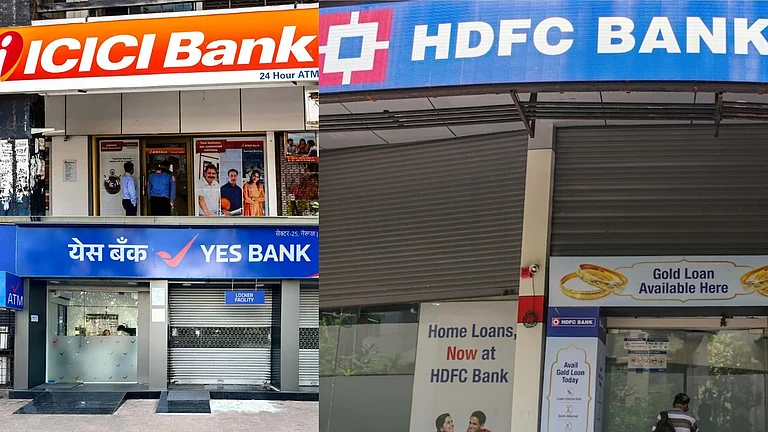
Executives also highlighted the broader value of mortgages beyond lending. Bharucha said home-loan customers are contributing to liability growth and cross-sell opportunities, noting that nearly 23% of home-loan customers hold active HDFC Bank credit cards. Sashidhar Jagdishan, Managing Director and Chief Executive Officer, HDFC Bank, said the focus is not just on the mortgage book, but on building a “large sustainable franchise over a long run.”
ICICI Bank struck a similar tone in its Q4 FY26 commentary, saying its mortgage portfolio grew 13.2% year-on-year and 4.7% sequentially to ₹4.98 trillion as of March-end. Anindya Banerjee, Group CFO, ICICI Bank, said the bank had earlier moderated growth in mortgages because of benchmark rate and spread concerns, but rate stability has now “given us the space to grow that portfolio.”
Advertisement
The contrast with other retail categories was notable. ICICI Bank’s personal loan book grew 7.2% year-on-year, while its credit card portfolio declined 5.6%. Overall retail loans rose 9.5% to ₹7.85 trillion. Total advances increased 15.8% year-on-year to ₹15.54 trillion.

Adhil Shetty, CEO, BankBazaar.com, said recent lending trends indicate that the market is stabilising rather than repricing aggressively, with most lenders operating within a narrow range across borrower segments. That, he said, typically points to a shift from volume-led growth to a more calibrated, quality-focused approach.
“That context explains the renewed push towards home loans. Mortgages work best when pricing is predictable, as both lenders and borrowers can take longer-term calls with greater confidence. As rate volatility eases, conversion cycles improve, particularly in mid-ticket segments,” Shetty said.
He added that lenders are increasingly differentiating based on borrower credit profile and ticket size rather than cutting rates broadly, supporting a broader move towards secured, lower-risk growth.
Advertisement
The shift matters because mortgages typically offer lower credit risk, longer customer tenure and multiple monetisation opportunities through deposits, insurance, cards and wealth products. In contrast, unsecured retail lending often delivers higher yields but can be more cyclical and sensitive to stress.
Both banks also entered the new financial year with strong asset quality metrics. HDFC Bank reported gross NPAs of 1.15%, while ICICI Bank’s net NPA ratio improved to 0.33%.