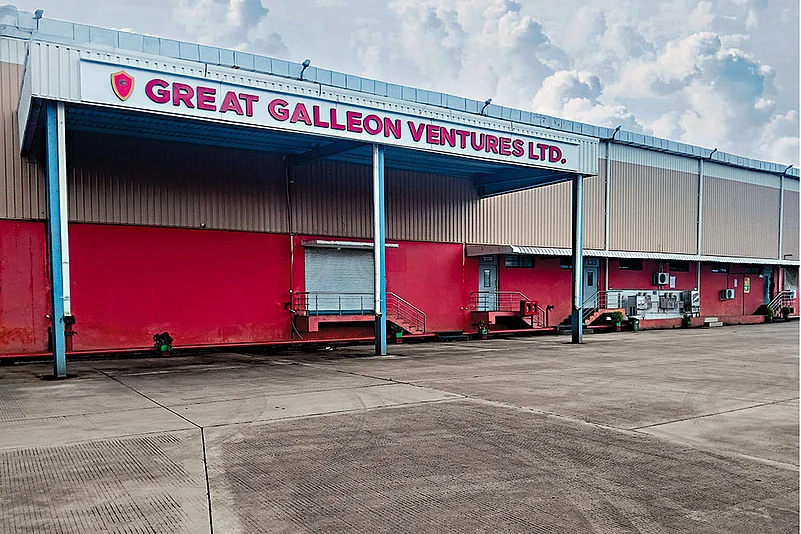
The safe bet would have been a bustling city. But in 1969, Kailashpati Kedia turned away from metros and put everything in a distillery in Dhar, a quiet Tier-III town in Madhya Pradesh.
“There’s nothing in Madhya Pradesh. Let’s go there and build something,” he had said. It was a move that would shape the future of alcobev company Great Galleon and the legacy that his grandson, Utsav Kedia, now leads.
“At that time, compared to other states, Madhya Pradesh’s ecosystem was not very developed. So, my grandfather’s vision was to go there and shape it. We became the first company in MP to launch our own Indian-made foreign liquor (IMFL) brand. Before that, everyone was only doing country liquor,” says Kedia.

1 September 2026
Get the latest issue of Outlook Business

Kedia, an MBA graduate from Insead, Paris, continues to build on that philosophy as he drives the company’s next phase of growth.
Building a Brand
Great Galleon Ventures (GGVL) began its journey as a distiller and contract supplier of rectified spirit and extra neutral alcohol (ENA), while also offering bottling services to established liquor companies.
Over the years, the company invested significantly in expanding its manufacturing and bottling complex in Dhar. With enhanced capacity and a product portfolio that spanned country liquor, ENA and IMFL, GGVL evolved from a backend producer into a brand-driven enterprise. It went on to introduce and scale its own range of consumer liquor brands, including Goa, Rascal, V21 among others.
But the legacy extends well beyond commercial milestones. The third generation grew up watching both parents at the helm, modelling a work ethic that shaped their worldview. In a sector traditionally dominated by men, Kedia witnessed his mother set a defining example through her leadership on the factory floor.
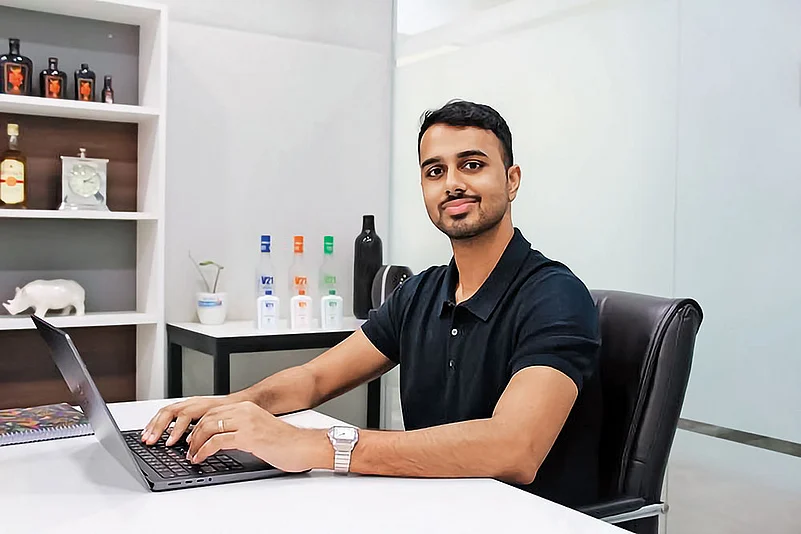

“The alcobev manufacturing sector is a male-dominated space, but my mother runs our entire factory; from bottling and distillation to procurement, administration, HR and labour management. To do that as a woman, she has to work twice as hard. She’s the first to arrive at the factory, makes her rounds before the team comes in and sets the tone for the day,” he says.
Today, according to Kedia, the company operates across a diverse portfolio and commands a 60% market share in Madhya Pradesh’s economy foreign liquor segment. His core philosophy is rooted in keeping the consumer at the centre.
“In Delhi, liquor shops are government-run, so you don’t always get the choice you want. The consumer isn’t the king the way they are in states with private retail. That was one major change we advocated for,” says Kedia.
The company was also the first distillery in Madhya Pradesh to transition from molasses-based to grain-based distillation, a more sustainable and environmentally responsible technology. GGVL now operates one of the largest state-of-the-art integrated bottling units in India, supplying to more than 20 states, including global partner Beam Suntory, a premium-spirits company.
On the manufacturing front, the company manages several packaging capabilities, from glass bottling and aluminium canning to sleeving, and has integrated polyethylene terephthalate manufacturing systems that enable it to scale operations.

Crossing Hurdles
One of the biggest challenges for GGVL has been operating in a sector where strict advertising and communication restrictions limit how alcohol brands can engage with consumers. To build brand visibility within these regulations, the Kedia family had to come up with creative solutions.
“When we develop brands, we start by asking what occasion or emotion do we want to own? That’s where it begins. You can communicate that without ever showing someone holding a bottle. Experiential marketing tapping into what your consumer wants to project about themselves is incredibly powerful,” Kedia says.
Excise duty is another factor influencing the industry. It is one of the largest sources of revenue for state governments but frequent revisions in duty rates impact manufacturers, market access, retail routes and disrupt long-term planning.
Low retail outlet density is another significant industry constraint. “India has one of the lowest outlet densities in the world, which encourages bootlegging. People buy from the limited outlets and resell alcohol deep in rural areas, often in unsafe, adulterated forms. It’s harmful both for consumers and the industry,” he says.
The Covid lockdowns also caused a temporary dent in the company’s daily operations as retail stores shut shop and supply chains were disrupted. Recovery, however, was swift once restrictions eased.
As part of its expansion strategy, the company has entered the ready-to-drink category with its brand Rascal, which is gaining traction among young consumers in metro markets. But regulatory variations are a major hurdle, says Kedia: some states allow beverages with up to 10% alcohol content, others cap it at 8% and a few restrict it to 4%.
The Food Safety and Standards Authority of India recent decision to introduce a standard code allowing production up to 15% is a positive development, says Kedia. But as each state must individually adopt and enforce the code, implementation may take another year or two, influencing how quickly new categories can scale.
A Homegrown Future
Despite the structural challenges within the sector, Kedia remains optimistic about the future of India’s alcohol industry. He notes that in markets such as the US and the UK, the alcobev space is significantly more dynamic, supported by simpler and more consistent regulations that enable new categories to grow and companies to innovate.
If India were to adopt a more streamlined regulatory approach, it would create a more vibrant environment that benefits consumers, producers and state revenues alike, Kedia says.
Global alcohol brands currently dominate the premium and mainstream categories in India, acknowledges Kedia, but he stresses that the country still has time to build a strong domestic presence, particularly as consumption patterns evolve.
Alcohol and beverage demand in India is growing at 8–10% annually, which the company views as a major opportunity for Indian producers to expand rather than remain contract manufacturers or back-end suppliers.
Across the world, alcohol carries a regional identity shaped by local culture, traditions and geography. Kedia sees a similar opportunity waiting to be fully realised in India, where traditional spirits rooted in community knowledge hold both commercial and cultural promise.
In Jabalpur, where he spent time with local producers of the traditional beverage mahua, he observed how deeply the drink is woven into the social fabric and is a marker of heritage for indigenous communities. Its value, Kedia explains, lies not just in its flavour, but in the stories, rituals and memories that have been passed down through generations.
The challenge, Kedia says, is to build markets around these traditions without diluting what makes them authentic. Any attempt to scale them must be collaborative, designed with the communities that have preserved them. The goal, as he sees it, is to create economic opportunity while ensuring that ownership and heritage are preserved with respect.
Looking ahead, Kedia envisions Great Galleon as a company that can continue to balance legacy with innovation. He reflects on the responsibility carried by third-generation leadership: maintaining the strength of the existing business while preparing for the industry’s next phase.
For Kedia, this means reinforcing core operations in manufacturing, distillation and country liquor, while simultaneously building a premium, brand-led, consumer-facing portfolio that can grow across markets and categories.