Study finds coal-linked ammonium sulphate forms major share of Delhi’s PM2.5 pollution.
Secondary particles spike during winter, driving Delhi’s most severe air pollution days.
Experts warn NCAP focus on PM10 overlooks regional sulphur dioxide emission sources.
Coal Emissions, Not Dust, Behind Delhi’s PM2.5 Pollution Spikes, Says Study
CREA study shows coal-driven secondary particles, not dust, dominate Delhi’s PM2.5 pollution

Smog engulfs skyline Photo by Marcin Jozwiak
Summary
Advertisement
The capital’s deadly PM2.5 load is caused less by local dust and more by invisible secondary particles formed as a result of emissions from burning of coal, reported Down to Earth citing a study published by Centre for Research on Energy and Clean Air (CREA).
About one-third of Delhi’s annual PM2.5 is comprised of ammonium sulphate—a fine particulate matter which is formed when sulphur dioxide emitted by coal-based thermal plants reacts with ammonia in the air—rising to almost half during episodes of smog in winter.
The report, which is based on satellite-based data from 2024, warns that the National Clean Air Program's emphasis on PM10 ignores sulphur dioxide emissions from such plants and other sources that contribute to the city's worst air days.
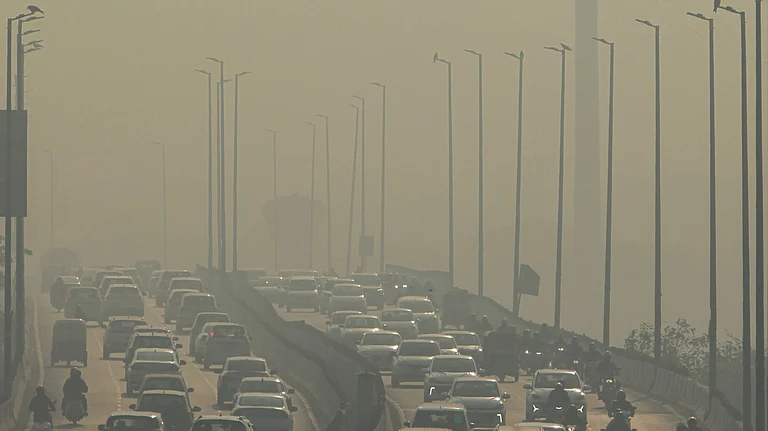
“During the city’s most polluted periods—post-monsoon and winter-ammonium sulfate dominates the PM2.5 load, contributing 49% and 41% respectively, compared with 21% in summer and monsoon. This shows Delhi’s worst pollution episodes are driven largely by region-wide sulphur dioxide emissions and secondary formation, not only local, primary sources,” the study found.
Advertisement
According to CREA, Delhi’s worst pollution episodes are driven largely by region-wide SO2 emissions and secondary formation, not only local primary sources.
Ammonium sulphate contributed between 17% and 42% of PM2.5 mass across Indian states, with most states clustering between 30 and 40% annually. The assessment concluded this by using NASA’s MERRA-2 reanalysis data for 2024.
“This establishes secondary particulate matter as a core driver of India’s PM2.5 burden, rather than a marginal or seasonal concern,” the statement pointed out.
In addition to Chhattisgarh, a number of other Indian states also reported high contributions, suggesting that secondary sulphate formation is not restricted to a few hotspots but rather is widespread and national in scope.

Policy Implications Ahead
According to the Global Burden of Disease study, which flagged coal-based power generation as a major regional pollution source, experts note that the findings echo earlier assessments by IIT Kanpur.
Advertisement
They underline the need for stricter sulphur dioxide controls, flue-gas desulphurisation and region-wide coordination beyond city-centric air action plans.