Delhi and Mumbai record severe and unhealthy AQI as pollution persists.
National Pollution Control Day highlights Bhopal tragedy and environmental responsibility.
Reports show external, local and construction-linked emissions worsening urban air quality.
National Pollution Control Day Finds Delhi, Mumbai Gasping for Clean Air
As India commemorates the fight against pollution, its biggest cities face fresh spikes

Smog engulfs Delhi Photo by PTI
Summary
Advertisement
National Pollution Control Day arrives with a bitter irony this year—Delhi and Mumbai, the country's two largest cities, are choking under some of their worst air quality levels of 2025: As India marks December 2 to remember the victims of the Bhopal gas tragedy and renew its commitment to cleaner air, Delhi's AQI stood at a 'severe' 252 while Mumbai recorded an 'unhealthy' 167 at 1 pm, underscoring just how far the nation remains from that goal.
December 2 commemorates the memories of those who lost lives in the 1984 Bhopal gas tragedy where lethal methyl isocyanate was leaked from the Union Carbide pesticide plant that spread silently over Bhopal, killing thousands overnight and leaving generations to cope with chronic health complications.
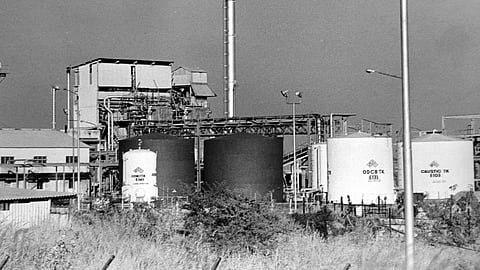
Bhopal Chemical Factory
The day stands as a stark testament to the importance of monitoring and managing industrial incidents and serves as a reminder of disastrous consequences of industrial ignorance.
This year's theme, 'Sustainable Living for a Greener Future' brings the focus back to everyday choices that could restore the country's environmental health in the long run.
Advertisement
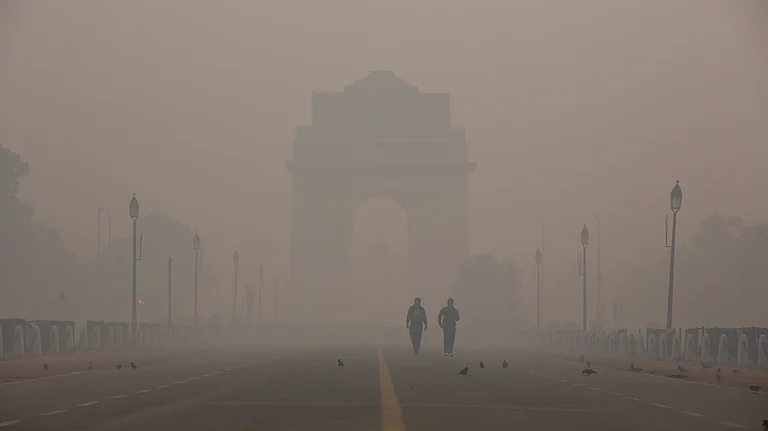
The Haze Over Delhi & Mumbai
Despite farm-fires at a multi-year low, Delhi-NCR's air is far from healthy. Pollution levels in the national capital oscillated between 'very poor' and 'severe' for most of October and November. This is caused by a combination of factors including vehicles and other local sources, resulting in high levels of PM2.5, nitrogen dioxide (NO2) and carbon monoxide (CO).
Citing a report by the Centre's Decision Support System (DSS), Hindustan Times reported on October 20 that at least 67.89% of total PM2.5 contribution in Delhi was from external sources. The remaining 32.11% of contribution was attributed to pollution sources within the capital, primarily vehicular emissions.
Stubble burning—a key factor cited by governments over the years—was surprisingly not a part of the top five contributors outside Delhi. The DSS data showed that the pollution from neighbouring NCR towns is a major contributing factor. The report did acknowledge that when farm fires are at their peak — typically in the last week of October and the first week of November, the share of stubble burning in Delhi's air can shoot up between 35-45%.
Advertisement

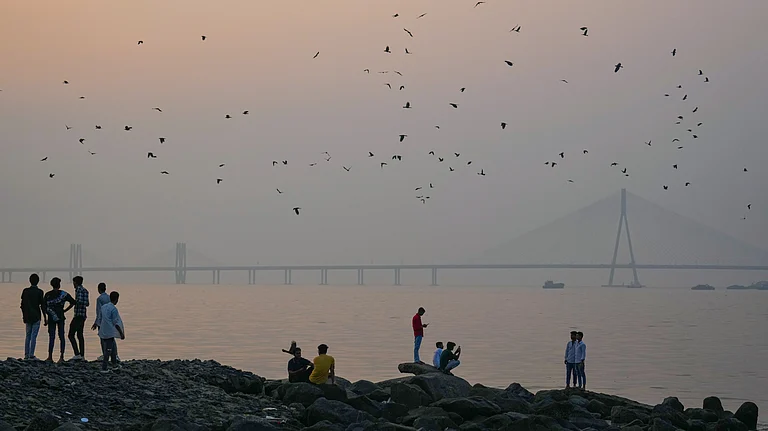
Air Pollution in Mumbai Photo by PTI
According to a PTI report published on November 30, experts attributed the spike in the AQI levels in Mumbai and its satellite cities to an increase in construction activities further aggravated by various infrastructure projects and vehicular pollution.
Mumbai's usual sea breeze, which clears pollutants, has been weakened by La Nina and stagnant, humid conditions, trapping smog near the surface. Pollutants build up after monsoon rains, increasing respiratory problems, particularly in children, the elderly and people with underlying medical conditions.
Health Impacts of Air Pollution
While the sources of pollution for the two cities may be different, the impact remains the same: impaired health of residents living in the two cities. According to World Health Organisation (WHO), air pollution is a risk for all-cause mortality as well as specific diseases. The disease outcomes linked to exposure to air pollution include stroke, lung cancer, pneumonia, ischaemic heart disease, chronic pulmonary disease and cataracts (in the case of household air pollution).
Advertisement
Exposure to air pollution can also severely impact pregnancy outcomes, leading to low-birth weight or small for gestational age infants. In addition, prolonged exposure may increase the risk of cancers, diabetes, cognitive impairment and neurological diseases, according to WHO.

According to a report published by Dalberg in September 2021, India's worsening air pollution is having a ruinous impact on its economy, with estimated losses to the tune of $95bn annually or roughly 3% of the country's GDP. Commenting on the costs that add up in "every phase", Bhargav Krishna of the Delhi-based research collective Sustainable Futures Collaborative told AFP, "From missing a day at work to developing chronic illness, the health costs associated with that, to premature death and the impact that has on the family of the person."
The Dalberg report also revealed that air pollution contributes to 18% of all deaths in India. In fact, India lost 3.8bn working days in 2019, costing $44bn due to air-pollution-related deaths. Premature mortality affects not only the current workforce, but also future generations, with children under the age of 1 contributing to 34% of the total impact. As the median age of India's population increases from 27 in 2019 to 32 in 2030, susceptibility to air pollution will increase, raising concerns about a sub-optimal workforce.
Advertisement
Proactive measures at the individual level, such as using energy-efficient appliances, reducing electricity consumption and supporting sustainable brands, along with proper implementation of policies from governments and cleaner industrial operations, could help mitigate pollution.