The US and Iran have agreed to an interim truce and a 60-day negotiation framework aimed at reaching a broader peace agreement.
Analysts warn that continued fighting involving Hezbollah in Lebanon and broader regional tensions could undermine the effectiveness of the ceasefire.
The conflict disrupted shipping through the Strait of Hormuz, pushed crude oil prices sharply higher and exposed vulnerabilities in global energy supply chains.
US and Iran Have a Deal, But the West Asia Crisis Is Far From Over
The United States and Iran have signed an interim ceasefire agreement after nearly four months of conflict, but unresolved tensions over Lebanon, regional militias and maritime security continue to raise questions about whether the fragile truce can hold

AI Generated
Summary
Advertisement
The US and Iran have entered a temporary truce and released the text of the interim agreement on Wednesday. Both heads of state signed it, with US President Donald Trump announcing fresh threats of resuming attacks and killing Iranian officials if they fail to honor their commitments.
"We're going to bomb the hell out of them if they violate the agreement," Trump said at a press conference. "I don't want them to. I want them to honor the agreement." Iranian leaders have not responded to the fresh threats.
"Everything we sought to achieve through military action, we obtained several times over through negotiation; it was not even comparable," Iran's lead negotiator Mohammad Baqer Qalibaf told state media Tasnim.
The Story So Far
While the agreement is the biggest breakthrough in the Iran-US war, which began on February 28, Trump’s threats and broader regional issues still raise questions about the effectiveness of the ceasefire.
Advertisement
The war intensified with the US and Israel launching a combined military attack against Iran, which took the life of Iranian Supremo Ayatollah Ali Khamenei.
Tehran shut down the Strait of Hormuz, the critical waterway through which 20% of global energy trade transits, in retaliation.
The war also led to global crude prices hitting multi-year highs, with benchmark Brent crude prices soaring as high as $126 per barrel.
The International Energy Agency had to release emergency stockpiles, while Washington had to lift some sanctions against Russian crude to prevent crude from hitting $150 per barrel.
Supply chain disruption and soaring crude prices exposed several economies, including India, to an energy crisis, with analysts warning that without an immediate resolution, global economic growth would slow down and persistently elevated crude prices could lead to a recession.
Both parties announced a temporary ceasefire in March and extended it by 60 days. Points of friction consistently arose at the negotiating table, with Iran refusing to engage in diplomatic talks as the US demands were "excessive."
Advertisement
Washington wanted Tehran to surrender its enriched uranium and accept a moratorium on uranium enrichment for twenty years.
The strait was then further blocked by the US Navy following the fallout between the two states, escalating tensions in the region.
On Wednesday, after nearly four months of conflict, Trump and his Iranian counterpart Masoud Pezeshkian digitally signed the memorandum of understanding, with the Iranian Foreign Ministry stating the agreement was already in effect.
"The United States of America and the Islamic Republic of Iran and their allies in the current war, by signing this MOU, declare the immediate and permanent termination of military operations on all fronts, including in Lebanon," the text read.
Will the Ceasefire End the West Asian Crisis?
While the agreement explicitly states an immediate end to the war on all fronts, including Israel’s combat against the Iran-backed militant group Hezbollah in Lebanon, the Lebanon issue has been at the forefront since the beginning of negotiations.
Advertisement
Tehran and Washington had come to a consensus, but Tel Aviv did not accept the deals and continued the fight on the Lebanon front.
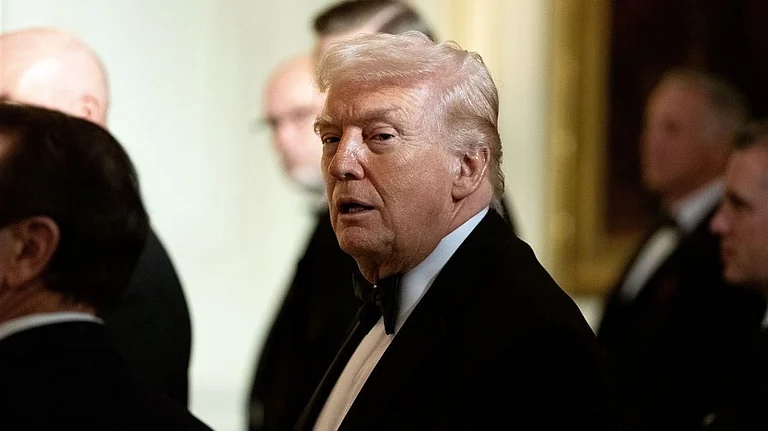
Trump on Wednesday rebuked Israeli Prime Minister Benjamin Netanyahu.
"Netanyahu happens to be a good man, gets a little excited sometimes," Trump told reporters. "We have a little dispute over Lebanon. I say you can do a little softer touch, Bibi," he said. "You don't have to knock down a building every time somebody walks into it that's from Hezbollah."
Meanwhile, Lebanese state media reported fresh Israeli air strikes and artillery fire in several southern towns on Wednesday, according to a Reuters report
The Problems Run Deeper
According to a report by The Guardian, citing analysts and experts, the Lebanon question remains the most striking issue.
For most of the conflict, the US demand to stop Iran's nuclear programme and Iran's demand to unfreeze foreign assets worth $20 billion were the top points of friction. However, an agreement on those issues has now been reached.
Advertisement
As per reports, the Israeli fight in Lebanon holds weight in the effectiveness of the agreement and, according to the report, such ceasefires remain fragile, with analysts citing Gaza as an example.
Israel needs the US to address what is known as the Axis of Resistance, a coalition of militants including Hezbollah in Lebanon, Hamas in Gaza and the Houthis in Yemen, alongside other militant groups in Iraq.
Ceasefires without addressing the deeper regional issue may risk being peace deals only on paper, with millions stranded without food supplies, healthcare, education and basic security.
60 Days to Negotiate
As per the memorandum, it gives both countries 60 days to negotiate and finalize a comprehensive broader agreement by mutual consent. A binding United Nations Security Council resolution would be required to bring the final deal into effect, reports said.
"The United States of America and the Islamic Republic of Iran commit to negotiating and achieving the final deal in a maximum of 60 days, extendable with mutual consent."
However, while the current agreement brings optimism around peace, policymakers remain cautious. A senior official cited by The Guardian said, "Either side can walk away at any time."
In case negotiations collapse again, the US has hinted that it is prepared to tighten economic pressure on Iran, while Iran has demonstrated that it holds significant control over maritime traffic through the critical waterway.
A fallout is likely to have a ripple effect and a massive impact on global markets and the economy, with the instability spilling over beyond West Asia.