Stable borrowing costs are supporting both homebuyers and developers amid global uncertainties
Rising fuel, labour and material costs threaten affordability and project economics
Despite slowing sales and rising inventory, long-term drivers such as urbanisation and infrastructure growth continue to support the sector
RBI Holds Rates, But Inflation and Inventory Are Becoming Realty's New Headwinds
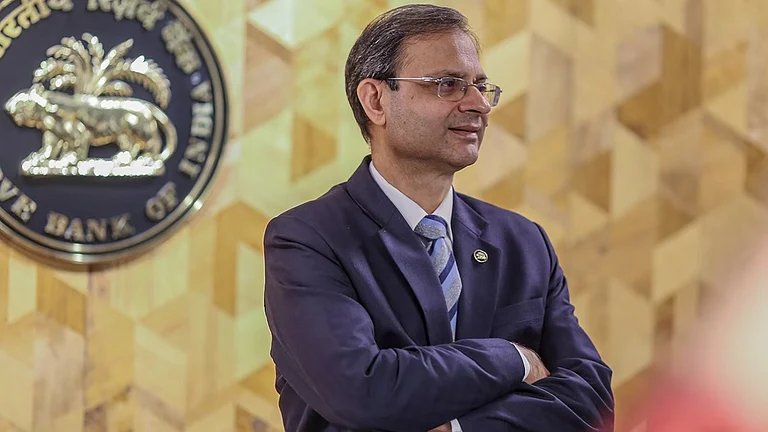
The RBI's decision to keep the repo rate unchanged at 5.25% has provided much-needed stability to India's real estate sector amid geopolitical uncertainty and rising inflationary pressures

RBI Holds Rates, But Inflation and Inventory Are Becoming Realty's New Headwinds
Summary
Advertisement
The Reserve Bank of India’s decision to keep the repo rate unchanged at 5.25% offers a breathing space to India’s realty sector, especially at a time when global uncertainties are intensifying due to the ongoing Iran war.
While homebuyers and developers welcome the stability in borrowing costs, industry experts warn that rising inflation, higher construction expenses and geopolitical tensions are creating fresh challenges for the real estate sector. These factors could test the realty market’s momentum in the coming quarters.
“The sector is witnessing strong annual growth amid short-term geopolitical shocks, and this rate pause reflects rising consumer pressures and volatile construction environments. External vulnerabilities have tested the broader macroeconomic environment in early 2026,” said Anuj Puri, Chairman of ANAROCK Group.
And these macroeconomic indicators are beginning to influence buying decisions and investment plans. The rising geopolitical uncertainty has also led many potential Middle East investors, who tend to put large amounts of money into Indian housing, to pause their buying.
Advertisement
As per data, India's housing market witnessed a sequential slowdown in the first quarter of 2026, with residential sales declining 7% quarter-on-quarter to around 1.02 lakh units from nearly 1.09 lakh units in the previous quarter. The total value of sales also dropped 5% to ₹1.51 lakh crore.
However, the broader demand picture remains robust. Compared to Q1 2025, residential sales volumes grew 9%, while the overall value of homes sold increased 6%, highlighting the sector's resilience despite rising costs, geopolitical uncertainties and a challenging macroeconomic environment.
Beyond Interest Rates
While the decision ensures stability in borrowing costs for now, experts believe the bigger concern for the real estate sector is no longer the cost of loans but the rising cost of living and doing business. Inflation has emerged as the dominant risk facing households, according to Adhil Shetty, CEO of BankBazaar.
Advertisement
While existing borrowers will not see any immediate changes in EMIs, Shetty said rising fuel, transportation and input costs could put pressure on household budgets and purchasing power over the coming months. The ripple effects are already being felt across the real estate value chain.
Vimal Nadar, National Director and Head of Research at Colliers India, noted that construction costs are rising due to increasing material and labour expenses. If these pressures persist, developers may eventually pass on a part of the additional costs to homebuyers, particularly affecting the affordable and mid-income housing segments.
Industry experts also caution that while the current rate environment remains supportive, the possibility of future rate action cannot be completely ruled out if inflationary pressures intensify.
For now, the RBI appears focused on balancing growth and price stability, but much will depend on how global energy markets, supply chains and domestic inflation evolve in the near future.
Advertisement

Inventory Challenge Looms
Even as housing demand remains resilient on an annual basis, developers are confronting a growing supply-side challenge. New project launches have begun to outpace sales, signalling a reversal from the post-pandemic period when strong demand helped absorb inventory at a rapid pace.
According to ANAROCK Research, developers launched more than 1.26 lakh housing units during the first quarter of 2026, marking a sharp increase from a year earlier. The pace of launches has exceeded sales activity, leading to a rise in unsold stock across major residential markets.
As a result, unsold inventory has climbed past the six-lakh-unit mark, raising concerns about absorption levels if demand moderates further amid global uncertainties. A larger inventory overhang can also put pressure on developers' cash flows, particularly at a time when construction costs are rising and access to capital remains critical for project execution.
Advertisement
Puri noted that while domestic housing demand remains fundamentally strong, a stable and affordable financing environment will be crucial to absorbing the growing stock of unsold homes.
The policy pause, therefore, not only protects homebuyers from higher borrowing costs but also provides developers with a buffer as they navigate rising inventories and an increasingly uncertain global backdrop.
Demand Holds Firm
Despite concerns around inflation, realty experts believe that the RBI's decision to maintain a stable interest-rate environment is expected to support both buyer sentiment and developer confidence at a time when global uncertainties are weighing on investment decisions.
Ramani Sastri, Chairman and Managing Director of Sterling Developers, said the policy pause provides much-needed stability amid geopolitical tensions and volatile oil prices. According to him, a predictable borrowing environment will help sustain homebuyer confidence and support project execution, while continued infrastructure development, urbanisation and rising consumer aspirations remain strong demand drivers for the housing market.
On the other hand, developers also observed that buyers are becoming more decisive in their purchase plans. Ashish Acharya, Founder and CEO of Propsoch, noted that previous rate cuts have already eased borrowing costs, reducing the likelihood of prospective homeowners delaying purchases in anticipation of further monetary easing.
Instead, buyers are increasingly focused on factors such as employment stability, income visibility and overall economic conditions.
The positive sentiment extends beyond residential real estate. Manas Mehrotra, Founder of 315Work Avenue, said stable borrowing costs are also supporting long-term investment decisions in the commercial real estate segment.
As companies continue to adopt flexible workplace strategies and expand operations, predictable financing conditions are helping sustain leasing momentum and encourage fresh development activity.
While challenges persist, industry leaders believe the sector remains fundamentally resilient. The combination of stable interest rates, strong end-user demand and India's long-term urbanisation story is expected to provide a cushion against short-term economic and geopolitical disruptions, helping the real estate market maintain its growth trajectory through the remainder of the year.