Deadline extended to July 31, 2027.
Up to 4,500 pairs allowed yearly for R&D imports.
FY2026 footwear imports stood at $628.8 million.
MSEs in Non-Leather Footwear Sector Get One More Year to Meet Quality Control Norm
Smaller manufacturers now have until July 31, 2027 to obtain BIS certification, while limited imports for R&D have also been allowed.

MSEs in Non-Leather Footwear Sector Get One More Year to Meet Quality Control Norm
Advertisement
The government has provided one more year till July 31, 2027 to micro and small enterprises (MSEs) from the non-leather footwear sector to comply with the mandatory quality control order.
The move would give smaller footwear manufacturers more time to obtain BIS (Bureau of Indian Standards) certification.
It has also allowed footwear manufacturers to import up to 4,500 pairs annually for research, design development, testing, and other non-commercial purposes without meeting QCO (quality control order) requirements.
However, these imported footwear have to be marked as "NOT FOR SALE" and have to be disposed of as scrap, the Department For Promotion of Industry and Internal Trade (DPIIT) said in a notification amending the Footwear made from all Rubber and all Polymeric Material and its Components (Quality Control) Order, 2024.
Commenting on the order, think tank GTRI said The R&D exemption is expected to help Indian manufacturers access global samples and accelerate product innovation without facing regulatory barriers.
Advertisement
The amendment applies only to footwear made from rubber and polymeric materials.
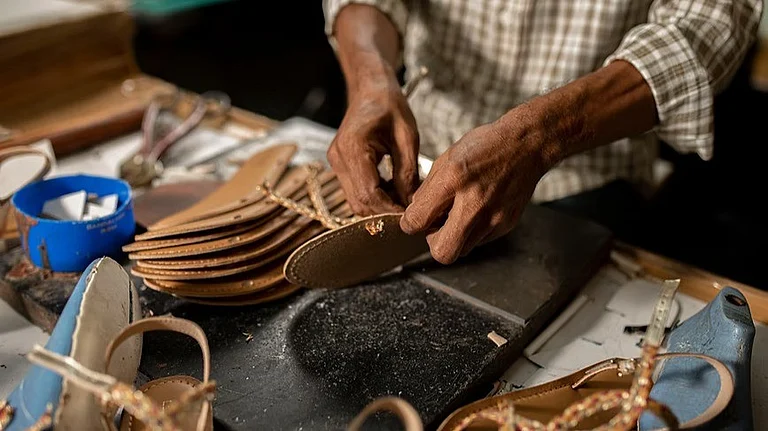
Leather footwear remains governed by a separate quality-control regime under the footwear made from leather and other materials (Quality Control) Order, 2024, which requires BIS certification for 12 categories of footwear.
India imported $628.8 million of footwear and related products in FY2026.
Vietnam was the largest supplier at $211.7 million, followed by China ($114.9 million), Bangladesh ($99.5 million), Indonesia ($77.3 million) and Thailand ($22.6 million).
Together, these five countries accounted for more than 80 per cent of India's footwear imports.
"Most imports were non-leather footwear and footwear components, including soles, uppers and other inputs used by Indian manufacturers, underscoring the industry's reliance on regional supply chains for materials and specialised parts," GTRI Founder Ajay Srivastava said.