MCD enforces higher green charges for commercial vehicles entering Delhi.
Revised rates aim to curb pollution-heavy freight and emissions impact.
Supreme Court MC Mehta ruling drives stricter environmental compliance framework.
MCD Green Charges Set to Make Entry to Delhi Costlier for Commercial Vehicles
Delhi raises green charges for commercial vehicles after Supreme Court directive

Commercial trucks queue at Delhi border as new green charges apply
Summary
Advertisement
The Municipal Corporation of Delhi (MCD) plans to immediately implement the revised environment compensation charges (ECC) for commercial vehicles entering the city, in line with a recent order of the Supreme Court.
The revised rates, aimed at discouraging polluting vehicles, have significantly increased across categories, according to officials.
According to the order, for Category 2 vehicles (light commercial vehicles) and Category 3 vehicles (two-axle trucks), the ECC has been raised from ₹1,400 to ₹2,000.
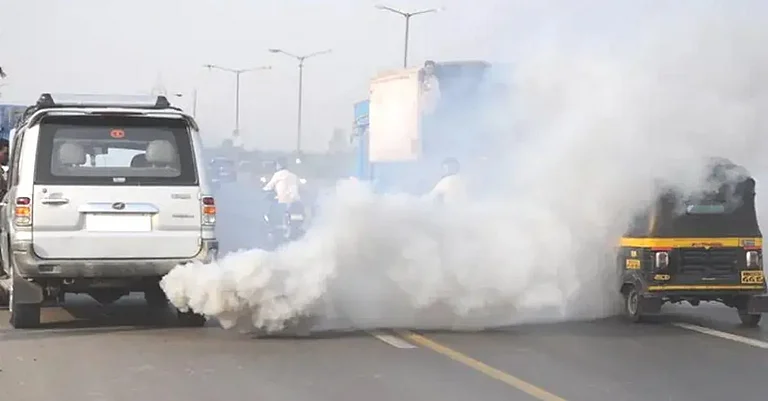
For heavier vehicles, the charges have seen a steeper hike. Category 4 vehicles (three-axle trucks) and Category 5 vehicles (four-axle trucks and above) will now be charged ₹4,000, up from ₹2,600.
Officials said the revision follows the Supreme Court's directions in the MC Mehta vs Union of India case, which called for higher ECC rates to curb vehicular pollution in the national capital.
The ECC is a fee charged on commercial vehicles entering Delhi to help reduce air pollution.
Advertisement
The charges are levied on all commercial vehicles entering the city and are in addition to the existing toll. Officials said at least 4000 trucks enter the national capital on a daily basis and the increase is intended to act as a deterrent, particularly for heavier and more polluting vehicles.

SC Orders Stricter Emission Rules
The Municipal Corporation of Delhi will enforce revised Environment Compensation Charges for commercial vehicles entering the city, following a directive from the MC Mehta vs Union of India.
The updated structure significantly raises penalties for higher-emitting freight transport with the objective of strengthening deterrence against pollution-heavy traffic. The move is part of ongoing efforts to tighten environmental compliance in the capital and reduce the impact of vehicular emissions on air quality. Officials said the revised framework is expected to influence freight movement patterns and encourage cleaner transport alternatives over time.
Advertisement
The MC Mehta vs Union of India is a long-running Supreme Court case that forms the legal foundation for pollution control. MC Mehta vs Union of India is a landmark series of environmental cases decided by the Supreme Court of India beginning in the 1980s. Initiated by environmental lawyer M C Mehta, the litigation established key principles of Indian environmental law and expanded the constitutional right to life to include a healthy environment.
(With inputs from PTI.)