The war between Iran and Israel could extend until September, far longer than the 4-week timeline suggested by Donald Trump.
The conflict may extend because US government bodies were not fully informed before the strikes were launched.
Second reason could be Iran's retaliation as rather than absorbing the strikes quietly, it has attacked with drones and missiles.
Iran-Israel War Could Last Until September, Contradicting Trump's '4-Week' Claim
US military's own request for additional intelligence staff contradicts Trump's initial claim of a four-to-five week operation

Israel-Iran War Photo by AP
Summary
Advertisement
The Israel-Iran war may be far from over, and the American military appears to know it. An internal Pentagon notification obtained by Politico reveals that the US Central Command has requested additional military intelligence officers to support operations against Iran for at least 100 days, and potentially through September.
That timeline stands in stark contrast to what US President Donald Trump told when the conflict began.
When the United States and Israel launched coordinated strikes against Iran on February 28, the operation was presented as swift and decisive. Trump publicly described it as a short military effort, expected to wrap up in roughly four to five weeks.
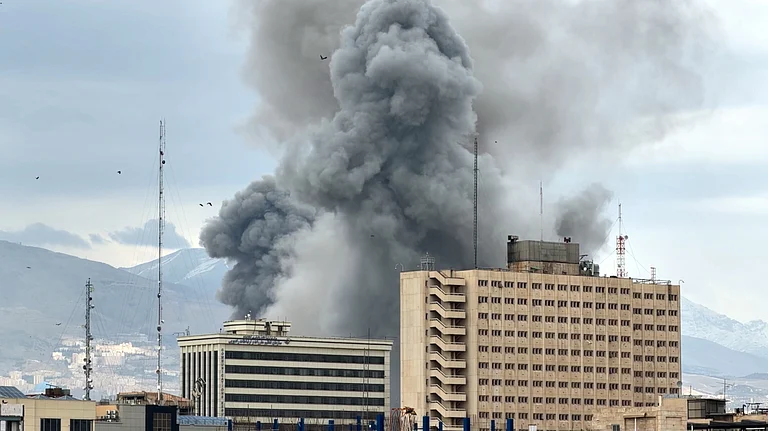
However, the internal Pentagon document tells a different story. The US Central Command, which oversees American military operations across West Asia, has asked the Pentagon to send more intelligence officers to its headquarters in Tampa, Florida, the report added.
Advertisement
The request covers at least 100 days of operations, but likely extends through September.
Politico described this as "the first known call for additional intelligence personnel for the Iran war by the administration", and a clear sign that the Pentagon is already setting aside funding for a conflict that may run well beyond the four-week window Trump initially outlined.

Signs US Was Caught Off Guard
Perhaps more troubling than the extended timeline is what it implies about the planning, or lack thereof, that preceded the strikes.
The scramble to deploy more intelligence staff and organise evacuations for American citizens in the region suggests that key parts of the US government were not fully informed before the strikes were launched, according to officials cited by Politico.
Standard practice for major military operations typically involves weeks or even months of coordination across government agencies, including evacuation planning, diplomatic contingency measures, and logistical groundwork.
Advertisement
Instead, several former officials have described the current effort as improvised.
Gerald Feierstein, a former senior US diplomat with extensive experience in Middle East policy, was blunt in his assessment to Politico. He said the process appeared chaotic, describing it as "a completely ad hoc operation where it appeared that nobody actually understood or believed that military action was imminent." "It seems like they woke up on Saturday morning and decided that they were going to start a war," he added.
Iran Is Hitting Back Hard
A second reason the conflict could drag on is the scale of Iran's response. Rather than absorbing the strikes quietly, Iran has retaliated with drone and missile attacks on American and allied targets across the region.
One such attack struck a port facility in Kuwait, killing six US troops, a reminder of how exposed American military installations are to Iran's growing drone capabilities.
Advertisement
Together, the internal Pentagon timeline, the rushed deployment of resources, and Iran's active retaliation paint a picture of a war that is deepening, not winding down.