Iran’s leadership vacuum has raised geopolitical risks for India’s energy and trade interests in West Asia.
Crude price volatility is the immediate concern, as tensions around the Strait of Hormuz could lift India’s oil import bill.
Trade flows and freight costs may face pressure if instability in the region persists.
Iran’s Power Vacuum Sends Shockwaves Through India’s Oil and Trade
India’s leadership is parsing through multiple scenarios, balancing diplomacy while preparing for unforeseen geopolitical shifts

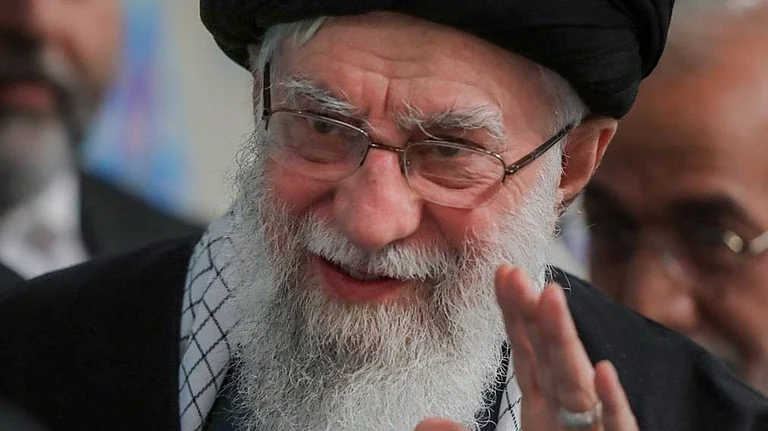
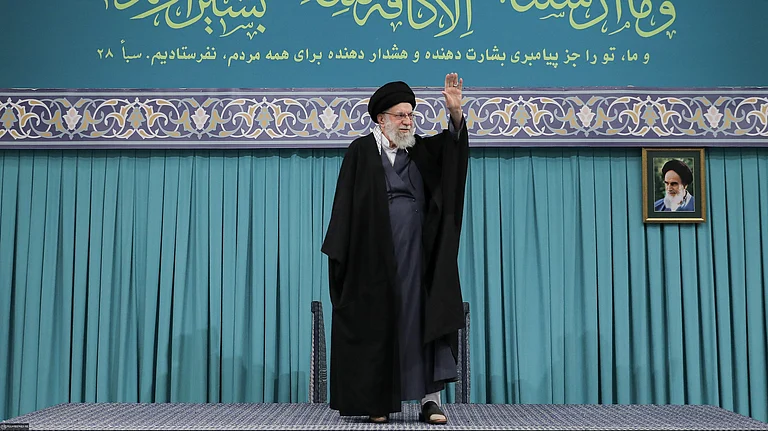
Iran’s Supreme Leader, Ayatollah Ali Khamenei X_#@Khamenei.ir
Summary
Advertisement
Iran is burning, and India is watching, but not from a safe distance. The sudden leadership vacuum has raised alarm bells in New Delhi, not just on diplomatic fronts but across economic, trade and energy channels that tie India to West Asia.
With the long-serving Supreme Leader Ayatollah Ali Khamenei no longer in the picture, Tehran now faces a critical moment of transition. Earlier indications pointed to a succession plan that could see his second-eldest son, Mojtaba Khamenei, step into the role. However, the possibility of internal dissent and instability remains high. A messy power shuffle could ripple into broader policy changes across the region.
India’s leadership is parsing through multiple scenarios, balancing diplomacy while preparing for unforeseen geopolitical shifts.

In our earlier report, we had already discussed that the timing of Khamenei's death could not be more complicated for India.
Advertisement
Just days before the strikes, Prime Minister Narendra Modi was in Tel Aviv for a landmark visit, the only Indian PM to visit Israel twice and the first to address the Knesset.
The two countries signed sixteen agreements, upgrading their ties to a "Special Strategic Partnership." Defence deals worth up to $10 billion, covering Israel's Iron Dome, Arrow missile defence, and precision strike systems, are on the table.
Modi said publicly that India stands with Israel with "full conviction." The optics were clear.
But India's calculus is considerably more tangled than that. India also operates the Chabahar Port in Iran, a strategic gateway to Central Asia, and imports a substantial share of its oil from the Gulf.
Iran has long been a crucial partner in India's connectivity ambitions, offering a land-sea route bypassing Pakistan to reach Afghanistan and Central Asian markets.
Advertisement
India has simply urged its nationals and workers in Israel and Iran to "exercise utmost caution." Due to India's non-alignment foreign policy, its approach is widely expected to be to monitor closely and pick sides quietly rather than make declarations.

Every time missiles fly in the Middle East, India's oil bill goes up. This time is no different, and analysts say the damage could linger.
Rising tensions around the Strait of Hormuz, through which a significant share of India's crude and LNG imports transit, have already pushed Brent crude prices toward a seven-month high of $73 per barrel, adding a geopolitical risk premium to global energy markets and heightening inflation and current account pressures.
Sumit Ritolia, Lead Research Analyst at commodity market analytics firm Kpler, told PTI that the initial impact is likely to be price-driven rather than volume-driven, a geopolitical risk premium would lift Brent prices, alongside increases in freight rates and war-risk insurance costs.
Advertisement
It is not only oil that travels through this corridor. India's rice exporters are already feeling the heat.
Shipments headed to Iran or to Afghanistan via Iran's biggest port, Bandar Abbas, have been held up. "These shipments will remain stuck till the situation improves, and it will impact the market. Payments may also get delayed," Sushil Kumar Jain, Rice Exporters Association's state unit president, told PTI.
The numbers put the pain in perspective. Iran is India's second-largest basmati rice market after Saudi Arabia. India exported around 1 million tonnes of the aromatic grain to Iran during the 2024–25 fiscal year. Haryana, which accounts for nearly 35% of India's total basmati exports, is particularly exposed.
Within one day of the conflict, trade was already impacted, causing a fall of nearly ₹4–5 per kg in basmati rates, which accounts for ₹400–500 per quintal, Neeraj Kumar, a rice miller from Karnal told the news agency.
Advertisement