India’s strategic petroleum reserves cover only about 9-10 days of net crude imports.
More than 85% of crude imports come from just six countries.
CEEW says India must strengthen energy security while building resilient clean-tech supply chains.
India's Strategic Oil Reserves Cover Only 9-10 Days of Crude Imports: Report
A new report says India remains highly exposed to crude supply shocks, while clean energy brings its own dependence on critical minerals and supply chains

India's Strategic Oil Reserves Cover Only 9-10 Days of Crude Imports: Report
Advertisement
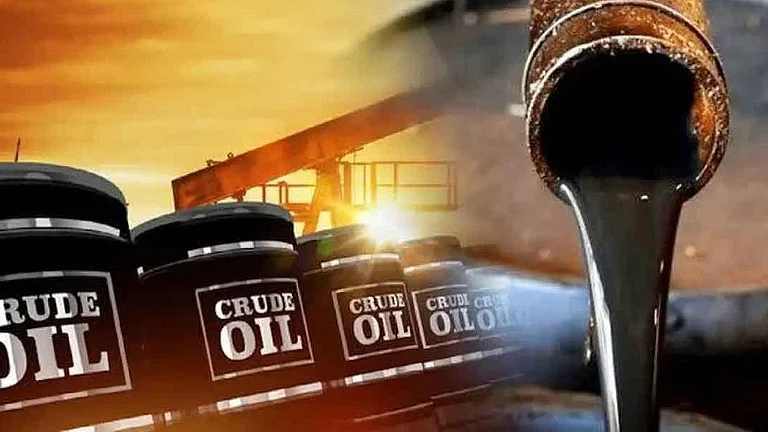
India's current strategic petroleum reserves are equivalent to just about 9-10 days of the country's net crude imports, far below other major import-dependent countries, a new report revealed on Wednesday.
The report released by Council on Energy, Environment and Water (CEEW) said other countries that rely heavily on crude imports – such as Japan and South Korea – maintain reserves sufficient for over 200 days.
The report, 'How Secure is India's Energy Future? Assessing Accessibility, Reliability, and Affordability, also noted that over 85% of India's crude oil imports come from just six countries, including Russia and key West Asian suppliers, limiting flexibility supply shocks.
Hemant Mallya, fellow at the CEEW, said, "Disruptions in crude oil, LNG, LPG, coal, or key shipping routes can quickly affect cooking costs, transport fuel prices, fertiliser subsidies, industrial competitiveness, and inflation." For gas, India imports nearly half its supply as LNG but has no dedicated strategic gas storage facilities, leaving fertiliser plants and city gas networks exposed, the report said.
Advertisement
It also highlighted that the country's coal security risks are increasingly influenced by its continued dependence on imported coking coal - particularly from Australia -for steelmaking, and exposure to Indonesian export policies for non-coking coal imports.
On the domestic side, declining coal quality and rising production costs signal a narrowing cost advantage for coal power over firm renewable power, said the report.
It argued that clean energy can reduce India's exposure to continuously imported fossil fuels.
However, the report said that clean energy can create a different kind of strategic dependence: on critical minerals, technologies, and industrial inputs.
This dependence must be managed through domestic manufacturing, supply-chain diversification, recycling, and strategic international partnerships, according to the report.
Mallya said, "India's next phase of energy security must move beyond securing fossil fuels to a clear transition plan: optimising gas system utilisation, avoiding further refinery expansion, accelerating viable EV adoption, electrifying industry, reconfiguring refineries for lower gasoline demand, and building resilient green technology supply chains."
Advertisement