India faces rising water stress threatening agriculture, livelihoods and rural stability.
Localised water solutions improve farm incomes, resilience and reduce distress migration.
Community-led conservation and policy support crucial for long-term water security nationwide.
Why India Needs to Link Water Security with Rural Prosperity
Linking water security with rural growth is key to climate resilience

Rural communities depend on sustainable water management for agriculture and livelihoods
Summary
Advertisement
Water has always been the lifeblood of India’s rural economy. It shapes agriculture, livelihood opportunities, and the social fabric of villages across the country. Yet, the paradox is stark: India is home to nearly 18% of the world’s population but has access to only 4% of global freshwater resources, placing immense pressure on its water systems. As climate variability intensifies through harsher heatwaves, erratic monsoons and growing groundwater depletion the fragility of the rural economy becomes increasingly visible.
In 2018, NITI Aayog’s Composite Water Management Index warned that 600 million Indians live under high to extreme water stress, highlighting the scale of the challenge. The Government of India has since taken several steps, including the Jal Shakti Abhiyan (2019) a mission-mode campaign across 256 water-stressed districts to strengthen local water conservation efforts.

Water Security and Rural Prosperity
Water is not merely a natural resource; it is the foundation of economic stability, social development and human dignity. In rural India, the availability of water determines whether farms remain productive, whether families can continue living in their villages, whether children especially girls remain in school and whether women have the time and opportunity to participate in economic activities.
Advertisement
Field experience across districts such as Alwar and Ajmer (Rajasthan), Jawhar (Maharashtra), and Nainital (Uttarakhand) shows that when water availability improves, the effects ripple across the rural economy. Increased water storage, improved groundwater levels and access to water closer to home collectively enhance both farm incomes and overall community well-being.
Managing Climate Variability
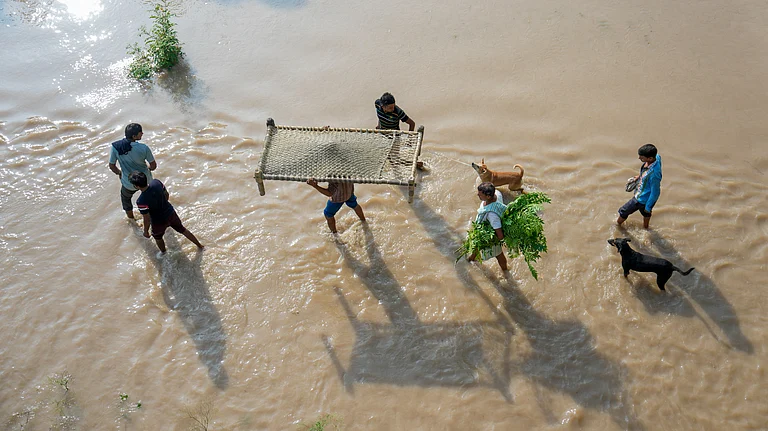
Climate change has altered India’s water map. Higher temperatures accelerate evaporation, shrinking reservoirs and drying out soil. Unpredictable rainfall disrupts cropping cycles and exposes farmers to higher risk.
Building resilience, therefore, requires long-term strategies such as groundwater recharge, restoration of traditional water bodies, household-level rainwater harvesting and landscape-level watershed development. The Foundation’s work since 2016 demonstrates that these interventions significantly improve water availability. They have enabled communities to revive local water sources, stabilise groundwater levels, and sustain agricultural productivity even in climate-stressed regions.
Finding Localised Water Solutions
India’s water challenges are diverse what works in a Himalayan village may not work in an arid Rajasthan block. This makes localised, community-led solutions essential.
Advertisement
Traditional and decentralised water management methods check dams, farm ponds, recharge structures, naulas and baoris and watershed treatments have repeatedly proven effective. When communities plan, implement, and maintain these systems, the outcomes are more durable and environmentally responsible. These efforts strengthen local water security, improve crop yields, diversify rural incomes and reduce distress migration.

Building Long-term Water Resilience
Water interventions have multiplier effects. They improve agriculture, support livestock, stabilise incomes and promote rural enterprise. Recognising this, national programmes such as Jal Shakti Abhiyan: Catch the Rain (2021) and the Atal Bhujal Yojana have laid an important foundation for scaling community-based water governance.
But long-term progress will depend on expanding groundwater conservation efforts, improving water-use efficiency, strengthening community institutions and driving behavioural change in how water is valued.
Path to Water-secure India
The path to water-secure rural India is challenging, but deeply possible. Across the country, success stories powered by government efforts, philanthropic investments, committed grassroots organisations and strong community participation show what is achievable. If India continues this trajectory, rural regions can become more productive, more resilient and better prepared for the uncertainties of a changing climate. Water, when managed well, is not just a resource it is a catalyst for hope and a cornerstone of sustainable rural development.
Advertisement
(Raman Kalyanakrishnan is the Chief Executive Officer of Hinduja Foundation. The views expressed are personal.)