Government launches 60-day emergency plan to bring back kerosene distribution nationwide.
Selected petrol pumps allowed to store and dispense kerosene under relaxed rules.
Measure helps households facing LPG shortages and energy access challenges in rural areas.
Centre Allows Kerosene Sale Through Petrol Pumps — Here's Why
Centre temporarily allows kerosene sale via petrol pumps to ease household fuel shortages

Petrol pump staff prepare kerosene distribution under government’s temporary emergency plan
Summary
Advertisement
The Indian government announced a 60-day emergency plan to bring back kerosene under the public distribution system (PDS), including in 21 “kerosene-free” States and Union Territories. Select petrol pumps in every district will be permitted to store and distribute limited quantities of superior kerosene oil (SKO) under the relaxed norms.
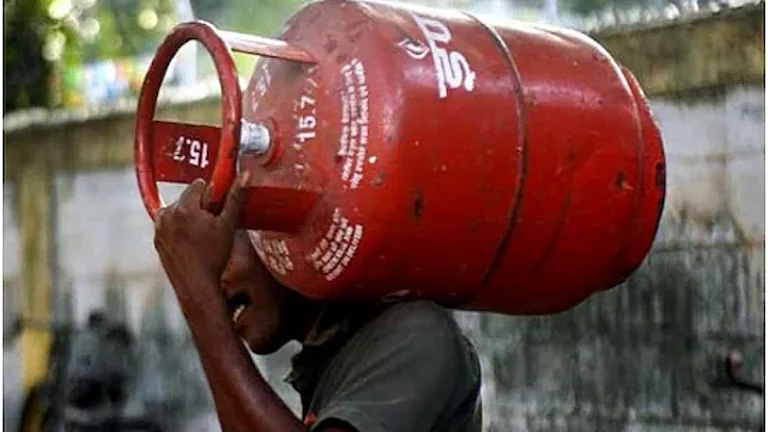
This is mainly intended to help the households who don’t have enough LPG for cooking, so they still have fuel for basic domestic needs.
The Ministry of Petroleum and Natural Gas has allowed public sector oil companies to supply kerosene to these 21 regions, which include Delhi, Haryana, Uttar Pradesh, Rajasthan, Andhra Pradesh, Telangana and Gujarat. Citing a Gazette notification issued on March 29, Deccan Herald reported that the Ministry of Petroleum and Natural Gas has allowed public sector oil marketing companies (OMCs) to allocate PDS kerosene across 21 States and Union Territories including Delhi, Haryana, Uttar Pradesh, Rajasthan, Andhra Pradesh, Telangana and Gujarat, where kerosene supply had been phased out.
Advertisement

How Kerosene Will Be Supplied
Under the updated rules, designated petrol pumps, preferably company-owned outlets of public sector oil firms, will be allowed to store and dispense kerosene to households. Each outlet can stock up to 2,500 litres, with up to such service stations identified per district by state governments and Union Territory administrations.
Dealers and transporters have also been exempted from certain licencing requirements under the Petroleum Rules, 2002, to enable faster distribution. Safety and operational guidelines issued by the Petroleum and Explosives Safety Organisation will continue to apply to all designated outlets.
The Ministry said the government can temporarily exempt certain petroleum products from usual safety and licencing rules under the Petroleum Act of 1934 and 2002.
“The Central government is empowered by order, in exceptional cases, to grant exemptions from any provisions of the Act or its sub-sections, to any category of petroleum, subject to such conditions may be imposed,” stated the notification.
Advertisement
“At the retail level, to ensure uninterrupted supply of energy products, to ensure uninterrupted supply of energy products, the Central government has approved the PDS stock keeping unit for high-priority PDS operations. This applies to 21 States and Union Territories where arrangements have been made to supply kerosene for household cooking purposes,” it added.
To facilitate this, companies are allowed to store up to 2,500 litres of kerosene per distribution unit at retail stations for household use, the notification stated.
Emergency Kerosene Allocation
India’s temporary PDS kerosene measure also reflects broader concerns about energy access and affordability.
According to Reuters, people in rural and low-income areas use paraffin not only for cooking but also for lighting in places where electricity is hard to come by. This shows that energy equity is still a problem. Analysts say that this emergency move is only a short-term fix while the LPG coverage continues to grow.
Advertisement