India records 96% climate awareness but only 10% feel ready act.
Gen Z drives online climate discourse with rising participation beyond metros nationwide.
Structural bottlenecks hinder translation of awareness into measurable climate action outcomes.
Climate Awareness Reaches 96% in India but Just 10% Act, Says Report
India’s climate awareness surges but action remains sharply limited across population

Rising climate awareness in India contrasts with low levels of real-world action
Summary
Advertisement
A significant gap exists between climate awareness and action in India with 96% of the population already aware of the concept of climate change but only 10% feeling equipped to take meaningful action, according to a report released by WeNaturalists.
The report also stated that this 10% readiness figure has not improved since 2011, despite the fact that 89% of Indians now view climate change as a serious threat.
Commenting on the findings, Amit Banka, Founder & CEO, WeNaturalists, said, “India is at a defining moment in its climate journey. We have near-universal awareness, a billion people connected online and a generation that is actively shaping the climate conversation.”
He underscored that turning this awareness into action is the real challenge, describing it as not just a gap but a structural bottleneck in converting intent into impact. He further added that as climate risks intensify and global disruptions reshape energy realities, the urgency is no longer about raising awareness but about enabling action at scale.
Advertisement
He noted that meaningful change will only happen when individuals, communities and businesses come forward and take collective responsibility. He believes that the opportunity lies in translating this surge in digital engagement into informed, measurable behaviour change on the ground, where real climate impact will be defined.
Digital Climate Engagement Trends
Between 2023 and 2024, climate-related conversations in the country grew by 34%. Much of this digital activity is driven by Gen Z (ages 13–27), who produced 89% of all eco-content in 2024. The data also shows a geographic shift in engagement.
The number of environmental content creators in Tier 2 and Tier 3 cities is growing three times faster than in major metropolitan areas. Cities such as Kochi, Jaipur, Indore and Bhubaneswar now represent 35% of overall participation.
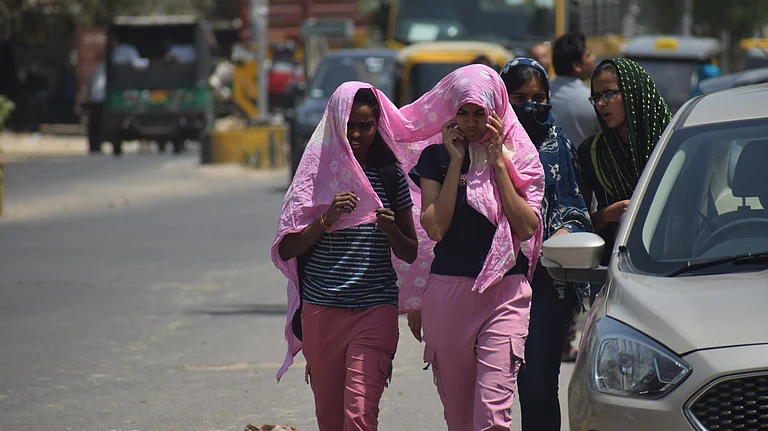
This movement is largely driven by individual citizens rather than corporations. Individuals create 97% of all nature-related content, which receives four times more engagement than branded campaigns.
Advertisement
Furthermore, participation is often tied to specific dates; for example, activity increased by 950% on Earth Day and 95% on World Environment Day. The interest in environmental issues is also affecting the workforce, as 63% of individuals seeking "green jobs" are between the ages of 21 and 30. Tier 2 and Tier 3 cities have seen a 50% increase in green job activity.

Energy Risks and Investments
The report connected these trends to broader economic issues and energy security. India’s reliance on oil imports, 84% of which transit through the Strait of Hormuz, makes the country vulnerable to global energy disruptions. This risk has contributed to a 91.5% surge in renewable energy investments between 2023 and 2024 and a 35-fold expansion in solar capacity over the past decade. Daily experiences with air pollution, extreme heat, water shortages and plastic waste are the primary drivers of public concern.
Advertisement
The WeNaturalists report concluded that while India has the demographic and digital tools to lead on climate issues, it must still bridge the gap between knowing about the problem and taking consistent action.