Buildings sector emits 37% globally while expansion continues despite efficiency gains.
Decarbonisation is slowing as floor space growth outpaces climate improvements worldwide.
Net zero targets remain distant amid policy gaps and rising investment needs.
Global Construction Sector Risks Locking In High Emissions Despite 37% Share, Says Report
Global buildings sector emits 37% of CO2 as expansion outpaces decarbonisation progress

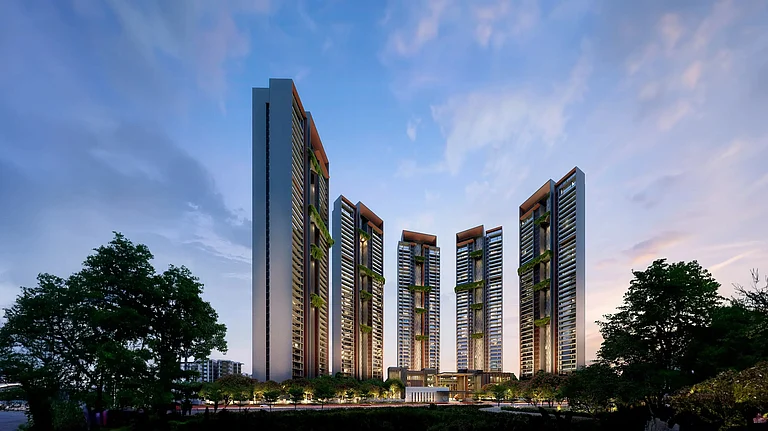
High-rise buildings and construction sites reflecting global urban expansion and emissions challenge
Summary
Advertisement
The buildings and construction sector currently accounts for 37% of global carbon emissions and 28% of global energy consumption. According to the Global Status Report for Buildings and Construction 2025–2026 published by United Nations Environment Programme (UNEP), decarbonisation efforts in this sector have slowed significantly.
In 2024, the global building floor area expanded by 1.7% to reach 273bn square metres. While the total floor area grew by 20% between 2015 and 2024, operational emissions rose by only 6.5% during the same period.
This relative decoupling was driven by improved energy efficiency and the declining carbon intensity of electricity and heat. Between 2015 and 2024, building energy intensity decreased by 8.5%, but progress stalled in 2024 with intensity remaining at 129 kWh/m². The sector remains 3.5 GtCO2 off the required trajectory to meet net-zero goals.
Operational emissions must decline by 56% from 2024 levels to get back on track by 2030. Furthermore, material extraction for the construction sector drives nearly 50% of the global total.
Advertisement

Policy Gaps Hinder Progress
As of January 2026, no G20 country has published an extensive strategy for the buildings sector under the latest round of Nationally Determined Contributions.
Only Canada and the United States have established building energy codes aligned with zero-emissions principles at certain levels. The share of renewables in buildings’ energy supply rose to 17.3% in 2024, which represents only a quarter of the increase required to stay on track.
To align with net-zero pathways, this share must reach 46% by 2030. Global annual investment in building energy efficiency reached $275bn in 2024. Cumulative investment must reach $5.9trn by 2030 to meet established climate targets. The report highlights that housing affordability and climate action are reinforcing priorities rather than competing interests.
Governments are encouraged to use green building certification schemes to amplify policies by integrating them into building codes and procurement frameworks. Finally, governments should monitor hazard exposure to develop necessary adaptation solutions
Advertisement
Emissions Pressure Rising
According to the International Energy Agency (IEA) report, the operations of buildings account for 30% of global final energy consumption and 26% of global energy-related emissions, including 8% from direct-on-site emissions and 18% from electricity and heat use.
Direct emissions from the buildings sector fell in 2022 compared to the previous year, despite higher heating demand driven by extreme temperatures in certain regions.
Despite efficiency improvements, global energy use in buildings continues to grow, underscoring the need for faster electrification and stronger efficiency policies to align with net-zero pathways.